




Aching muscles are something almost everyone experiences, whether after a new exercise class, a long day at a desk or a bout of flu. Most muscle aches are harmless and settle within days. When they keep coming back, or appear for no obvious reason, it is worth looking for a cause.
This guide explains why your muscles might ache, how to get relief, why muscles can ache all the time and when muscle pain needs medical attention.
Quick answer
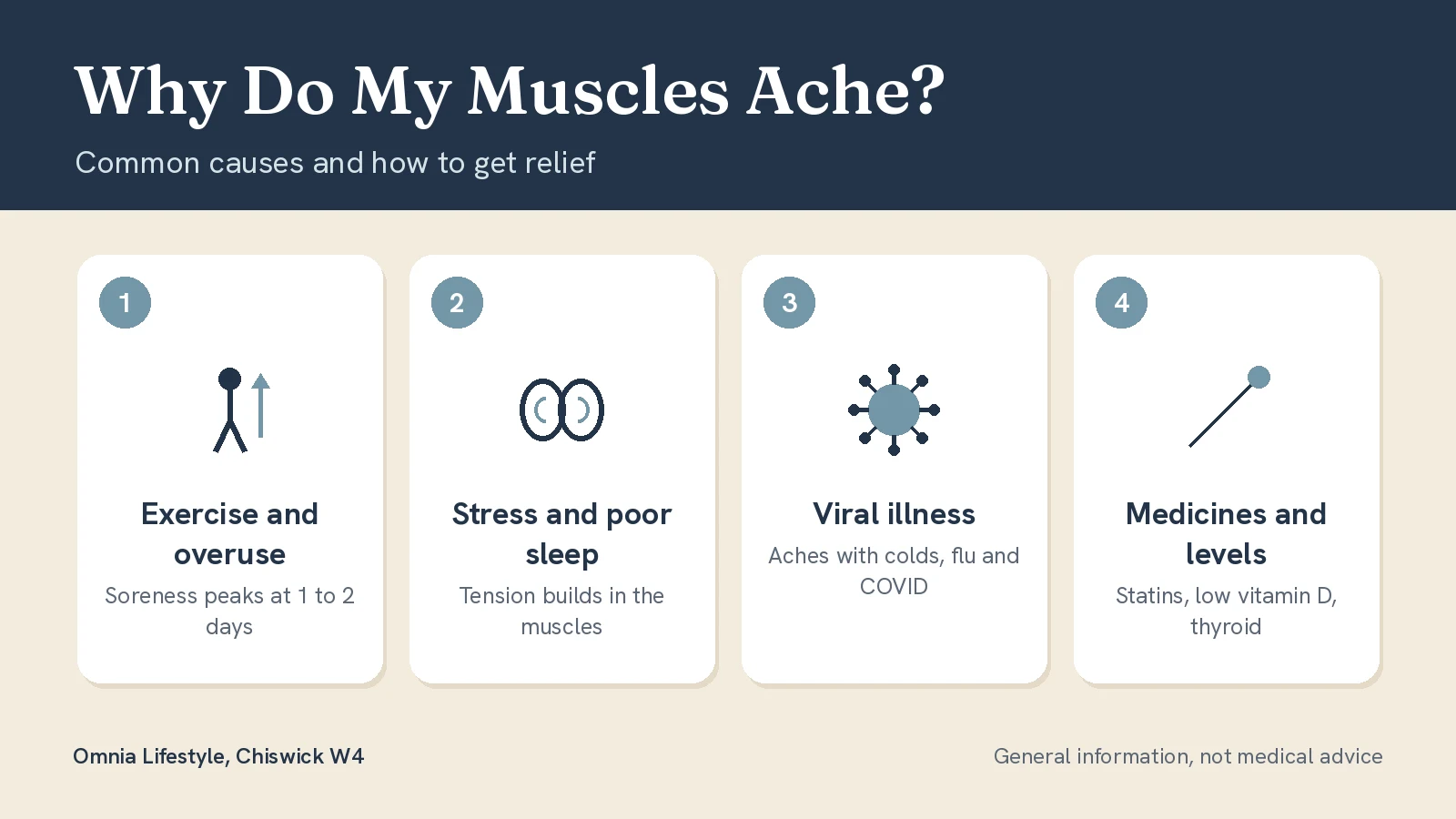
Muscles usually ache because of exercise or overuse, tension from stress or posture, poor sleep, dehydration or a viral illness such as a cold, flu or COVID. Some medicines, particularly statins, low vitamin D and an underactive thyroid can also cause aching. For relief, keep gently active, use heat, stretch, drink enough fluids and use simple painkillers if suitable. Muscle aches with dark urine after intense exercise, a fever and stiff neck, or unexplained weakness need urgent medical attention.
Why do my muscles ache?
- Exercise and overuse. Delayed onset muscle soreness starts 12 to 24 hours after unfamiliar or hard exercise and peaks at one to two days.
- Tension and posture. Long periods at a desk, carrying heavy bags and stress keep muscles tight.
- Poor sleep. Sleep is when muscles recover, and poor sleep increases pain sensitivity.
- Viral illness. Colds, flu and COVID commonly cause aching all over.
- Dehydration and not eating enough, especially around exercise
- Minor strains from lifting or sport
Why do my muscles ache all the time?
Muscles that ache most days, or all over, are more likely to have a medical cause worth checking:
- Medicines, especially statins. Do not stop them without speaking to your GP
- Low vitamin D, which is common in the UK in winter
- An underactive thyroid. See underactive thyroid symptoms
- Fibromyalgia, which causes widespread pain, fatigue and poor sleep. See how fibromyalgia is diagnosed
- Polymyalgia rheumatica, which causes pain and stiffness in the shoulders and hips, usually in people over 50
- Chronic fatigue syndrome, long COVID and recovery from viral illness
- Stress, anxiety and depression, which can all increase muscle pain
How to relieve muscle aches
- Keep moving gently. Light walking and stretching help more than complete rest.
- Use heat. A warm bath, shower or heat pack relaxes tight muscles.
- Ice can help in the first day or two after a strain.
- Drink enough fluids and eat regular meals with enough protein.
- Take simple painkillers such as paracetamol or ibuprofen if suitable, or use an anti-inflammatory gel.
- Massage. Massage reduces exercise-related soreness and eases tension.
- Sleep well to give muscles time to recover.
- Build training gradually to prevent soreness next time.
When to seek medical help
Call 999 if you have:
- Muscle aches with a fever, stiff neck, severe headache, sensitivity to light or a rash that does not fade when a glass is pressed on it
- Sudden muscle weakness with difficulty breathing or swallowing
Get same-day medical advice, from your GP or NHS 111, if:
- You have severe muscle pain and weakness with dark or brown urine, especially after intense exercise
- You are over 50 and have new pain and stiffness in both shoulders or hips, especially with a headache or jaw pain
- One calf is painful, swollen, warm or red
See your GP if:
- Muscle aches have lasted more than two weeks without a clear reason
- Aches started after a new medicine, such as a statin
- You also feel very tired, have lost weight or feel generally unwell
- You notice muscle weakness
Frequently asked questions
Why do my muscles ache after exercise?
This is delayed onset muscle soreness, a normal response to unfamiliar or harder exercise. It settles within a few days and becomes less severe as you adapt.
Can stress make your muscles ache?
Yes. Stress keeps muscles tense, particularly in the neck, shoulders and back, and increases sensitivity to pain.
Can dehydration cause muscle aches?
Dehydration can contribute to muscle cramps and aches, especially during hot weather or exercise.
Should I exercise with aching muscles?
Light activity usually helps muscle soreness. Avoid hard exercise if aches come with a fever or feeling unwell.
Muscle pain treatment in Chiswick
Muscle pain is assessed and treated at Omnia Lifestyle in Chiswick, W4, close to Turnham Green station, on bus routes 94, E3 and 272. Limited parking is available on request when booking. We look at your work, training, sleep, stress and medicines, assess how you move and may combine massage, physiotherapy, red light therapy, acupuncture or compression therapy, suggesting blood tests or a GP review if a medical cause is possible.
Read more about muscle pain and fibromyalgia, see deep tissue vs sports massage and soft tissue injury healing times, explore manual therapy, physiotherapy and red light therapy, or book an appointment.
This article is general information, not medical advice. If you have any of the warning signs listed above, seek medical attention.

.jpg)
.jpg)