






Book at our Chiswick clinic
Deep Tissue Massage
Massage is one of the most popular things people try for back pain, and for many it brings welcome relief from tight, aching muscles. This guide is for anyone with everyday lower or upper back pain who wants to know what massage for back pain can and cannot do, what the NHS and NICE say, and how to get the most from it alongside exercise.
When to see someone: if back tightness keeps returning or is affecting sleep or work, hands-on treatment plus a simple exercise plan can help. Deep tissue massage at Omnia is £90 for 60 minutes or £65 for 30 minutes. Book online or call 020 4515 0000.
Quick answer
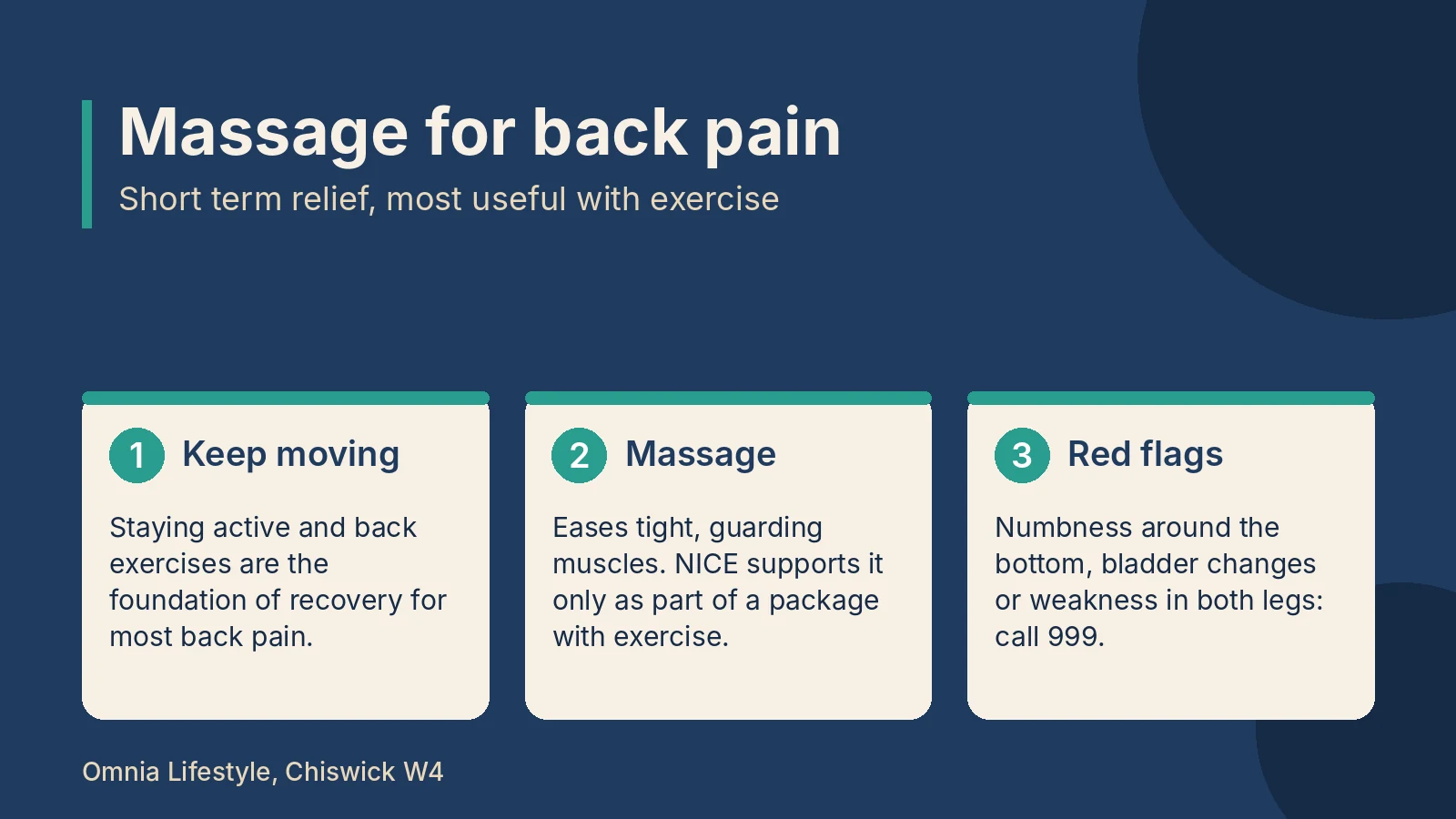
Massage can ease back pain and muscle tension in the short term, and many people find it helps them move more comfortably. It does not fix back pain on its own. NICE guidance on low back pain (NG59) says to consider manual therapy, including massage, only as part of a treatment package that includes exercise. The NHS also recommends staying active and back exercises. Use massage to ease pain so you can keep moving. A 60-minute deep tissue massage at Omnia in Chiswick is £90.
Is massage good for back pain? What the evidence shows
Research reviews of massage for low back pain, including a Cochrane review, find that massage can reduce pain and improve how people feel in the short term, compared with no treatment or some inactive treatments. The benefit tends to fade over the following months, and the overall quality of evidence is rated low or very low. The review authors said they had very little confidence in massage as a treatment for low back pain, mainly because the studies were small and had design flaws.
In practical terms, massage is a sensible option if your back feels tight and sore, if pain is making it hard to start exercising, or if stress and long hours at a desk keep tightening the same muscles. It is less useful for pain caused by a specific structural problem, such as an irritated nerve, where an assessment and a targeted exercise plan matter more.
What NICE and the NHS say
- NICE NG59 (low back pain and sciatica). NICE recommends advice and encouragement to stay active, and exercise programmes. It says to consider manual therapy, such as spinal manipulation, mobilisation or soft tissue techniques like massage, but only as part of a treatment package that includes exercise.
- NHS advice. Back pain usually improves within a few weeks. The NHS advises staying active, back exercises and stretches, heat or ice, and anti-inflammatory painkillers if suitable. If pain lasts more than a few weeks, options include group exercise, physiotherapy and manual therapy, where a therapist massages and moves the muscles, bones and joints.
We think it is important to be clear: massage is a helpful part of a plan, not the whole plan.
How massage helps back pain
- It eases muscle guarding. When your back hurts, the muscles around the spine and hips often tighten to protect it. Slow, firm pressure helps them relax.
- It changes how pain feels. Touch and pressure may dampen pain signals and calm a nervous system that has been on alert.
- It improves comfort with movement. Many people bend, twist and walk more freely after a session, which makes exercise easier.
- It helps with stress. Stress and poor sleep raise muscle tension and make pain feel worse, and massage can help you relax.
Which type of massage is right for back pain?
There is no single type proven to work better than others. Deep tissue massage uses slow, sustained pressure to reach deeper layers of muscle and suits long-standing tension from desk work or physical jobs. Sports massage is firmer and quicker, often with stretching, and suits people whose back pain is linked to training. Swedish, Thai and shiatsu massage are other options people search for, and the right one is mostly about preference and comfort. Compare them in deep tissue vs sports massage and types of massage.
If pain keeps coming back or you are not sure what is causing it, start with an assessment. Read physiotherapy vs massage to help you choose.
What happens at a session
Your therapist starts by asking where your pain is, when it started, what makes it better or worse, your work and activity, and any medical conditions or medicines. They check how you move, then work on the back, hips and sometimes the shoulders and legs, with pressure built up gradually and adjusted to your feedback. You are covered with towels, and only the area being treated is uncovered. You leave with simple stretches or movements to keep the benefit going.
How many sessions do you need?
For a flare-up of muscle tension, one or two sessions may be enough, together with staying active. For long-standing back tightness, many people find a short course of three to four sessions, a week or two apart, works well, followed by occasional maintenance. If pain is not improving after a few sessions, see a physiotherapist or your GP rather than continuing with massage alone. See how often you should get a massage.
Massage for back pain: cost
At Omnia in Chiswick, deep tissue or sports massage is £65 for 30 minutes or £90 for 60 minutes. A 60-minute session suits the whole back and hips; 30 minutes suits one focused area. Home visit massage is available across West London from £100.
Massage for back pain at home
- Keep moving. Gentle walking and normal activity help most back pain settle. See lower back pain exercises.
- Use heat. A heat pack wrapped in a towel can ease stiffness or spasm.
- Try a tennis ball. Lean against a wall with a ball between your back muscles and the wall, and roll gently. Avoid pressing directly on the spine.
- Ask a partner. Gentle, broad strokes either side of the spine can be soothing. Stop if pain increases.
- Be careful with massage guns. Use a low setting on muscle, never on the spine, and avoid them over bruising or recent injury.
Who should take care with massage
Massage is adapted around many conditions, but tell your therapist first if you take blood-thinning medicine, have a bleeding disorder, osteoporosis, cancer, varicose veins, a recent injury, skin infection or recent surgery. Avoid massage over a recent strain for the first couple of days, as the NHS advises. Massage is not suitable over an area of suspected blood clot (DVT). In pregnancy, choose a therapist trained in pregnancy massage and tell your midwife. After a caesarean, wait until your wound has healed and you have had your postnatal check.
When to seek urgent help
Call 999 or go to A&E if back pain comes with:
- Pain, tingling, weakness or numbness in both legs
- Loss of feeling around your genitals or bottom, or changes in genital sensation or sexual function
- Changes in bladder or bowel control, or difficulty peeing
- Chest pain, or pain that started after a serious accident
Get an urgent GP appointment or contact NHS 111 if you feel hot, cold, shivery or unwell, or the pain is severe, starts suddenly or is getting worse quickly.
See your GP if pain has not improved after a few weeks, it is worse at night or does not improve with rest, you have lost weight without trying, or there is a lump or change in the shape of your back.
Frequently asked questions
Is massage good for lower back pain?
It can help, especially when lower back pain comes from tight, overworked muscles. Research shows short-term relief for many people, and NICE supports massage as part of a package that includes exercise. Use the easier movement after a session to keep up walking and back exercises, which is where longer-term improvement comes from.
Can massage make back pain worse?
Some people feel sore for a day or two after deep work, a bit like after exercise, and this usually settles. Pain should not be sharp or keep getting worse. Tell your therapist if pressure is too strong. If your pain is much worse after a session, or you develop new symptoms in your legs, see your GP.
Can massage help back pain and sciatica?
Massage can ease the tight muscles in the back and buttock that often come with sciatica, which may make you more comfortable. It does not treat the irritated nerve itself. NICE recommends exercise first for sciatica. Read massage for sciatica and how to relieve sciatica pain.
Can I have a back massage during pregnancy?
Yes, many people find massage eases back pain in pregnancy, but choose a therapist trained in pregnancy massage, who will position you comfortably on your side and adjust pressure. Tell your midwife, and stop if you feel unwell. Pelvic pain in pregnancy may need physiotherapy. See pelvic girdle pain in pregnancy.
Is massage or physiotherapy better for back pain?
They do different jobs. Physiotherapy starts with an assessment and builds an exercise programme, which has the strongest evidence for back pain. Massage eases tension and pain in the short term. For pain that keeps returning, starting with physiotherapy and adding massage often works well. Read physiotherapy for back pain.
Massage for back pain in Chiswick
Our clinic is at 8 to 9 Bedford Corner, The Avenue, Chiswick W4 1LZ, close to Turnham Green station, on bus routes 94, E3 and 272. Limited parking is available on request when booking. Our massage therapists and physiotherapists work under one roof, so if your back needs an assessment or exercise plan, we can combine both.
Read more about back pain and muscle pain, see all our massage in London options, or explore deep tissue massage in Chiswick.
Book massage in Chiswick: deep tissue or sports massage from £65 for 30 minutes, £90 for 60 minutes. Book online or call 020 4515 0000.
This article is general information, not medical advice. If you have any of the warning signs above, seek medical attention.
Ready to book?
Deep Tissue Massage


.jpg)
.jpg)
