

Book at our Chiswick clinic
Vestibular First
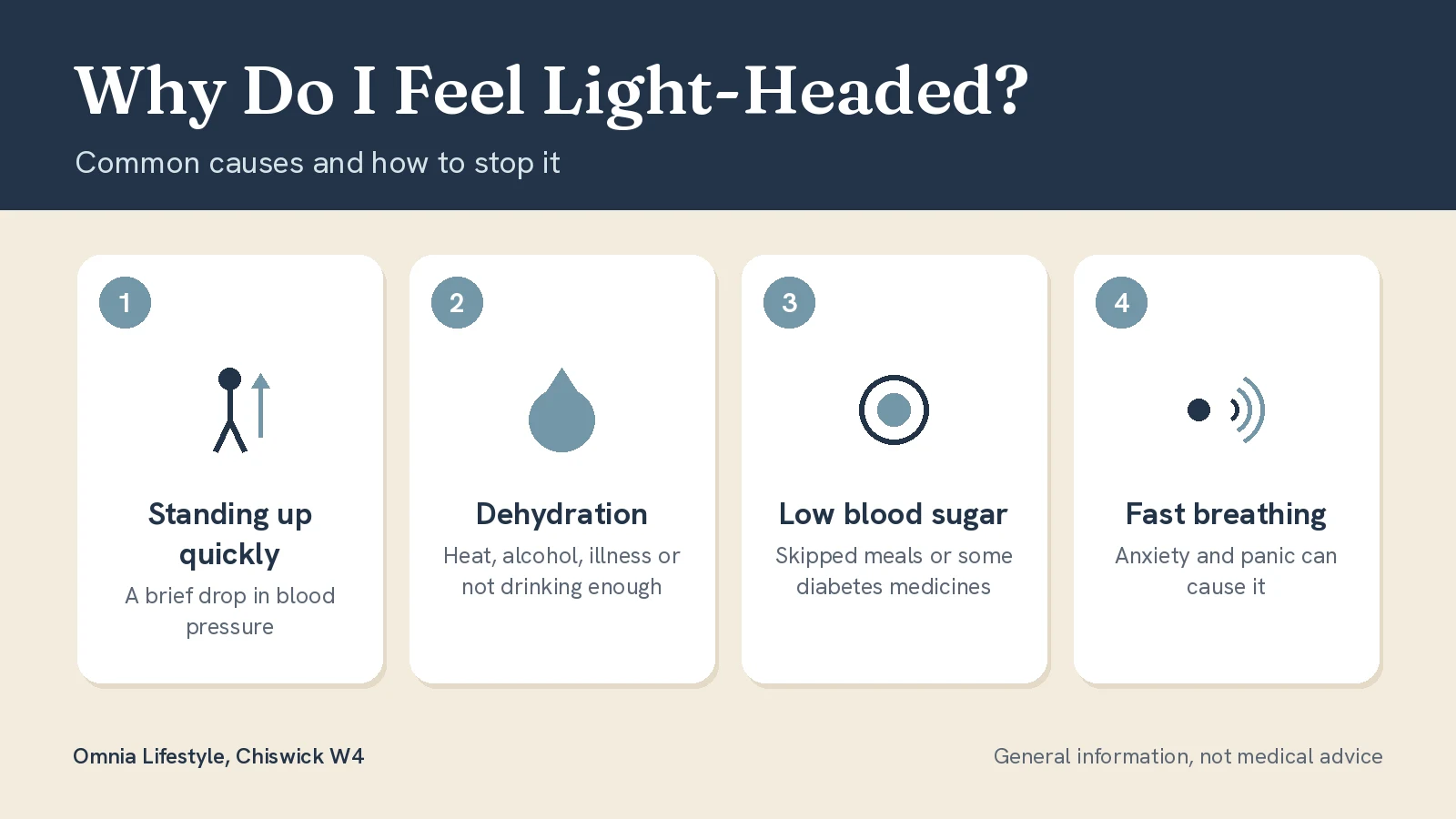
Feeling light-headed is that woozy, faint or floaty feeling, as if you might pass out, without the room spinning. It is very common and is usually caused by something simple, such as standing up too quickly, not drinking enough or going too long without food. Sometimes it points to a problem with your blood pressure, blood, medicines or heart that is worth checking.
This guide explains the common causes of light-headedness, how to stop it in the moment, how to prevent it and when it needs urgent help.
Quick answer
You may feel light-headed because of a brief drop in blood pressure when you stand up, dehydration, low blood sugar, fast breathing from anxiety, alcohol, a medicine side effect, anaemia or an illness. To stop it, sit or lie down straight away, raise your legs if you can, sip water and eat something if you have not eaten. Get up slowly. See your GP if it keeps happening, and call 999 if light-headedness comes with chest pain, breathlessness, a racing or irregular heartbeat, or face, arm or speech changes, or if someone faints and does not come round quickly.
Light-headed vs dizzy: what is the difference?
Light-headedness feels as if you might faint, and it usually improves when you sit or lie down. Vertigo is a spinning or moving sensation and usually comes from the inner ear. The two have different causes, so it helps to work out which you have. If the room spins, see what causes vertigo.
Many people feel light-headed and dizzy at the same time, or cannot tell which it is. That is common, and noting when it happens, how long it lasts and what eases it is more useful than the label.
Common causes of light-headedness
- Standing up quickly (postural hypotension). Blood pressure dips for a few seconds when you stand, especially after lying or sitting for a while, in the heat or after a hot bath. It is more common with age and with some medicines.
- Dehydration. Not drinking enough, sweating, a fever, or vomiting and diarrhoea lower your blood volume.
- Low blood sugar. Going too long without food, intense exercise, or in people with diabetes, insulin and some tablets, can cause shakiness, sweating and light-headedness.
- Fast breathing. Anxiety and panic can cause over-breathing, which leads to light-headedness, tingling and a tight chest. See what a panic attack is.
- The fainting reflex (vasovagal syncope). Pain, fear, the sight of blood, standing still for a long time or a hot, crowded room can briefly slow the heart and lower blood pressure.
- Alcohol, both while drinking and the next day
- Medicines, including blood pressure tablets, water tablets, some prostate medicines, antidepressants, sedatives and strong painkillers
- Anaemia. A low red blood cell count, often from low iron, can cause light-headedness with tiredness, breathlessness and pale skin.
- Pregnancy. Blood pressure is often lower in early and mid pregnancy.
- Postural tachycardia syndrome (PoTS). The heart rate rises abnormally on standing, causing light-headedness, palpitations and fatigue. It is more common in younger women and can follow a viral illness.
- Heart rhythm and valve problems. Less common, but important to rule out, especially if light-headedness comes with palpitations, chest pain or fainting during exercise.
Why do I feel light-headed and tired?
Light-headedness and tiredness often go together. Anaemia, dehydration, poor sleep, low blood pressure, an underactive thyroid, recovery from a viral illness and some medicines can cause both. If you feel this way most days, your GP can check your blood pressure and arrange blood tests. See why you may be tired all the time.
Why do I keep feeling light-headed and dizzy?
Light-headedness and dizziness that keep coming back usually follow a pattern, and the pattern points to the cause:
- Mainly when you stand up: postural hypotension, often linked to dehydration or medicines, or PoTS in younger people.
- Most of the day, with tiredness: anaemia, poor sleep, an underactive thyroid or recovery from a viral illness. See whether tiredness can cause dizziness.
- In stressful or busy situations: anxiety and over-breathing, or persistent dizziness after an earlier bout of vertigo.
- When you go a long time without food: low blood sugar.
- With spinning or unsteadiness when you move your head: an inner ear cause such as BPPV.
Keep a simple diary for two weeks and take it to your GP, who can check your blood pressure lying and standing and arrange blood tests.
How to stop feeling light-headed
- Sit or lie down as soon as you feel it coming on. If you can lie down, raise your legs on a cushion or chair.
- Tense your muscles. Crossing your legs and squeezing your thigh and buttock muscles, or gripping your hands together and pulling, can raise your blood pressure and help prevent a faint.
- Sip water, and eat something with some carbohydrate if you have not eaten.
- Slow your breathing if you feel anxious, breathing out for longer than you breathe in.
- Get up slowly once you feel better, sitting for a minute before you stand.
How to prevent light-headedness
- Get up in stages, sitting on the edge of the bed for a minute before standing
- Drink regularly through the day, unless your doctor has told you to limit fluids
- Eat regular meals and avoid long gaps without food
- Keep alcohol low and avoid very hot baths and showers
- Avoid standing still for long periods; shift your weight and flex your calves
- Ask your GP or pharmacist to review your medicines if light-headedness started after a new medicine or a dose change. Do not stop a prescribed medicine without advice
- Only increase the salt in your diet if a doctor advises it
How light-headedness is checked
Your GP will ask when it happens and what you were doing, check your blood pressure lying down and standing, listen to your heart and may arrange an ECG (heart tracing) and blood tests for anaemia, blood sugar, kidney function and thyroid. A longer heart monitor may be used if your symptoms suggest a rhythm problem. If light-headedness is mixed with spinning or unsteadiness, a vestibular assessment can check for an inner ear cause.
When to seek medical help
Call 999 if light-headedness comes with:
- Chest pain, breathlessness, or a racing, pounding or irregular heartbeat
- Drooping of the face, weakness or numbness in an arm or leg, slurred speech or sudden vision problems
- A sudden, severe headache
- Fainting where the person does not come round within a minute or two
- Pregnancy, or possible pregnancy, with tummy pain, shoulder tip pain or vaginal bleeding
Get same-day medical advice, from your GP or NHS 111, if:
- You faint during exercise, or faint with no warning
- You faint while lying down
- You have been vomiting or had diarrhoea and cannot keep fluids down
- You have diabetes and keep having low blood sugar episodes
See your GP if:
- Light-headedness keeps coming back
- It started after a new medicine or a change in dose
- You also feel tired or breathless, or look pale
- You have had a fall or are worried about falling
Frequently asked questions
Is feeling light-headed the same as being dizzy?
Light-headedness is one type of dizziness. It feels faint or woozy, whereas vertigo feels like spinning. They usually have different causes.
Can anxiety make you feel light-headed all the time?
Anxiety can cause frequent light-headedness, often through fast or shallow breathing. It is still worth having physical causes checked. See anxiety symptoms.
Why do I feel light-headed after eating?
In some people, especially older adults, blood pressure drops after a large meal as blood is diverted to the gut. Smaller meals and less alcohol with food can help. Tell your GP if it happens often.
Can lack of sleep make you feel light-headed?
Yes. Poor sleep can make you feel woozy and less steady, and it lowers your tolerance to other triggers such as skipped meals or dehydration.
Why do I feel dizzy and light-headed with tingling hands?
The most common reason is over-breathing, often with anxiety or panic, which changes the balance of gases in the blood and causes light-headedness and tingling in the hands and around the mouth. Slowing your breathing usually eases it. Low blood sugar can also cause shakiness and tingling. Call 999 if numbness or tingling affects one side of the body, or comes with face, arm or speech changes or chest pain.
Dizziness assessment in Chiswick
Dizziness and balance problems are assessed at Omnia Lifestyle, 8 to 9 Bedford Corner, The Avenue, Chiswick W4 1LZ, close to Turnham Green station, on bus routes 94, E3 and 272. Limited parking is available on request when booking. If light-headedness comes with spinning or unsteadiness, our Vestibular First service can check for inner ear causes, with vertigo and BPPV assessment and treatment for £50, and home visits are available if you are too dizzy to travel. Light-headedness linked to blood pressure, blood sugar or the heart needs your GP, and we refer where needed. Our private blood tests in Chiswick need no GP referral and include a full blood count for £59 and an iron and ferritin test from £49.
Read more about balance and dizziness, see why you might feel dizzy, how to stop feeling dizzy, blood pressure readings explained and vestibular rehabilitation for chronic dizziness, explore Vestibular First, physiotherapy and home visits, or book an assessment.
This article is general information, not medical advice. If you have any of the warning signs listed above, seek medical attention.
Ready to book?
Vestibular First