




Vertigo is the feeling that you, or the room around you, is spinning or moving when it is not. It is a symptom rather than a condition in its own right, and in most people it comes from a problem in the inner ear that can be diagnosed and treated. Occasionally it is a sign of something in the brain that needs urgent care.
This guide explains what causes vertigo, what triggers vertigo attacks, what vertigo can be a symptom of and how the cause is worked out.
Quick answer
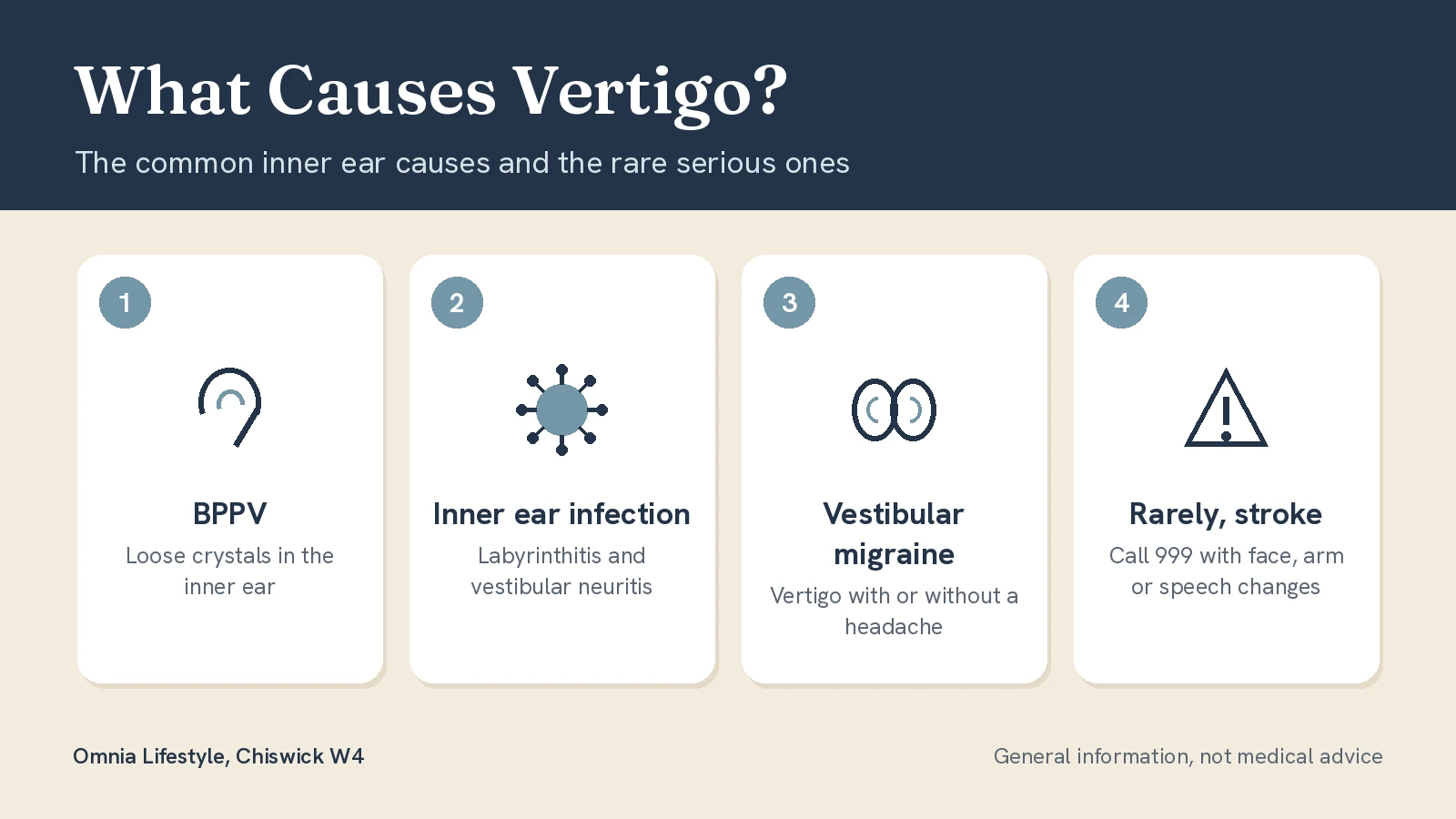
Most vertigo is caused by the inner ear. The most common cause is BPPV, where tiny crystals move out of place and trigger brief spinning with certain head movements. Other common causes are vestibular neuritis and labyrinthitis (inflammation of the balance nerve or inner ear, often after a virus), vestibular migraine and Meniere's disease. Less commonly, vertigo comes from the brain, for example a stroke, multiple sclerosis or a benign growth on the balance nerve. Sudden vertigo with face, arm or speech changes, double vision or difficulty walking needs a 999 call.
How vertigo happens
Your balance depends on signals from your inner ears, your eyes, and the joints and muscles of your body, which your brain combines to work out where you are and how you are moving. Vertigo happens when the signals from one inner ear do not match the other, or when the brain cannot process them properly. Causes are usually grouped into peripheral causes, in the inner ear or balance nerve, and central causes, in the brain.
Inner ear causes of vertigo
- BPPV (benign paroxysmal positional vertigo). The most common cause, especially over 50. Calcium crystals drift into one of the balance canals, so rolling over in bed, lying down, looking up or bending down triggers intense spinning that lasts less than a minute. It can follow a head injury or inner ear infection but often has no clear trigger.
- Vestibular neuritis. Inflammation of the balance nerve, usually after a viral infection such as a cold or flu. It causes sudden, severe, constant vertigo with nausea and vomiting, without hearing loss.
- Labyrinthitis. Inflammation of the inner ear itself, which causes similar vertigo plus hearing loss or ringing in the affected ear.
- Meniere's disease. A long-term condition causing attacks of vertigo lasting from about 20 minutes to several hours, with fluctuating hearing loss, ringing (tinnitus) and a feeling of fullness in one ear.
- Ear wax, ear infections and injury. Impacted ear wax and middle ear infections can occasionally cause dizziness, and a head injury can disturb the inner ear.
Other causes of vertigo
- Vestibular migraine. One of the most common causes of recurring vertigo. Episodes can last from minutes to days and may happen with or without a headache, often alongside sensitivity to light, sound or movement.
- Stroke and transient ischaemic attack (TIA). A stroke affecting the back of the brain can cause sudden vertigo, usually with other symptoms such as double vision, slurred speech, weakness, numbness or severe unsteadiness. This is an emergency.
- Multiple sclerosis. Vertigo can be a symptom, usually alongside other neurological symptoms.
- Vestibular schwannoma (acoustic neuroma). A rare, non-cancerous growth on the balance nerve. It usually causes gradual hearing loss and tinnitus in one ear, and unsteadiness more than spinning.
- Medicines. Some medicines, including certain antibiotics, anti-seizure medicines and blood pressure tablets, can cause dizziness or, rarely, damage the inner ear.
- Anxiety and PPPD. Anxiety can cause dizziness, and persistent postural-perceptual dizziness (PPPD) can follow an episode of vertigo, leaving a lasting sense of unsteadiness. See whether stress can cause vertigo.
What triggers vertigo attacks?
Triggers depend on the cause, which is why noting what sets off your episodes helps diagnosis.
- Head position changes trigger BPPV: rolling over in bed, getting up, lying back at the hairdresser, looking up to a high shelf or bending down.
- Migraine triggers can set off vestibular migraine: missed or poor sleep, stress, skipped meals, dehydration, hormonal changes around periods, bright or flickering lights, and for some people alcohol or certain foods.
- Meniere's attacks are often unpredictable, although some people notice links with stress, tiredness, or high salt, caffeine or alcohol intake.
- Viral infections can trigger vestibular neuritis and labyrinthitis.
- Busy visual environments, such as supermarkets, crowds and scrolling screens, can worsen dizziness in PPPD and after an inner ear problem.
What is vertigo a symptom of?
In most people, vertigo is a symptom of an inner ear problem, most often BPPV, vestibular neuritis, labyrinthitis or Meniere's disease, or of vestibular migraine. Less often it is a symptom of a problem in the brain, such as a stroke or multiple sclerosis. The pattern usually points to the cause: brief spinning with head movements suggests BPPV, constant vertigo for days after a cold suggests vestibular neuritis, and vertigo with hearing changes points to the inner ear. How long episodes last is a key clue, which we cover in how long vertigo lasts.
How the cause of vertigo is found
Diagnosis starts with a detailed history: what the dizziness feels like, how long it lasts, what triggers it and whether there are hearing or neurological symptoms. A clinician then examines your eye movements, balance and walking, and may perform positional tests such as the Dix-Hallpike test, which reproduces BPPV and shows which ear is affected. Hearing tests, blood tests or an MRI scan are arranged when the history or examination suggests they are needed. See how to tell whether your dizziness is BPPV and what BPPV is and how it is treated.
When to seek medical help
Call 999 if vertigo comes with:
- Drooping of the face, weakness or numbness in an arm or leg, or slurred speech
- Double vision, loss of vision, or difficulty swallowing
- Sudden inability to walk or stand
- A sudden, severe headache, or a headache with a stiff neck
- Chest pain, a racing or irregular heartbeat, or collapse
Get same-day medical advice, from your GP or NHS 111, if:
- You have sudden hearing loss in one ear
- Vertigo follows a head injury
- You cannot keep fluids down because of vomiting
- You have constant vertigo for the first time and it has lasted more than a few hours
See your GP if:
- Vertigo keeps coming back
- You have ringing, fullness or gradual hearing loss in one ear
- You think a medicine may be causing it
- Vertigo is affecting your work, driving or confidence
Frequently asked questions
Can dehydration cause vertigo?
Dehydration more often causes light-headedness than true spinning vertigo. It can make migraine-related dizziness worse, so drinking enough is sensible if you are prone to attacks.
Can ear wax cause vertigo?
Impacted ear wax can occasionally cause dizziness along with muffled hearing. Speak to a pharmacist or GP rather than using cotton buds, which push wax further in.
Can high blood pressure cause vertigo?
High blood pressure rarely causes vertigo directly, but it raises the risk of stroke, which can. Low blood pressure is a more common cause of light-headedness. See what causes high blood pressure.
Is vertigo a sign of a brain tumour?
Very rarely. Most vertigo is caused by the inner ear. A slow-growing growth on the balance nerve usually causes gradual one-sided hearing loss and tinnitus rather than spinning on its own.
Vertigo assessment in Chiswick
Vertigo and balance problems are assessed and treated at Omnia Lifestyle in Chiswick, W4, close to Turnham Green station, on bus routes 94, E3 and 272. Limited parking is available on request when booking. Our Vestibular First service identifies the cause, treats BPPV with repositioning manoeuvres, often in the same session, and provides balance rehabilitation, and home visits are available if you are too dizzy to travel. We refer to your GP if anything needs further investigation.
Read more about balance and dizziness, see how to stop feeling dizzy, why you may feel light-headed, the Epley manoeuvre and what the vestibular system is, explore Vestibular First, physiotherapy and home visits, or book an assessment.
This article is general information, not medical advice. If you have any of the warning signs listed above, seek medical attention.



.jpg)
.jpg)