




Dizziness is one of the most common reasons people see a doctor, and the word means different things to different people. It can describe a spinning sensation, feeling light-headed or faint, or simply feeling unsteady. Working out which kind of dizziness you have is the first step to finding the cause, and most causes are treatable.
This guide explains the types of dizziness, the most common causes, what helps in the moment and the warning signs that need urgent help.
Quick answer
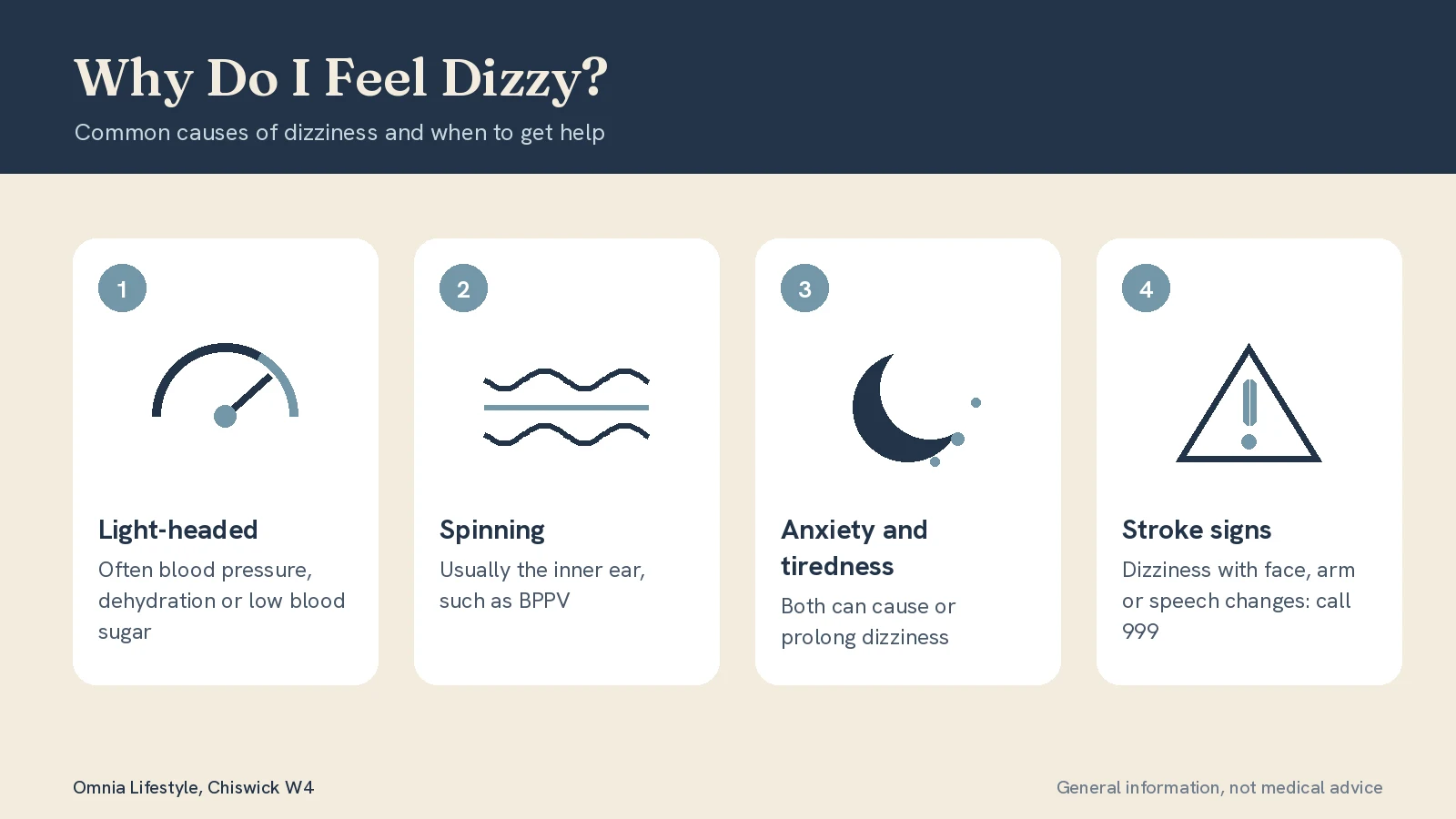
Most dizziness is caused by an inner ear problem, a drop in blood pressure, dehydration, low blood sugar, anxiety or a medicine side effect. A spinning sensation triggered by head movements is often BPPV, which is very treatable. Feeling light-headed when you stand up is usually a brief drop in blood pressure. Dizziness that comes on suddenly with face, arm or speech changes, a severe headache or chest pain needs a 999 call.
Types of dizziness
- Vertigo. A spinning or moving sensation, usually from the inner ear.
- Light-headedness. Feeling faint or woozy, often linked to blood pressure, fluids or blood sugar.
- Imbalance. Feeling unsteady on your feet without spinning.
Inner ear causes
- BPPV (benign paroxysmal positional vertigo). Brief spinning, usually under a minute, triggered by rolling over in bed, looking up or bending down. It is the most common cause of vertigo and often resolves with the Epley manoeuvre.
- Vestibular neuritis and labyrinthitis. Sudden, constant vertigo with nausea, often after a viral infection, settling over days to weeks.
- Vestibular migraine. Episodes of dizziness, sometimes without a headache.
- Meniere's disease. Attacks of vertigo with hearing changes, ringing in the ear and a feeling of fullness.
Causes of light-headedness
- Postural hypotension. A drop in blood pressure when you stand up, causing brief light-headedness.
- Dehydration, heat and alcohol
- Low blood sugar, from skipping meals or, in people with diabetes, some medicines
- Medicines, including blood pressure tablets, some antidepressants and sleeping tablets
- Anaemia, which can also cause tiredness and breathlessness
- Fainting reflex, triggered by pain, standing for a long time or the sight of blood
- Heart rhythm problems, which are less common but important to rule out
Anxiety, tiredness and dizziness
Anxiety can cause light-headedness, especially with fast breathing, and dizziness from any cause can trigger anxiety, creating a cycle. Tiredness and poor sleep also make dizziness more likely. Persistent postural-perceptual dizziness (PPPD) is a common condition in which unsteadiness lingers after an initial trigger, and it responds well to vestibular rehabilitation. See whether stress can cause vertigo.
What to do when you feel dizzy
- Sit or lie down straight away until it passes
- Drink some water and eat if you have not eaten
- Get up slowly, sitting on the edge of the bed for a minute first
- Avoid driving, climbing ladders or using machinery while dizzy
- Keep a note of when it happens, how long it lasts and what triggers it
How dizziness is diagnosed
Your GP may check your blood pressure lying and standing, arrange blood tests or a heart tracing, and review your medicines. A vestibular assessment tests eye movements, balance and positional responses to identify inner ear causes such as BPPV, which can often be treated in the same session. For more, see how to tell whether your dizziness is BPPV and what vestibular rehabilitation is.
When to seek medical help
Call 999 if dizziness comes with:
- Drooping of the face, weakness or numbness in an arm or leg, or slurred speech
- Sudden double vision, loss of vision, or difficulty walking or swallowing
- A sudden, severe headache
- Chest pain, a racing or irregular heartbeat, breathlessness or collapse
Get same-day medical advice, from your GP or NHS 111, if:
- You have sudden hearing loss in one ear
- Dizziness follows a head injury
- You faint, especially during exercise
- You cannot keep fluids down because of dizziness and vomiting
See your GP if:
- Dizziness keeps coming back or lasts more than a few days
- You have hearing changes or ringing in one ear
- You have had a fall
- You think a medicine may be the cause. Do not stop it without advice
Frequently asked questions
Can anxiety make you dizzy?
Yes. Anxiety commonly causes light-headedness and unsteadiness, often linked to fast breathing. It is worth having physical causes checked first.
Can dehydration cause dizziness?
Yes. Not drinking enough, especially in hot weather or after exercise, lowers blood volume and can make you light-headed, particularly when you stand up.
Why do I feel dizzy when I lie down or roll over?
Brief spinning when lying down or rolling over in bed is typical of BPPV, which is very treatable with a repositioning manoeuvre.
Should I drive if I feel dizzy?
No. Do not drive while you are dizzy. Some conditions that cause dizziness must be reported to the DVLA, so ask your GP for advice.
Dizziness assessment in Chiswick
Dizziness and balance problems are assessed and treated at Omnia Lifestyle in Chiswick, W4, close to Turnham Green station, on bus routes 94, E3 and 272. Limited parking is available on request when booking, and home visits are available if you are too dizzy to travel. We refer to your GP if anything needs further investigation.
Read more about balance and dizziness, see how long vertigo lasts, what causes vertigo, why you may feel light-headed, how to stop feeling dizzy and whether tiredness can cause dizziness, explore vestibular rehabilitation, physiotherapy and home visits, or book an assessment.
This article is general information, not medical advice. If you have any of the warning signs listed above, seek medical attention.


.jpg)
.jpg)