




Feeling tired and dizzy at the same time is very common, and the two are closely linked. Tiredness can make you dizzy, dizziness can wear you out, and several common health problems cause both. Working out which is driving which is the key to feeling better.
This guide explains how tiredness and dizziness are connected, the conditions that cause both, what you can do and when to see a doctor.
Quick answer
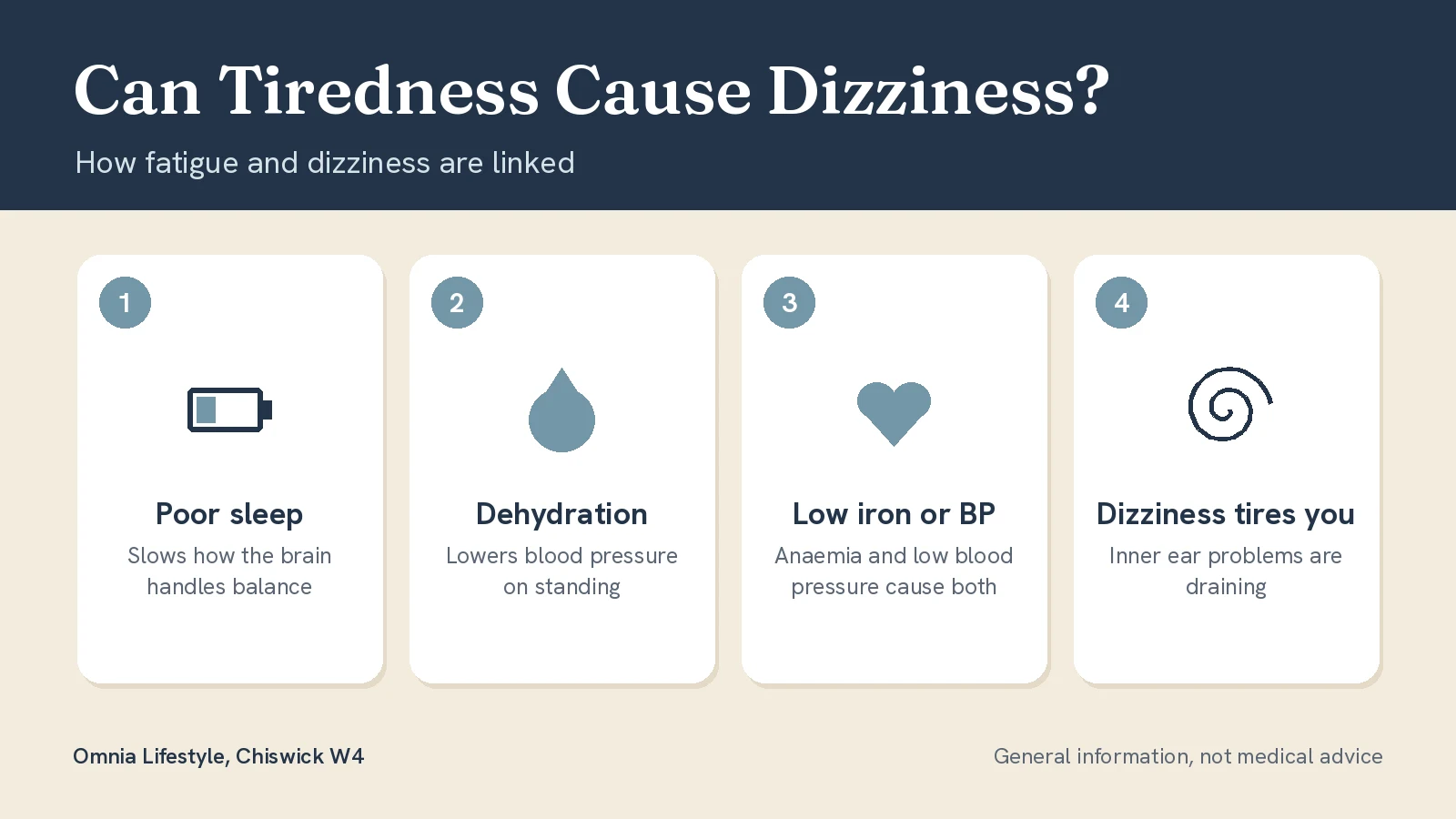
Yes, tiredness can cause dizziness. Lack of sleep slows how the brain processes balance signals, and being run down often goes with dehydration, skipped meals and lower blood pressure, all of which can make you light-headed. Dizziness can also cause fatigue, because inner ear problems make the brain work harder to keep you balanced. Common causes of both include anaemia, low blood pressure, dehydration, an underactive thyroid, recovery from a viral illness, anxiety and some medicines. If you feel tired and dizzy for more than a couple of weeks, see your GP.
How tiredness can make you dizzy
- Poor sleep affects balance. Your brain combines signals from your inner ears, eyes and body to keep you steady. When you are sleep deprived, that processing is slower, so you can feel woozy or unsteady.
- Tiredness often comes with dehydration and skipped meals, which lower blood pressure and blood sugar.
- Exhaustion lowers your tolerance to other triggers, such as standing up quickly, heat or alcohol.
- Lack of sleep can trigger vestibular migraine, a common cause of recurring dizziness.
- Existing balance problems feel worse when you are tired, because the brain has less capacity to compensate.
Conditions that cause both tiredness and dizziness
- Anaemia, often from low iron, which can also cause breathlessness and pale skin
- Low blood pressure and light-headedness on standing
- Dehydration, including after illness, heat or exercise
- Low blood sugar, and blood sugar swings in diabetes
- An underactive thyroid
- Recovery from a viral illness, including long COVID
- Postural tachycardia syndrome (PoTS), where the heart rate rises abnormally on standing
- Anxiety and depression, which commonly cause both, as well as poor sleep
- Medicines, including some blood pressure tablets, antidepressants, sedatives and antihistamines
- Pregnancy, especially in the early months
- Heart rhythm problems, which are less common but important if you also have palpitations or faint
Can dizziness cause fatigue?
Yes. When an inner ear problem such as vestibular neuritis, BPPV or PPPD disrupts balance, the brain has to work much harder to keep you upright and your vision steady. Many people describe feeling mentally and physically exhausted, especially in busy places. Dizziness can also disturb sleep, increase anxiety and lead you to move less, all of which add to fatigue. Treating the cause of the dizziness, usually with vestibular rehabilitation, often improves energy too.
What you can do
- Aim for regular sleep and wake times. See what insomnia is if sleep is a struggle
- Drink regularly through the day and eat regular meals
- Get up slowly, sitting for a minute before standing
- Keep gently active, as resting too much makes both fatigue and balance worse
- Limit alcohol and late caffeine
- Keep a diary of when dizziness happens, how you slept and what you ate
- Ask your GP or pharmacist whether any of your medicines could be contributing
What your GP may check
Your GP may check your blood pressure lying and standing, listen to your heart and arrange blood tests such as a full blood count, iron stores, thyroid function, vitamin B12 and blood sugar. An ECG may be done if you have palpitations or have fainted. If the dizziness is spinning or unsteadiness, a vestibular assessment can check for an inner ear cause.
When to seek medical help
Call 999 if dizziness and tiredness come with:
- Drooping of the face, weakness or numbness in an arm or leg, or slurred speech
- Chest pain, breathlessness, or a racing or irregular heartbeat
- Fainting where the person does not come round quickly
- A sudden, severe headache
Get same-day medical advice, from your GP or NHS 111, if:
- You faint, especially during exercise
- You have been vomiting or had diarrhoea and cannot keep fluids down
- You have very heavy bleeding, including heavy periods, with dizziness
See your GP if:
- Tiredness and dizziness last more than two weeks
- You also have weight loss, night sweats, breathlessness or very heavy periods
- Low mood or anxiety is part of the picture
- Symptoms started after a new medicine
Frequently asked questions
Can lack of sleep cause vertigo?
Lack of sleep does not cause inner ear conditions such as BPPV, but it can trigger vestibular migraine and make existing dizziness feel worse.
Can low iron make you dizzy and tired?
Yes. Iron deficiency anaemia is a common cause of both, particularly in women with heavy periods. A blood test can check.
Why do I feel dizzy and tired after eating?
Blood pressure can dip after a large meal, especially in older adults. Blood sugar swings after sugary meals can also cause tiredness and light-headedness.
Should I exercise if I feel tired and dizzy?
Gentle activity usually helps, but stop if you feel faint, and avoid exercise if you have chest pain or palpitations until you have seen a doctor.
Dizziness assessment in Chiswick
Dizziness and balance problems are assessed at Omnia Lifestyle in Chiswick, W4, close to Turnham Green station, on bus routes 94, E3 and 272. Limited parking is available on request when booking. Our Vestibular First service checks for inner ear causes and provides balance rehabilitation, and home visits are available if you are too dizzy to travel. For persistent tiredness, our fatigue page explains the tests and support available.
Read more about balance and dizziness and fatigue, see why you may be tired all the time, why you may feel light-headed and vestibular rehabilitation for chronic dizziness, explore Vestibular First, physiotherapy and home visits, or book an assessment.
This article is general information, not medical advice. If you have any of the warning signs listed above, seek medical attention.


.jpg)
.jpg)