




Feeling dizzy is unsettling, whether the room seems to spin, you feel light-headed or you simply feel off balance. The good news is that most dizziness passes quickly, there are simple steps that help in the moment, and the causes that keep it coming back are usually treatable.
This guide explains what to do when dizziness starts, how to stop it coming back, which treatments fix the underlying cause, and the warning signs that need urgent help.
Quick answer
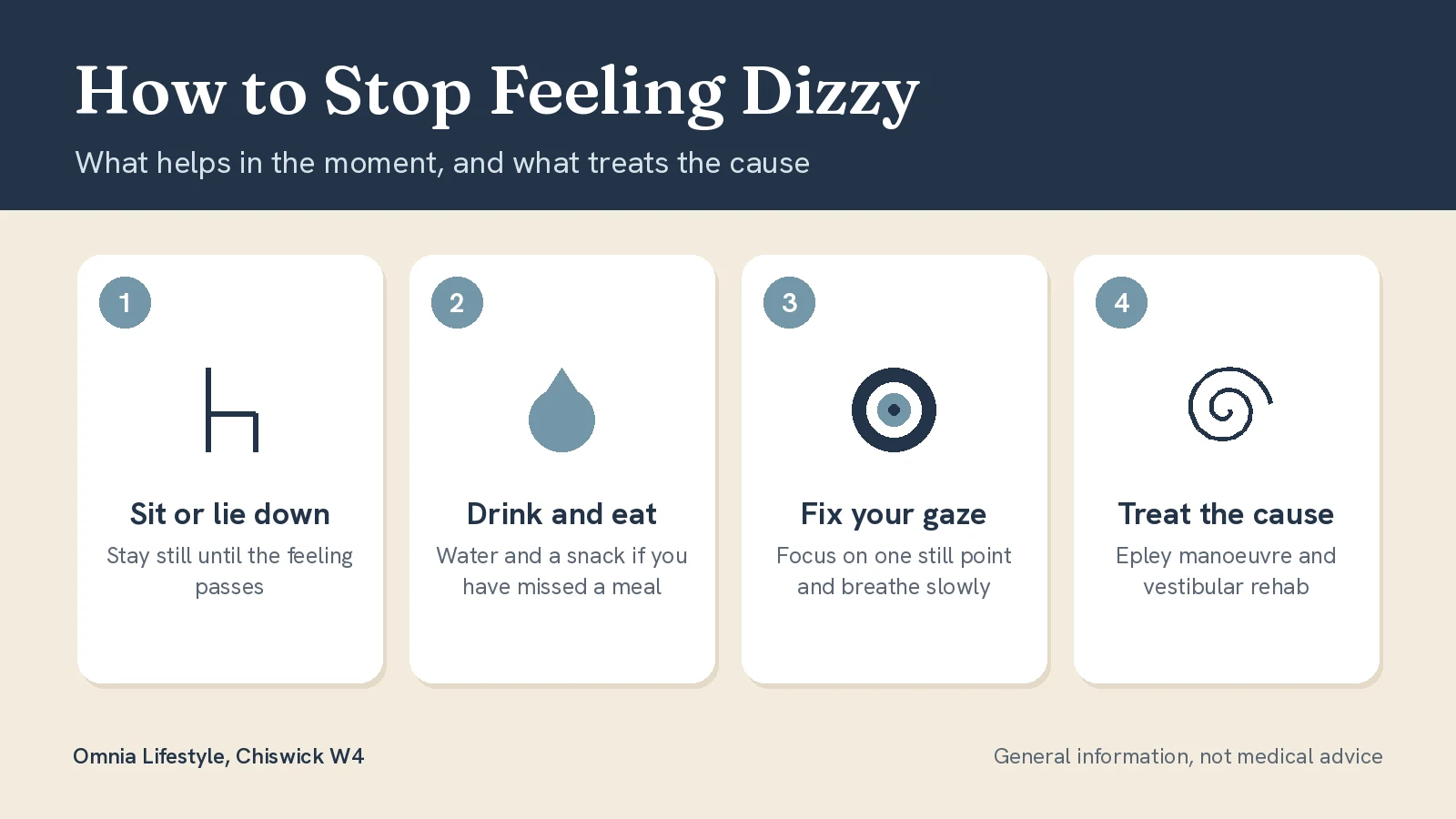
To stop feeling dizzy right now, sit or lie down straight away, keep still, fix your eyes on one point and breathe slowly. Drink some water and eat something if you have not eaten. Get up slowly when it passes. To stop dizziness coming back, the cause needs treating: the Epley manoeuvre for BPPV, vestibular rehabilitation exercises for most other inner ear problems, and a GP review for dizziness linked to blood pressure, blood sugar or medicines. Call 999 if dizziness comes with face, arm or speech changes, a sudden severe headache or chest pain.
What to do the moment you feel dizzy
- Sit or lie down straight away. This is the most important step, as it prevents falls and helps blood reach your brain if you feel faint.
- Keep still and keep your head still until the worst passes, especially if the room is spinning.
- Fix your gaze on a single still point rather than looking around.
- Breathe slowly, making each breath out longer than the breath in. Fast breathing makes light-headedness worse.
- Drink some water, and eat something if you have skipped a meal or have diabetes and may be running low.
- Loosen tight clothing and move somewhere cooler if you are hot.
- Get up in stages. Sit for a minute, then stand, holding on to something steady.
How to stop feeling dizzy when you stand up
Light-headedness on standing is usually caused by a brief drop in blood pressure. If you feel it coming on, sit or lie down, or try muscle tensing: cross your legs and squeeze your thigh and buttock muscles, or grip your hands together and pull, for 30 seconds or so. To prevent it, stand up slowly, drink enough fluids through the day, avoid long hot showers and standing still for long periods, and keep alcohol low. If it happens often, ask your GP to check your blood pressure lying and standing and to review your medicines. For more on this type of dizziness, see why you may feel light-headed.
How to avoid dizziness day to day
- Drink regularly through the day, more in hot weather and after exercise
- Eat regular meals rather than going long periods without food
- Keep alcohol within low-risk limits
- Get enough sleep, as tiredness makes dizziness more likely
- Turn on a light if you get up at night, and keep floors clear to reduce the risk of falls
- Keep moving. Avoiding head movements and activity can slow recovery from inner ear problems
- Ask your GP or pharmacist whether any of your medicines could be contributing. Do not stop a prescribed medicine without advice
How to get rid of dizziness for good: treat the cause
Dizziness that keeps coming back usually has a specific cause, and treatment depends on what that is. For the full range of causes, see what causes vertigo and why you might feel dizzy.
- BPPV. Brief spinning triggered by rolling over, looking up or bending down. A repositioning manoeuvre such as the Epley manoeuvre moves the loose crystals back into place and often resolves it in one to three sessions.
- Vestibular neuritis and labyrinthitis. After the first few days, vestibular rehabilitation exercises help the brain compensate, and recovery is usually faster if you keep active.
- Vestibular migraine. Managing triggers such as missed sleep, missed meals and stress, with migraine treatment from your GP where needed.
- Meniere's disease. Managed by your GP and an ear, nose and throat specialist. Some people find a low-salt diet helps.
- Persistent postural-perceptual dizziness (PPPD) and anxiety-related dizziness. Vestibular rehabilitation, often combined with support for anxiety. See whether stress can cause vertigo.
- Blood pressure, blood sugar, anaemia and medicines. These need your GP, who may adjust medicines or arrange tests.
Exercises that help dizziness
Vestibular rehabilitation uses specific exercises to retrain the balance system. They include gaze stabilisation (keeping your eyes on a target while moving your head), habituation (repeating movements that provoke mild dizziness so the brain gets used to them) and balance and walking practice. Brandt-Daroff exercises can help some people with BPPV at home. Exercises work best when they are matched to the cause, so an assessment first is worthwhile. For older adults, balance exercises and tai chi reduce the risk of falls.
Should I take tablets for dizziness?
Medicines such as prochlorperazine or some antihistamines can ease severe dizziness and sickness for a few days. They are not recommended for longer, because they can slow the brain's natural recovery from inner ear problems. Speak to your GP or pharmacist before taking anything, particularly if you are older, pregnant or take other medicines.
When to seek medical help
Call 999 if dizziness comes with:
- Drooping of the face, weakness or numbness in an arm or leg, or slurred speech
- Sudden loss of vision, double vision, or difficulty walking or swallowing
- A sudden, severe headache
- Chest pain, a racing or irregular heartbeat, breathlessness, or fainting that you do not quickly recover from
Get same-day medical advice, from your GP or NHS 111, if:
- You have sudden hearing loss in one ear
- Dizziness follows a head injury
- You have a high temperature or stiff neck, or are vomiting and cannot keep fluids down
- You faint during exercise
See your GP if:
- Dizziness keeps coming back or has not improved within a week
- You have hearing changes, ringing or fullness in one ear
- You have had a fall or are worried about falling
- You think a medicine may be the cause
Frequently asked questions
Is it better to lie down or sit when dizzy?
Lying down is best if you feel faint, ideally with your legs raised. If the room is spinning, sitting or lying still in whichever position feels most comfortable helps until it settles.
Does drinking water help dizziness?
Yes, if dehydration is part of the cause. Water helps restore blood volume, which can ease light-headedness. It will not stop vertigo caused by an inner ear problem.
What should I eat when I feel dizzy?
If you have not eaten for a while, a small snack with some carbohydrate, such as a piece of fruit or a few crackers, can help. People with diabetes should follow their own plan for low blood sugar.
How long does dizziness take to go away?
Light-headedness usually passes within seconds to minutes. BPPV spins last under a minute but recur until treated, and inner ear inflammation can take days to weeks. See how long vertigo lasts.
Dizziness treatment in Chiswick
Dizziness and balance problems are assessed and treated at Omnia Lifestyle in Chiswick, W4, close to Turnham Green station, on bus routes 94, E3 and 272. Limited parking is available on request when booking. Our Vestibular First service offers specialist assessment, the Epley manoeuvre and balance rehabilitation from £50, and home visits are available if you are too dizzy to travel. We refer to your GP if anything needs further investigation.
Read more about balance and dizziness, see whether your dizziness is BPPV, what happens at a vestibular assessment and whether physiotherapy helps dizziness, explore Vestibular First, physiotherapy, tai chi and home visits, or book an assessment.
This article is general information, not medical advice. If you have any of the warning signs listed above, seek medical attention.



.jpg)
.jpg)