




A panic attack is a sudden rush of intense fear and physical symptoms, such as a pounding heart, breathlessness and dizziness, that comes on quickly and often seems to come out of nowhere. Panic attacks are frightening, and many people fear they are having a heart attack or are about to collapse. They are not dangerous in themselves, they pass, and they are very treatable.
This guide explains what a panic attack feels like, how to get through one, how to tell it apart from a heart problem, and how panic disorder is treated.
Quick answer
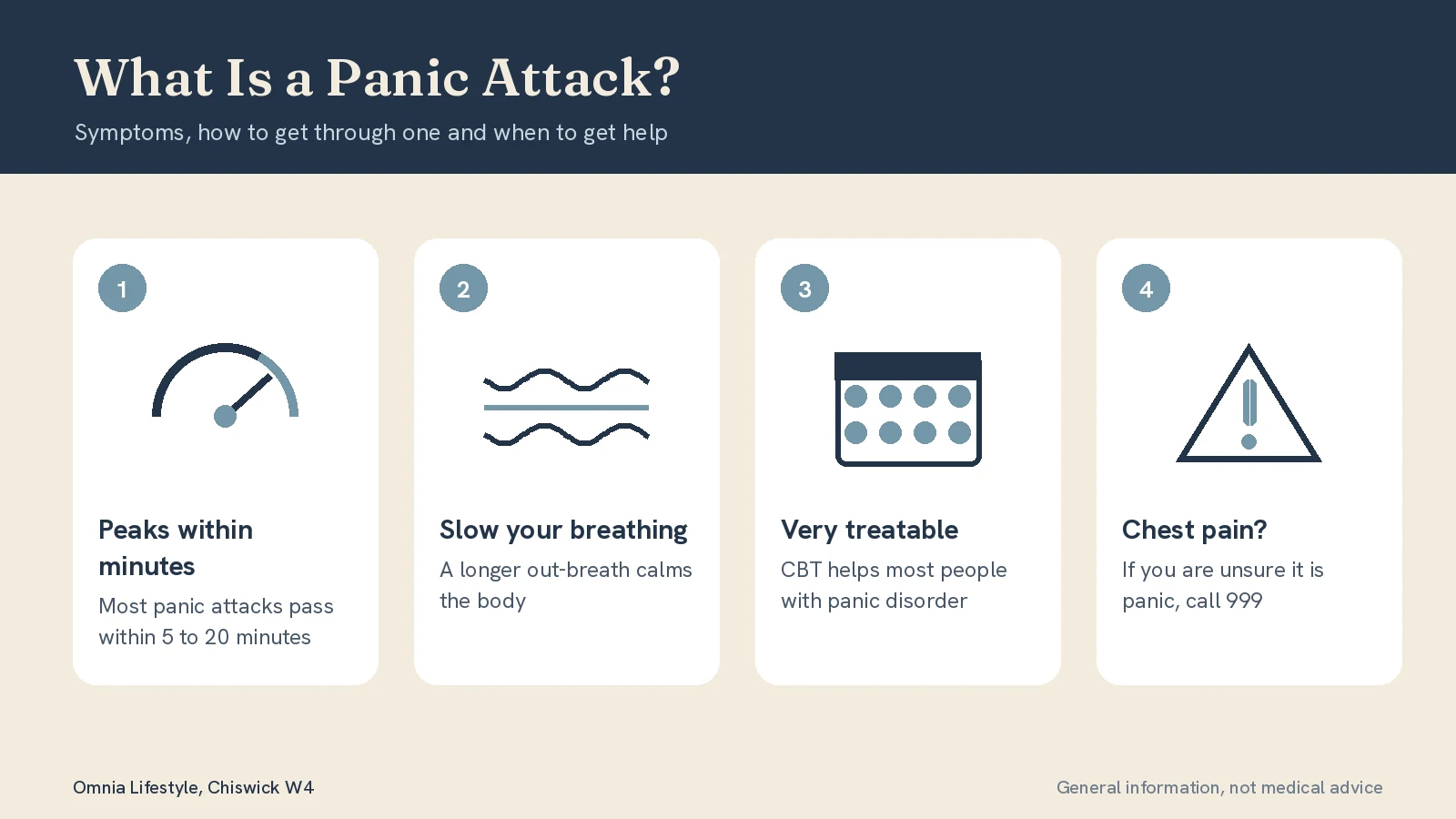
A panic attack is a surge of the body's fight-or-flight response, causing a racing heart, fast breathing, sweating, trembling, chest tightness, dizziness and a strong sense of fear. Most panic attacks peak within about 10 minutes and pass within 5 to 20 minutes. Slow breathing and staying where you are until it passes usually help. If you have chest pain and are not sure whether it is panic, call 999.
What a panic attack feels like
- A racing, pounding or irregular heartbeat
- Shortness of breath or a feeling of choking
- Chest tightness or pain
- Sweating, trembling, hot flushes or chills
- Feeling dizzy, light-headed or faint
- Nausea or a churning stomach
- Tingling or numbness in the fingers or lips
- Feeling detached from yourself or your surroundings
- A sense of dread, or fear of losing control or dying
Panic attack or anxiety attack?
"Panic attack" is the medical term for a sudden, intense episode that peaks quickly. People often use "anxiety attack" to describe either a panic attack or a period of anxiety that builds more gradually in response to stress. Both are real and both respond to the same techniques and treatments.
What causes panic attacks?
Panic attacks are caused by the body's alarm system firing when there is no real danger. They can follow stress, life changes or a period of anxiety, and caffeine, alcohol, lack of sleep and some recreational drugs make them more likely. Fear of the physical sensations often fuels the attack: a racing heart is interpreted as danger, which increases fear and makes the heart race faster.
How to get through a panic attack
- Stay where you are if it is safe. The attack will pass, and leaving can make you more likely to avoid that place in future.
- Slow your breathing. Breathe in through your nose for four and out through your mouth for six, focusing on the out-breath.
- Remind yourself what is happening. These feelings are uncomfortable but not dangerous, and they will pass.
- Ground yourself by naming things you can see, hear and touch around you.
- Let the feelings rise and fall rather than fighting them, which often makes them stronger.
Panic attack or heart attack?
Some symptoms overlap, so it is understandable to worry. A heart attack typically causes chest pain or pressure that may spread to the arm, jaw, neck or back, often with sweating, breathlessness or nausea, and it does not ease with slow breathing. Panic symptoms usually peak quickly and settle within minutes. Do not try to decide on your own if you are unsure. If you have chest pain and are not certain it is panic, especially if it is your first episode, call 999.
What is panic disorder?
Panic disorder is when panic attacks keep happening unexpectedly and you spend a lot of time worrying about the next one, often avoiding places or situations where attacks have happened. It is common and very treatable. NICE recommends CBT, which helps you understand the panic cycle and gradually face feared sensations and situations, along with guided self-help. Some people are also offered medicine, usually an SSRI antidepressant, through their GP.
When to get help
Call 999 if you have chest pain that spreads to your arm, jaw, neck or back, chest pain with sweating, breathlessness or nausea, or if you are not sure whether your symptoms are panic.
See your GP or refer yourself to talking therapy if:
- You have had more than one panic attack
- You are worrying about having another attack
- You are avoiding places or activities because of panic
- You have not had your symptoms checked by a doctor before
Get urgent help if you feel unable to keep yourself safe. Call 999 or go to A&E. For urgent mental health support, call NHS 111 and choose the mental health option, or call Samaritans free on 116 123, day or night.
Frequently asked questions
How long does a panic attack last?
Most panic attacks peak within about 10 minutes and pass within 5 to 20 minutes, although you may feel tired and shaky afterwards.
Can a panic attack hurt you?
A panic attack feels frightening but is not dangerous in itself. Any new chest pain should still be checked by a doctor.
Can you have a panic attack in your sleep?
Yes. Night-time panic attacks can wake you with a racing heart and fear. They are common in people with panic disorder and respond to the same treatment.
Should I breathe into a paper bag?
This is no longer recommended. Slow breathing with a longer out-breath is safer and more effective.
Panic and anxiety support in Chiswick
Support for panic and anxiety is available at Omnia Lifestyle in Chiswick, W4, close to Turnham Green station, on bus routes 94, E3 and 272. Limited parking is available on request when booking. This includes clinical psychology with Prof (Dr) Diwakar Sukul, Chartered Clinical Psychologist, in person or by secure video, alongside calming therapies such as yoga and acupuncture. We can also signpost you to your GP or NHS Talking Therapies.
Read more about stress and anxiety, see how to cope with anxiety, anxiety symptoms and why you might feel dizzy, explore clinical psychology and acupuncture, or book an appointment.
This article is general information, not medical advice. If you have any of the warning signs listed above, seek help.

.jpg)
.jpg)