




Anxiety is a normal human response to pressure and uncertainty, and in small amounts it can even help. When it becomes constant, out of proportion or hard to control, it can affect sleep, work, relationships and physical health. The good news is that anxiety is one of the most treatable mental health problems, and there is a lot you can do yourself alongside professional support.
This guide explains how to cope with anxiety in the moment, the daily habits that help over time, the treatments with the best evidence and where to get help.
Quick answer
In the moment, slow your breathing with a longer out-breath, ground yourself by focusing on your senses and move your body. Over time, regular exercise, good sleep, less caffeine and alcohol, and gradually facing situations you have been avoiding all reduce anxiety. Cognitive behavioural therapy (CBT) has the strongest evidence, and in England you can refer yourself to NHS Talking Therapies. If anxiety is affecting your daily life, speak to your GP.
What to do in the moment
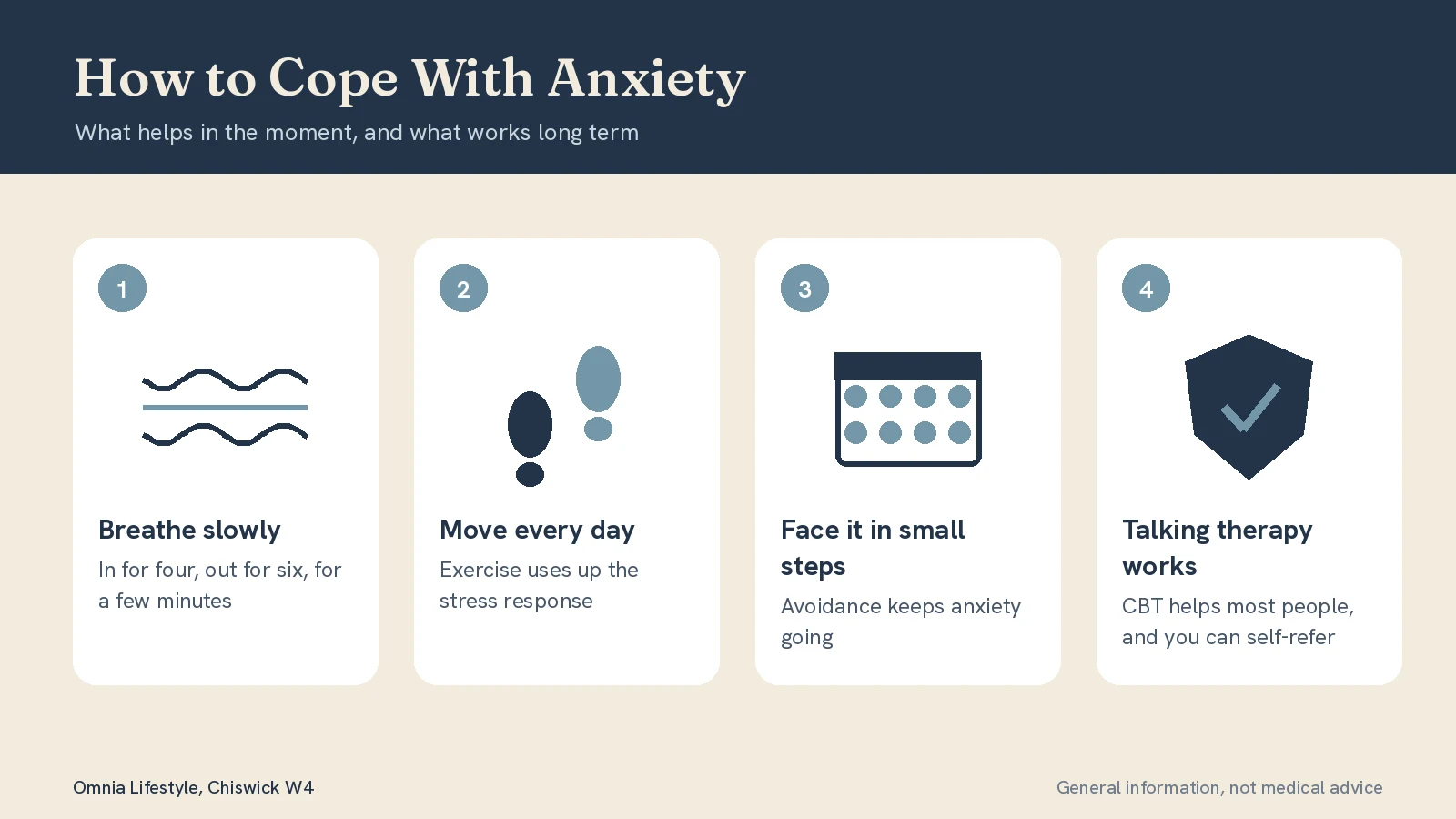
- Slow your breathing. Breathe in through your nose for a count of four and out slowly for a count of six, for a few minutes. A longer out-breath calms the body's stress response.
- Ground yourself. Name five things you can see, four you can hear, three you can touch, two you can smell and one you can taste.
- Relax your body. Drop your shoulders, unclench your jaw and open your hands.
- Move. A short brisk walk helps use up the adrenaline that anxiety produces.
- Name it. Telling yourself "this is anxiety, and it will pass" can reduce its grip.
Daily habits that reduce anxiety
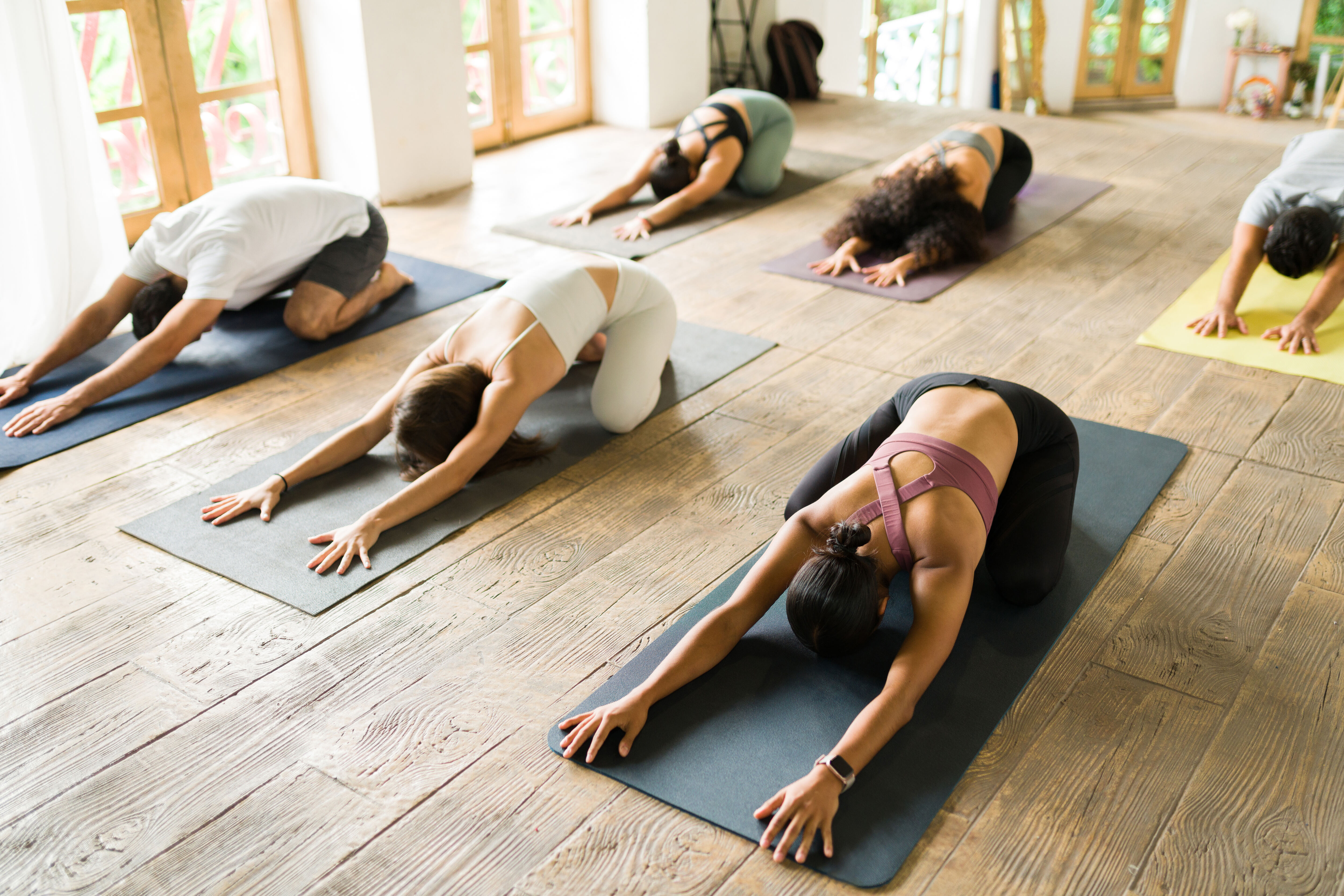
- Exercise regularly. Aim for at least 150 minutes of moderate activity a week. Walking, swimming, cycling, yoga and tai chi all help.
- Protect your sleep. Poor sleep and anxiety feed each other. See why you cannot sleep and what to do.
- Cut down on caffeine, which can mimic and worsen the physical feelings of anxiety
- Keep alcohol low. It may relax you briefly but often makes anxiety worse the next day.
- Limit news and social media if they leave you more worried
- Stay connected. Talking to people you trust eases the load.
- Try a worry time. Set aside 15 minutes a day to write down worries, and postpone them to that time when they come up.
Face things gradually
Avoiding situations that make you anxious brings short-term relief but keeps anxiety going in the long run, because you never learn that you can cope. Breaking a feared situation into small steps and facing each one, repeating it until it feels easier, is one of the most effective ways to reduce anxiety.
Treatments that work
- Self-help based on CBT, using books, online courses or apps, is a good first step for milder anxiety. The NHS Every Mind Matters website has free resources.
- Talking therapy. CBT and applied relaxation have the strongest evidence for generalised anxiety. In England you can refer yourself to NHS Talking Therapies without seeing your GP.
- Medicine. If anxiety is more severe or has not improved with therapy, your GP may suggest medicine, usually a type of antidepressant called an SSRI. Sedatives such as diazepam are only used for short periods in a crisis.
- Complementary approaches. Yoga, tai chi and acupuncture help some people feel calmer. The evidence is more modest, so they work best alongside, rather than instead of, psychological support.
When to get help
See your GP or refer yourself to talking therapy if:
- Anxiety is affecting your work, relationships or daily life
- You are avoiding places, people or situations because of anxiety
- You are having panic attacks
- You are using alcohol or other substances to cope
- You also feel low, hopeless or unable to enjoy things
Get urgent help if you feel unable to keep yourself safe. Call 999 or go to A&E. For urgent mental health support, call NHS 111 and choose the mental health option, or call Samaritans free on 116 123, day or night.
Frequently asked questions
Can anxiety be cured?
Many people recover fully, and most people with anxiety find that treatment reduces it to a level that no longer controls their life. Skills learned in CBT keep working after therapy ends.
How long does it take to feel better?
Some people notice a difference within a few weeks of starting self-help or therapy. A full course of CBT usually runs for several months.
Does exercise help anxiety?
Yes. Regular exercise reduces anxiety symptoms for many people and improves sleep and mood. Even short daily walks help.
What makes anxiety worse?
Avoidance, poor sleep, caffeine, alcohol and constantly seeking reassurance tend to make anxiety worse over time.
Anxiety support in Chiswick
Support for stress and anxiety is available at Omnia Lifestyle in Chiswick, W4, close to Turnham Green station, on bus routes 94, E3 and 272. Limited parking is available on request when booking. This includes clinical psychology with Prof (Dr) Diwakar Sukul, Chartered Clinical Psychologist, in person or by secure video, alongside calming therapies such as yoga, tai chi and acupuncture. We can also signpost you to your GP or NHS Talking Therapies if that is the better route.
Read more about stress and anxiety, see what a panic attack is, anxiety symptoms and how stress affects your body, explore clinical psychology, yoga and acupuncture, or book an appointment.
This article is general information, not medical advice. If you have any of the warning signs listed above, seek help.

.jpg)
.jpg)