




Anxiety is the feeling of worry, unease or fear that everyone experiences at times, especially when facing something stressful or uncertain. It becomes a problem when it is intense, lasts a long time, feels out of proportion or starts to affect daily life. Anxiety affects the body as much as the mind, which is why many people first notice it as a physical symptom.
This guide explains the symptoms of anxiety in the body, mind and behaviour, the main types of anxiety disorder, conditions that can mimic anxiety and when to get help.
Quick answer
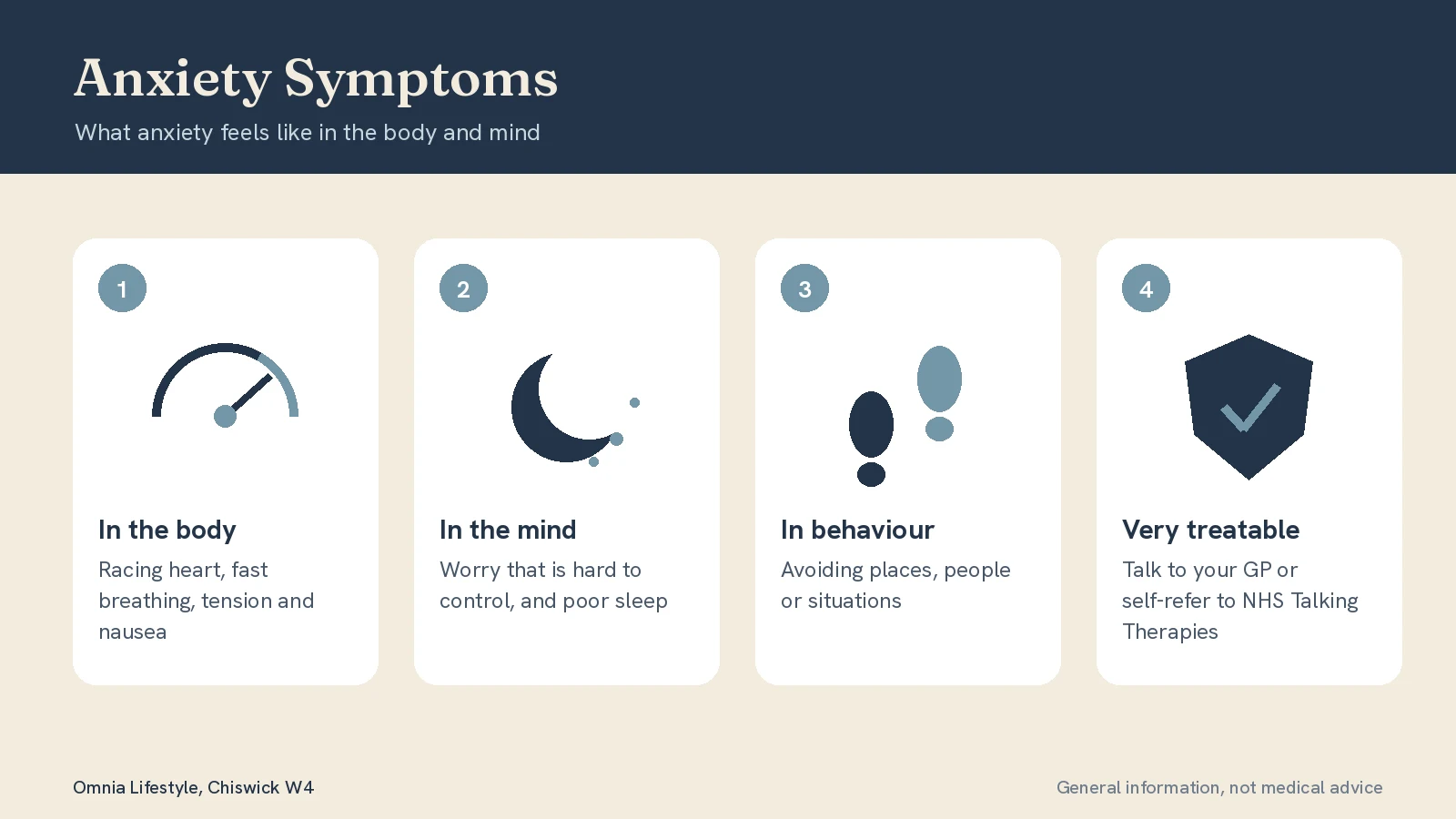
Anxiety symptoms include a racing heart, fast breathing, sweating, trembling, muscle tension, dizziness, nausea and poor sleep, along with constant worry, restlessness, irritability and difficulty concentrating. Many people also start avoiding situations that trigger anxiety. If anxiety is affecting your daily life, it is very treatable: speak to your GP or, in England, refer yourself to NHS Talking Therapies.
Is anxiety a mental illness?
Feeling anxious is a normal emotion, not an illness. Anxiety disorders, where anxiety is persistent, hard to control and affects daily life, are recognised mental health conditions. They are among the most common, affecting millions of people in the UK, and most people improve with treatment.
Physical symptoms
- A fast, pounding or irregular heartbeat
- Fast or shallow breathing, or feeling short of breath
- Sweating, trembling or hot flushes
- Muscle tension, aches, tension headaches and jaw clenching
- Dizziness or light-headedness
- Nausea, butterflies, stomach upset or needing the toilet more often
- Tiredness and difficulty sleeping
- Pins and needles, or a dry mouth
Psychological symptoms
- Constant worry that is hard to control
- Feeling restless, tense or on edge
- Difficulty concentrating, or your mind going blank
- Irritability
- Expecting the worst, or a sense of dread
- Feeling detached from yourself or your surroundings
Changes in behaviour
- Avoiding places, people or situations
- Seeking frequent reassurance from others
- Checking things repeatedly
- Using alcohol, smoking or other substances to cope
- Withdrawing from work or social life
Types of anxiety disorder
- Generalised anxiety disorder (GAD). Excessive, hard-to-control worry about many everyday things, on most days for at least six months.
- Panic disorder. Repeated, unexpected panic attacks and fear of having more. See what a panic attack is.
- Social anxiety disorder. Intense fear of being judged or embarrassed in social situations.
- Health anxiety. Persistent worry about being seriously ill, despite reassurance.
- Phobias. Intense fear of a specific object or situation, such as flying or needles.
Obsessive-compulsive disorder (OCD) and post-traumatic stress disorder (PTSD) also involve high levels of anxiety and are treated by specialist therapies.
Conditions that can mimic anxiety
Some physical problems cause symptoms similar to anxiety, so it is worth having them checked, especially if symptoms are new. These include an overactive thyroid, heart rhythm problems, low blood sugar, too much caffeine, alcohol withdrawal, the perimenopause and side effects of some medicines. Your GP may suggest blood tests.
How anxiety is assessed
Your GP will ask about your symptoms, how long you have had them and how they affect your life, and may use a short questionnaire such as the GAD-7. They will also check for physical causes. You do not need a formal diagnosis to start helpful self-help or talking therapy. For practical steps, see how to cope with anxiety.
When to get help
See your GP or refer yourself to talking therapy if:
- Anxiety has lasted several weeks or keeps coming back
- It is affecting your work, relationships or daily life
- You are avoiding situations or having panic attacks
- You also feel low or hopeless
Call 999 if you have chest pain and are not sure whether it is anxiety.
Get urgent help if you feel unable to keep yourself safe. Call 999 or go to A&E. For urgent mental health support, call NHS 111 and choose the mental health option, or call Samaritans free on 116 123, day or night.
Frequently asked questions
Can anxiety cause physical symptoms?
Yes. Anxiety triggers the body's stress response, which can cause a racing heart, breathlessness, dizziness, stomach problems and muscle tension.
Can anxiety make you feel dizzy?
Yes, especially with fast breathing. It is still worth having other causes checked. See why you might feel dizzy.
How do I know if I have anxiety?
If worry or physical symptoms of anxiety are frequent, hard to control and affect your daily life, speak to your GP, who can assess you and rule out physical causes.
Can anxiety affect sleep?
Yes. Anxiety commonly makes it hard to fall asleep or causes early waking, and poor sleep in turn makes anxiety worse.
Anxiety support in Chiswick
Support for stress and anxiety is available at Omnia Lifestyle in Chiswick, W4, close to Turnham Green station, on bus routes 94, E3 and 272. Limited parking is available on request when booking. This includes clinical psychology with Prof (Dr) Diwakar Sukul, Chartered Clinical Psychologist, in person or by secure video, alongside calming therapies such as yoga, tai chi and acupuncture.
Read more about stress and anxiety and depression support, see how stress affects your body and whether acupuncture can help anxiety, explore clinical psychology, tai chi and acupuncture, or book an appointment.
This article is general information, not medical advice. If you have any of the warning signs listed above, seek help.


.jpg)
.jpg)