


Book at our Chiswick clinic
Physiotherapy
A swollen knee is a sign that something inside or around the joint is irritated. It might look puffy all over, feel tight when you bend it, or have a soft, squashy lump at the front or back. Swelling often comes with pain and stiffness, and it can make walking and stairs difficult.
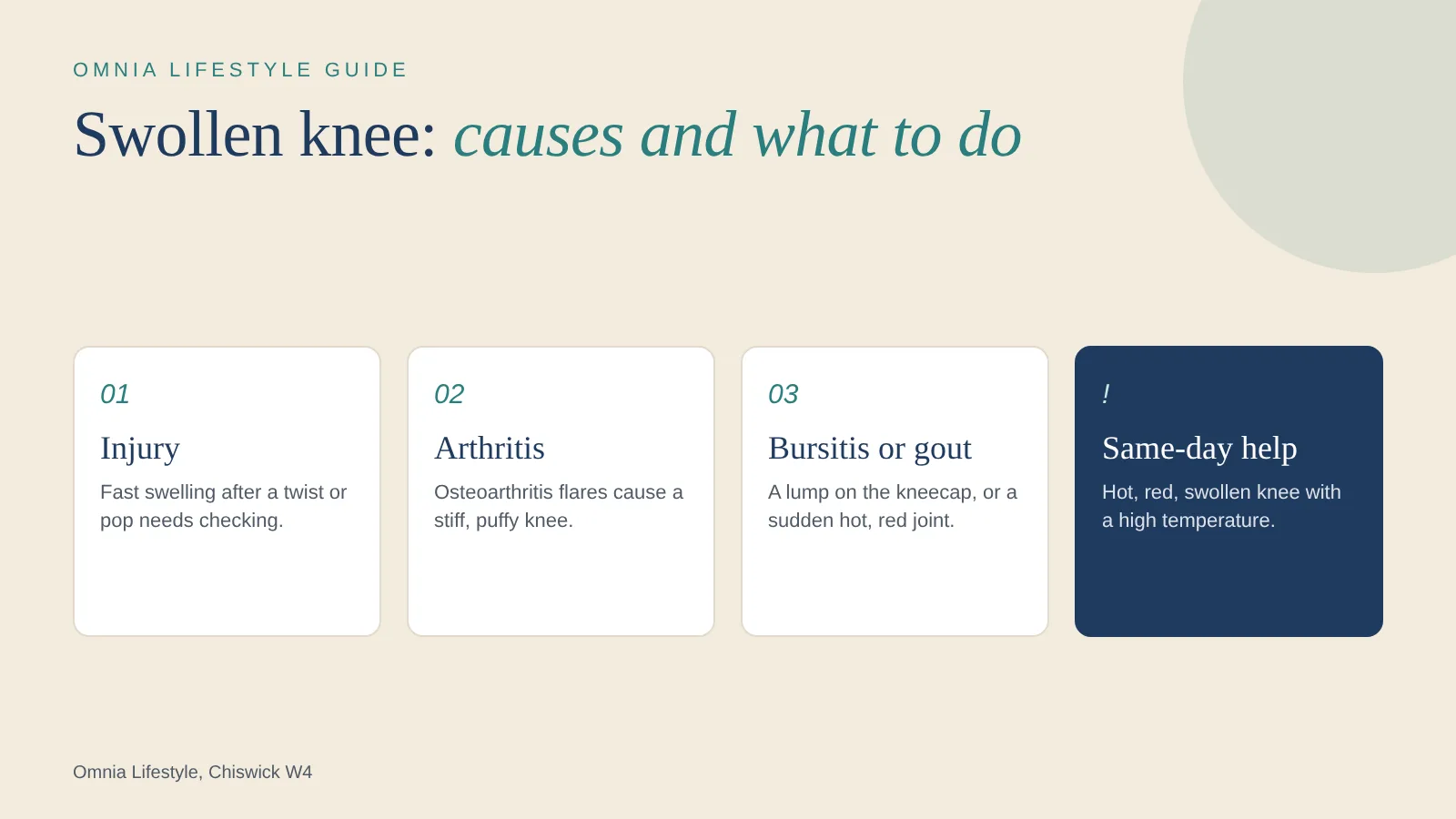
The cause can be an injury, arthritis, a bursa, gout or, rarely, an infection. How quickly the swelling came on, and whether you injured the knee, are the most useful clues. This guide explains the common causes of a swollen and painful knee, how to reduce swelling, and when you need to be seen urgently.
Quick answer
A swollen, painful knee is usually caused by an injury such as a ligament or meniscus tear, osteoarthritis, bursitis or gout. Swelling within a few hours of an injury suggests bleeding into the joint and needs prompt assessment. A hot, red, swollen knee with a high temperature can be an infection: get same-day help. Otherwise, rest, ice, raising the leg and gentle movement usually help while the cause is treated.
What causes a swollen knee and pain?
Knee swelling is usually extra fluid inside the joint, sometimes called water on the knee, or fluid in one of the small cushioning sacs (bursae) around it. The body produces this fluid in response to injury, wear or inflammation.
Swollen knee after an injury
- Swelling within a few hours: often bleeding into the joint, which can follow an anterior cruciate ligament (ACL) tear, a fracture or a dislocated kneecap. These injuries need assessment within a day or two. See torn ACL.
- Swelling that builds over the next day: more typical of a meniscus (cartilage) tear or a ligament sprain, especially after a twist.
- Swelling with locking or giving way: suggests something mechanical inside the joint, such as a torn meniscus.
Swollen, painful knee with no injury
- Osteoarthritis: a flare can cause the knee to swell, ache and stiffen, often after more walking or kneeling than usual. Read about the stages of osteoarthritis.
- Gout and pseudogout: crystals in the joint cause sudden, severe pain with a hot, red, swollen knee, often overnight. See gout.
- Bursitis: a soft, swollen lump on the front of the kneecap, common in people who kneel a lot. It is sometimes called housemaid's knee.
- Baker's cyst: a fluid-filled swelling at the back of the knee, usually linked to arthritis or a meniscus problem. See pain behind the knee.
- Inflammatory arthritis: rheumatoid, psoriatic and reactive arthritis can cause swelling in one or both knees, often with other joints affected and morning stiffness lasting more than 30 minutes.
- Overuse: a big jump in running, walking or squatting can leave the knee puffy and sore.
- Infection: an infected joint or bursa causes a hot, red, very painful knee, often with a fever. This is an emergency.
When a swollen knee is urgent
Ask for an urgent GP appointment, call NHS 111 or go to A&E if:
- The knee is hot, red and swollen and you have a high temperature or feel shivery and unwell
- The knee swelled up quickly after an injury, or you heard a pop or snap
- You cannot put weight on the leg, or the knee is misshapen
- The knee is locked and will not straighten
- Your calf is also swollen, warm and painful, which can be a blood clot
- You have numbness, tingling or a cold, pale foot
See your GP or a physiotherapist if: the swelling has not gone down after a few days of home care, keeps coming back, or you have swelling in several joints.
How to get rid of swelling in the knee fast
There is no instant fix, because the swelling is the body's response to a problem in the joint. These steps help it settle more quickly, particularly in the first few days:
- Rest from aggravating activities such as running, kneeling and deep squatting, but keep walking short distances if you can
- Use ice: a bag of frozen peas wrapped in a tea towel, for up to 20 minutes every two to three hours
- Raise the leg on pillows when you sit or lie down, ideally with the knee above the level of your heart
- Use light compression: a tubular or elastic bandage can help, but it should not feel tight, and take it off at night
- Keep the knee moving gently: tightening the thigh muscle and slowly bending and straightening the knee helps pump fluid away
- Avoid heat, alcohol and massage on the knee for the first two to three days after an injury, as they can increase swelling
- Consider painkillers such as paracetamol or ibuprofen if they are suitable for you
Once the first few days have passed, gentle strengthening is the next step. Our exercises for knee pain guide includes safe starting exercises.
Treatment for swollen knee pain
Treatment depends on the cause:
- Sprains, meniscus problems and overuse: usually physiotherapy, with exercises to restore movement, strength and confidence, and advice on returning to sport
- Osteoarthritis: exercise, weight management where relevant, and pacing activity. See osteoarthritis treatment
- Gout and inflammatory arthritis: medical treatment from your GP or a specialist, with physiotherapy to keep the joint moving
- Infection: urgent hospital treatment
Sometimes a doctor will draw fluid from the knee with a needle, both to ease pressure and to test the fluid for crystals or infection.
Knee pain without swelling
Knee pain without swelling is common and often less concerning. Typical causes include kneecap pain (patellofemoral pain), tendon problems below or above the kneecap, IT band irritation on the outside of the knee, and pain referred from the hip or lower back. See our guides to knee pain when bending, outer knee pain and inner knee pain.
How we help in Chiswick
At Omnia Lifestyle our HCPC-registered physiotherapists check your knee for signs that need a GP, X-ray or scan, work out what is behind the swelling and pain, and agree a plan to settle the knee and rebuild strength.
- Physiotherapy in Chiswick: 70-minute initial assessment and treatment for £99, follow-ups from £70. Recognised by AXA Health, Aviva, WPA and Vitality.
- Home visit physiotherapy across West London from £110, if a swollen knee makes travelling difficult.
- Pixformance guided training: £50 a session, to build leg strength with real-time feedback on your form once the knee has settled.
Frequently asked questions
Why is my knee swollen and painful with no injury?
The most common reasons are an osteoarthritis flare, bursitis, gout or overuse. A hot, red knee with a fever needs urgent medical help, as it can be an infection.
Should I walk on a swollen knee?
Short, comfortable walks are usually fine and help keep the knee moving. If you cannot put weight on it, or it gives way, get it checked.
How long does knee swelling take to go down?
After a minor strain, swelling often settles within one to two weeks. Swelling that lasts longer, or keeps returning, suggests an underlying problem that should be assessed.
Should I put heat or ice on a swollen knee?
Ice is usually better for a newly swollen knee. Heat can help a stiff, arthritic knee once any fresh swelling has settled.
Is a swollen knee serious?
Most swollen knees are not serious, but rapid swelling after an injury, a hot red knee with a fever, or a knee that locks or cannot take weight needs prompt assessment.
Swollen knee assessment in Chiswick
Swollen and painful knees are assessed and treated at Omnia Lifestyle, 8 to 9 Bedford Corner, The Avenue, Chiswick W4 1LZ, close to Turnham Green station, on bus routes 94, E3 and 272. Limited parking is available on request when booking.
Read more about knee pain and knee pain exercises, explore physiotherapy in Chiswick, or book an assessment.
This article is general information, not medical advice. If you have any of the warning signs listed above, seek urgent medical attention.
Ready to book?
Physiotherapy



.jpg)
.jpg)