


Book at our Chiswick clinic
Physiotherapy
Pain on kneeling or when bending the knee is one of the most common knee complaints. It might be a sore knee after kneeling to garden or clean, a sharp pain when you squat, or an ache at the top of the knee on the stairs. Where the pain is, and what sets it off, gives useful clues to the cause.
This guide explains the common causes of knee pain when bending or kneeling, how to tell them apart, what you can do at home, how a physiotherapist helps and when you need medical advice.
Quick answer
Pain on kneeling is most often caused by irritation of the kneecap joint or swelling of the bursa in front of the kneecap, known as housemaid's knee. Pain in the knee when bending, squatting or using stairs is commonly linked to kneecap pain, osteoarthritis or a meniscus problem, and pain at the back of the knee may be a Baker's cyst. Most cases improve with activity changes, padding and strengthening exercises. Seek urgent help for a hot, red, swollen knee, a fever or a knee that locks.
Pain on kneeling: common causes
Prepatellar bursitis (housemaid's knee)
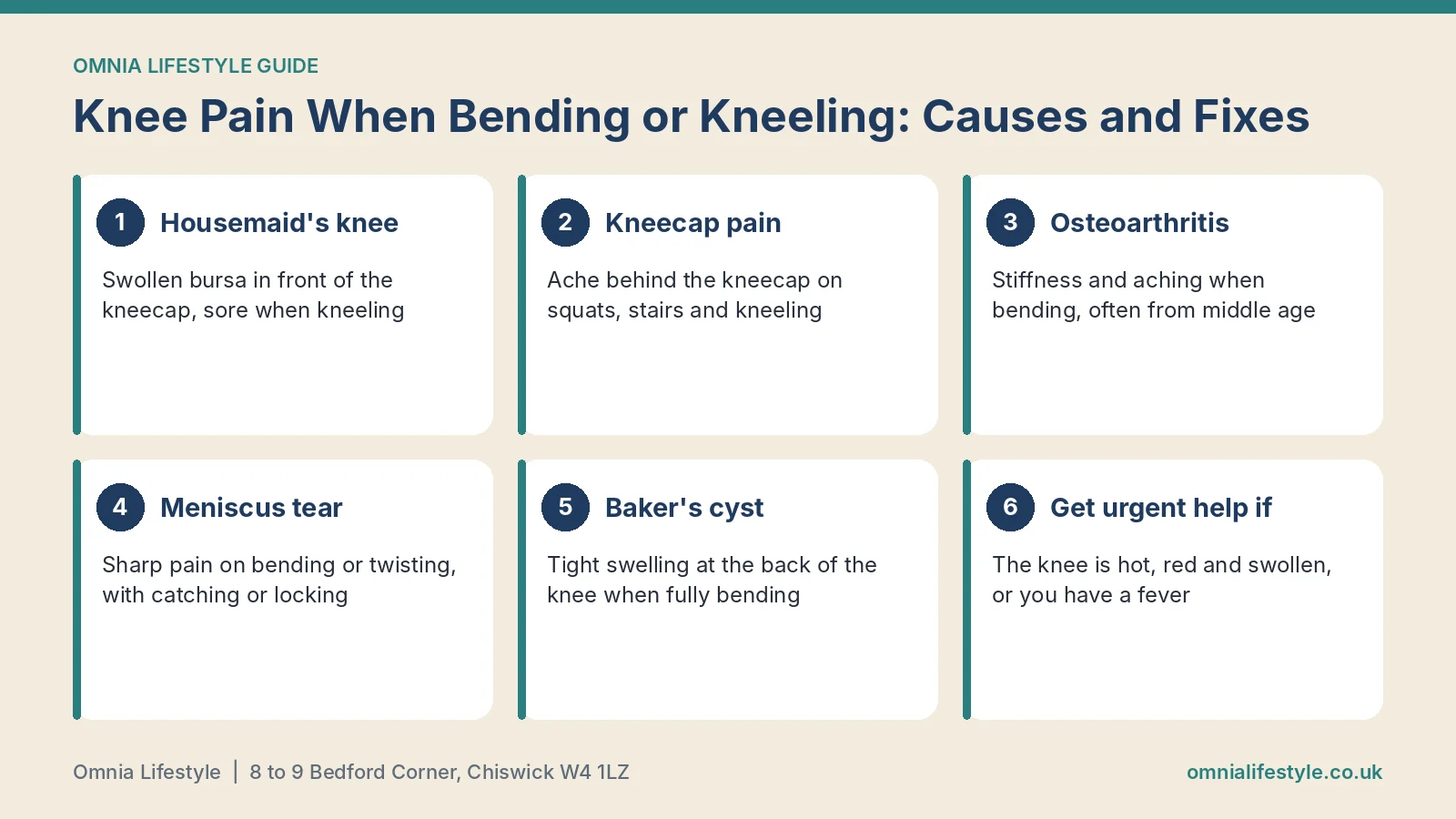
A bursa is a small fluid-filled sac that reduces friction. The prepatellar bursa sits just in front of the kneecap, and repeated or prolonged kneeling can irritate it, causing it to swell. It is common in people who kneel for work, such as plumbers, carpet fitters, cleaners and gardeners.
- A soft, squashy swelling over the front of the kneecap
- Pain in the knee when kneeling, or pressing on the front of the knee
- Usually little pain when walking
A bursa can occasionally become infected, particularly after a cut or graze over the knee. This needs prompt medical attention (see the warning signs below).
Infrapatellar bursitis and tendon irritation
Swelling or tenderness just below the kneecap, over the tendon, can come from a different bursa or from the patellar tendon itself. Kneeling upright puts pressure directly on this area, so the knee hurts after kneeling, especially on hard floors.
Kneecap (patellofemoral) pain
When you kneel, the kneecap is pressed into the thigh bone. If the joint behind the kneecap is irritated, kneeling, squatting and stairs often all hurt. This is one of the most common reasons people say their knees hurt when kneeling.
Pain in knee when bending: what it could be
Patellofemoral pain (runner's knee)
This causes a dull ache around or behind the kneecap that is worse when bending the knee under load: squatting, going down stairs, getting up from a low chair or sitting for a long time with the knees bent. It is common in runners, people who have recently increased activity and teenagers. Our runner's knee exercises guide explains the exercises and running changes that help.
Knee osteoarthritis
From middle age onwards, knee pain when bending and straightening is often linked to osteoarthritis. Typical features include stiffness after rest, aching with activity, a grinding feeling and difficulty kneeling or squatting fully. Exercise and staying active are the core treatments recommended by NICE.
Meniscus problems
The menisci are two cartilage cushions inside the knee. A tear can follow a twisting injury in younger people or develop gradually with age. Clues include:
- Sharp pain while bending the knee, often on the inner or outer side of the joint
- Pain when squatting deeply or twisting
- Swelling that comes on over a day or so
- Catching, or the knee locking so that it will not straighten
Ligament injury
A knee that gave way during sport, with rapid swelling, may have a ligament injury. Bending may be painful and limited for some time. See our guide to a torn ACL if this sounds familiar.
Pain above the knee when bending
Pain at the top of the knee when bending is often related to the quadriceps tendon, which attaches the big thigh muscle to the top of the kneecap. It is usually caused by doing more running, jumping, squatting or stair climbing than the tendon is used to. It tends to feel:
- Sore just above the kneecap when bending, squatting or going downstairs
- Stiff at the start of activity, sometimes easing once warmed up
- Tender to press on the top edge of the kneecap
Pain on top of the knee when bending can also come from the kneecap joint itself. Gradual strengthening, rather than complete rest, usually helps tendon pain settle.
Pain at the back of the knee when bending
Tightness or a lump at the back of the knee, which feels worse when fully bending or straightening the leg, may be a Baker's cyst. This is a fluid-filled swelling that often goes with another knee problem, such as osteoarthritis or a meniscus tear. It is usually harmless and settles when the underlying cause is treated.
Pain behind the knee can also come from the hamstring or calf tendons. Importantly, a painful, swollen, warm calf can be a blood clot (deep vein thrombosis), which needs urgent medical assessment.
Sharp pain when bending the knee
A sudden sharp pain in the knee when kneeling or bending is more likely to come from something being pinched or caught inside the joint, such as a torn meniscus, or from direct pressure on an irritated bursa or kneecap. Occasional sharp twinges with no swelling are common and often settle. Sharp pain with swelling, locking or giving way should be assessed.
What you can do at home
- Reduce kneeling for now. Use a thick kneeling pad or knee pads, and take regular breaks if you kneel for work.
- Modify bending, not all movement. Squat to a comfortable depth, use a higher chair and take stairs one at a time with your stronger leg leading upwards.
- Keep active. Walking, cycling and swimming usually keep the knee moving without too much bending under load.
- Use ice or heat. Ice wrapped in a towel for up to 20 minutes can ease swelling. Heat may help stiffness.
- Consider painkillers. Paracetamol or anti-inflammatory gels or tablets, such as ibuprofen, may help if they are suitable for you. Ask a pharmacist.
- Start strengthening. Strong thigh and hip muscles take load off the knee. See our exercises for knee pain, including what to avoid.
When to see a doctor
Go to A&E or call 999 if:
- You had a serious injury and cannot put weight on the leg, or the knee looks deformed
- Your calf is swollen, warm and painful, especially with breathlessness or chest pain
Get urgent advice the same day from your GP or NHS 111 if:
- Your knee is hot, red and swollen, particularly with a high temperature or feeling unwell, as this can be an infected joint or bursa
- The knee swelled up quickly after an injury
- Your knee is locked and will not straighten
- You cannot bend or straighten your knee at all
See your GP or a physiotherapist if:
- Pain has not improved after a few weeks of home treatment
- Swelling over the kneecap keeps coming back
- The knee keeps catching or giving way
- Pain is stopping you working, sleeping or exercising
How a physiotherapist helps
A physiotherapist will ask where and when the knee hurts, then examine how it bends, how the kneecap moves, the strength of the thigh and hip muscles and the stability of the ligaments and meniscus. Treatment usually includes:
- An explanation of the likely cause and how much bending and kneeling is safe for now
- A progressive strengthening programme for the quadriceps, hips and calves
- Advice on kneeling pads, work tasks, footwear and training loads
- Hands-on treatment or taping for short-term relief where useful
- Referral for a scan or specialist opinion if the knee locks, keeps giving way or does not improve
Frequently asked questions
Why does my knee hurt after kneeling?
The most common reasons are irritation of the bursa in front of the kneecap (housemaid's knee) or pain from the joint behind the kneecap. Both are made worse by pressure on hard surfaces, so padding and reducing kneeling usually help.
Can kneeling cause knee damage?
Occasional kneeling is safe for healthy knees. Frequent, prolonged kneeling without padding can lead to bursitis and may add to wear in people who kneel for work, so knee pads and breaks are sensible.
Why am I unable to bend my knees without pain?
Pain when bending both knees is often linked to kneecap pain or osteoarthritis, while pain in one knee after an injury may be a meniscus or ligament problem. If the knee locks, swells or gets steadily worse, see a GP or physiotherapist.
What does pain at the top of the knee when bending mean?
It is often irritation of the quadriceps tendon or the joint behind the kneecap, usually from a recent increase in activity. Gradual strengthening tends to help.
Is knee pain when bending and straightening serious?
Usually not, and most cases improve with exercise and activity changes. Locking, giving way, a hot swollen knee or pain after a significant injury need prompt assessment.
Knee pain treatment in Chiswick
Knee pain when bending or kneeling is assessed and treated at Omnia Lifestyle, 8 to 9 Bedford Corner, The Avenue, Chiswick W4 1LZ, close to Turnham Green station, on bus routes 94, E3 and 272. Limited parking is available on request when booking. Assessment identifies the likely cause, checks for anything that needs medical review and sets a practical exercise plan.
Read more about knee pain causes and treatment and knee pain in women, explore physiotherapy in Chiswick, or book an assessment.
This article is general information, not medical advice. If you have any of the warning signs listed above, seek medical attention.
Ready to book?
Physiotherapy


.jpg)
.jpg)