


Book at our Chiswick clinic
Physiotherapy
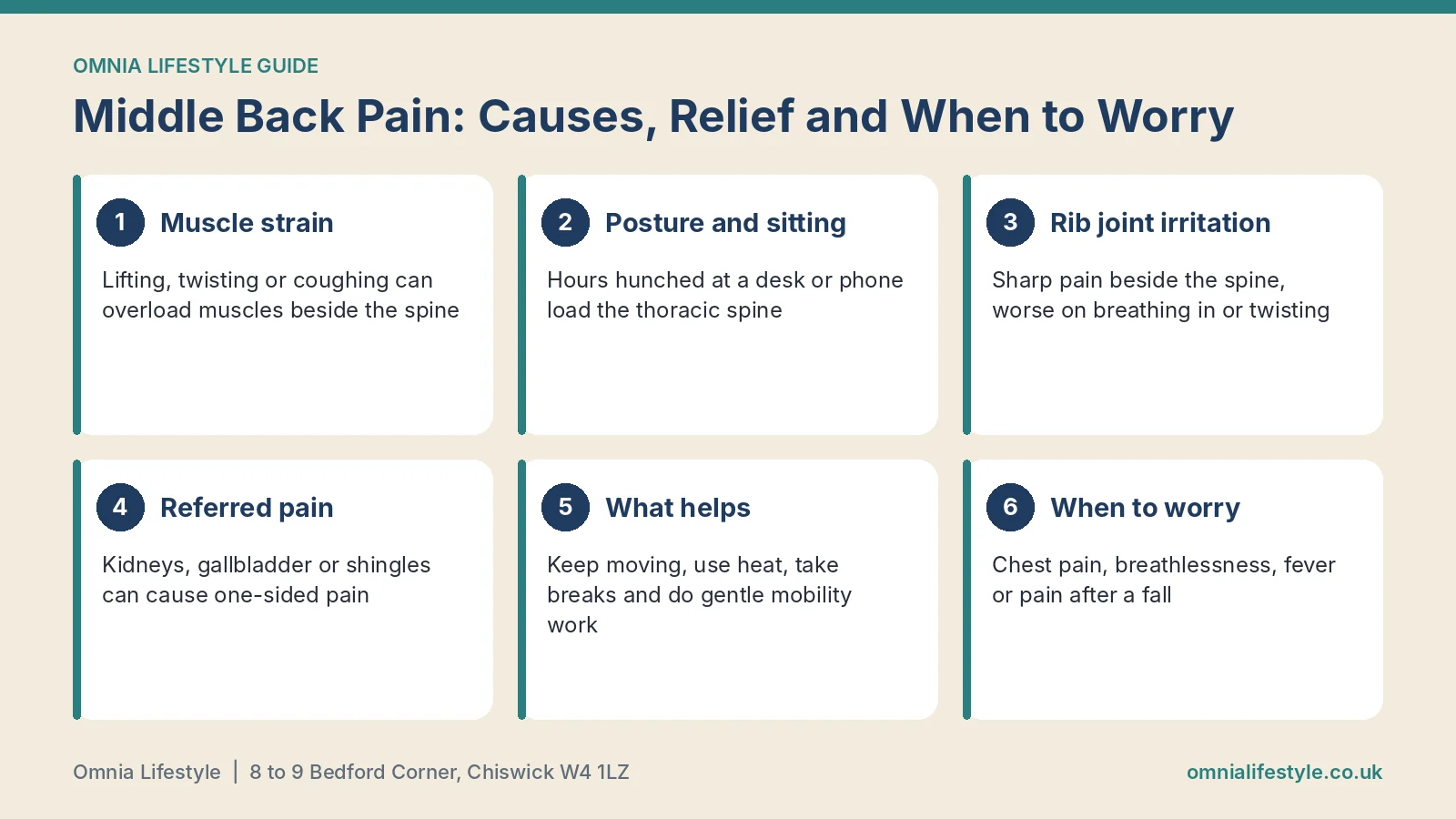
Middle back pain is felt below the neck and above the lower back, in the part of the spine that connects to the ribs. It can be a dull ache across the middle of the back, a sore spot on one side of the spine, or a sharp catch when you breathe in or twist. Most of the time it comes from muscles, joints and posture rather than anything serious.
This guide explains the common causes of a sore middle back, why it can hurt on the right or the left, when organs such as the kidneys or gallbladder can be the source, what helps and when to get checked urgently.
Quick answer
Most middle back pain comes from a back strain in the middle of the back, stiff joints where the ribs meet the spine, or long hours sitting hunched over a desk or phone. It usually eases within a few weeks with gentle movement, heat, posture changes and simple exercises. Pain on one side can occasionally come from the kidneys, gallbladder, lungs or shingles. Call 999 for back pain with chest pain or breathlessness, and see a GP promptly for fever, weight loss or pain after a fall.
Where is the middle back?
The middle back is the thoracic spine: 12 vertebrae running from the base of the neck to the bottom of the rib cage. Each vertebra connects to a pair of ribs, which makes this part of the spine stiffer and more stable than the neck or the lower back. Because it moves less, it is injured less often, but when it does hurt, people often describe:
- A dull back ache in the middle, on one or both sides of the spine
- A sore middle back after sitting, driving or a long day at a screen
- A sharp pain in the middle of the back on the spine, or just beside it, when breathing in or turning
- Tightness that wraps around the ribs towards the chest
Pain higher up, between the shoulder blades, has its own causes and is covered in our guide to upper back pain between the shoulder blades.
Common causes of a sore middle back
Back strain in the middle of the back
A muscle strain is one of the most common reasons for a back ache in the middle. The long muscles beside the spine and the small muscles between the ribs can be overloaded by:
- Lifting, especially with a twist
- Sudden reaching, throwing or racquet sports
- Heavy gardening, decorating or moving house
- A long bout of coughing
A strain feels sore and tight, is worse with certain movements and usually settles within a few weeks.
Posture and long hours sitting
Sitting for hours with rounded shoulders and the head pushed forward places a steady load on the thoracic spine and its muscles. The result is often a backache in the mid back that builds through the day and eases when you get up and move. There is no single perfect posture, but staying in any one position for too long is a common trigger. Posture exercises and regular movement breaks often help.
Rib joint irritation
Each rib forms small joints with the spine. If one of these becomes irritated or stiff, for example after a twist, a heavy lift or a bout of coughing, it can cause a sharp, localised pain just to one side of the spine. It is often worse when you breathe deeply, cough, sneeze, twist or lie on that side, and the pain can wrap around the ribs towards the front. It can feel alarming but usually responds well to movement and hands-on treatment.
Stiffness and age-related changes
The thoracic spine changes with age. Disc and joint changes are common on scans and often cause no pain, but they can add to stiffness and to the middle of your back aching, particularly in the morning.
Less common spinal causes
- Osteoporotic fracture: in people with thinning bones, a vertebra in the middle back can fracture after a minor fall, a lift or even a cough, causing sudden pain. Loss of height or an increasing curve can be clues.
- Inflammatory back pain: conditions such as axial spondyloarthritis cause stiffness that is worse in the morning and improves with movement, often starting in early adulthood.
- Spinal curves such as scoliosis or kyphosis, which cause aching in some people.
- Thoracic disc problems, which are uncommon compared with disc problems in the lower back.
Middle right back pain and middle left back pain
Pain on one side of the middle back is still most often muscular or from a rib joint. Some organs sit close to the middle back, though, and can refer pain there, so the side can matter.
Middle right back pain may occasionally come from:
- The gallbladder: gallstone pain usually starts in the upper right tummy and can spread to the right side of the back or the right shoulder blade, often after a meal.
- The right kidney: a kidney infection or stone can cause pain in the side and back, just below the ribs.
Middle left back pain may occasionally come from:
- The left kidney, with the same pattern as on the right.
- The pancreas: pancreatitis causes severe pain in the upper middle of the tummy that often spreads through to the back.
- The stomach: a stomach ulcer can cause a burning upper tummy pain that is sometimes felt in the back.
Either side can be affected by shingles, which causes a burning or tingling band of pain on one side followed by a rash, and by chest infections or pleurisy, which cause sharp pain when breathing, usually with a cough or a high temperature.
Lower middle back pain and pain across both sides
Lower middle back pain, felt around the bottom of the rib cage, is often where the stiffer thoracic spine meets the more mobile lumbar spine. This junction takes a lot of twisting and bending, so it is a common place for strains. For pain further down, below the ribs and above the buttocks, see what causes back pain, which focuses on lower back causes.
A mid back ache on both sides is usually postural or muscular, especially if it is worse after sitting and better with movement. Pain across the middle of the back with a high temperature, pain when peeing or feeling generally unwell needs prompt medical advice, as it can point to a kidney infection.
Sharp or extreme back pain in the middle: when to worry
Call 999 if middle back pain comes with:
- Chest pain, or pain spreading to the arms, jaw or neck, with breathlessness, sweating or feeling sick, which can be a heart attack
- A sudden, severe tearing pain in the chest or back
- Severe breathlessness or coughing up blood
- Numbness or weakness in both legs, numbness around the genitals or bottom, or loss of bladder or bowel control
Get urgent advice from your GP or NHS 111 if you have:
- A high temperature, or you feel hot and shivery
- Pain after a fall or accident, or sudden pain if you have osteoporosis
- Severe pain in the upper tummy spreading to the back, or yellowing of the skin or the whites of the eyes
- A painful band or rash on one side of the body
- Pain that is worse at night or does not ease with rest
See your GP if:
- The pain has not improved after a few weeks
- You have unexplained weight loss, or have had cancer in the past
- The pain stops you doing your normal activities or is getting worse over time
- You have morning stiffness lasting more than half an hour that eases with movement
Middle back pain relief: what helps
- Keep moving: gentle walking and normal activity help more than bed rest.
- Heat: a warm pack or warm shower can ease muscle tension. A cold pack wrapped in a cloth may help in the first day or two after a strain.
- Painkillers: anti-inflammatory painkillers such as ibuprofen may help if they are suitable for you. Ask a pharmacist if you are unsure.
- Break up sitting: stand, stretch or walk every 30 to 45 minutes.
- Breathe deeply: slow breaths that expand the ribs help keep the rib joints moving.
- Sleep comfortably: a pillow between the knees when on your side, or under the knees when on your back, may help.
Simple exercises for a sore middle back
- Seated rotation: sit tall with your arms crossed over your chest and turn slowly to each side. Repeat 10 times each way.
- Cat and cow: on hands and knees, slowly round your back, then gently arch it. Repeat 10 times.
- Thread the needle: on hands and knees, slide one arm under your body, then reach it up towards the ceiling. Repeat 8 times each side.
- Towel chest opener: lie on your back with a rolled towel lengthways along your spine and let your arms rest out to the sides for one to two minutes.
- Band rows: pull a resistance band towards your chest, squeezing your shoulder blades together. Two sets of 12.
Move within comfort. Mild discomfort is fine, but stop if the pain becomes sharp or spreads. For more ideas, see how to relieve back pain naturally.
How a physiotherapist helps
A physiotherapist or other clinician will ask about your symptoms, check for warning signs and examine how your spine, ribs and shoulders move. Treatment usually combines:
- A tailored exercise programme to restore mobility and build strength
- Hands-on treatment, such as joint mobilisation or soft tissue work, used alongside exercise
- Advice on workstation set-up, activity and pacing
- Referral back to your GP if anything suggests a cause outside the muscles and joints
Tight muscles around the shoulders often go with a sore middle back. Our guide to knots in the shoulders explains why.
Frequently asked questions
Why does the middle of my back ache?
Most often because of posture, long periods of sitting, a muscle strain or a stiff rib joint. Organs such as the kidneys or gallbladder are less common causes and usually come with other symptoms, such as fever or tummy pain.
Is middle right back pain serious?
Usually not, as most middle right back pain is muscular. See a GP if it comes with a high temperature, upper tummy pain after meals, or yellowing of the skin or eyes.
What does pain in the middle of the back on the spine mean?
Pain directly on the spine usually comes from the joints or the muscles that attach to them. See a GP promptly if it follows a fall, starts suddenly when you have osteoporosis, or comes with fever or weight loss.
How long does a back strain in the middle take to heal?
Most mild strains improve within a few days to a few weeks. Staying gently active usually speeds recovery, and pain that has not improved after a few weeks should be checked.
What causes sharp back pain in the middle when breathing?
Often an irritated rib joint or a strained muscle between the ribs. If it comes with breathlessness, a cough, fever or chest pain, seek medical help the same day.
Middle back pain treatment in Chiswick
Middle back pain is assessed and treated at Omnia Lifestyle, 8 to 9 Bedford Corner, The Avenue, Chiswick W4 1LZ, close to Turnham Green station, on bus routes 94, E3 and 272. Limited parking is available on request when booking. Assessment checks for warning signs, identifies whether muscles, joints or posture are driving the pain and sets a plan of exercise and hands-on treatment.
Read more about back pain and posture exercises for rounded shoulders, explore physiotherapy and manual therapy, or book an assessment.
This article is general information, not medical advice. If you have any of the warning signs listed above, seek medical attention.
Ready to book?
Physiotherapy


.jpg)
.jpg)