


Book at our Chiswick clinic
Physiotherapy
Lower right back pain is very common. It might be a dull ache low on the right side of the back, a sore spot just above the right buttock, or a sharp twinge when you bend, twist or get out of a chair. In most people it comes from the muscles, joints or discs of the lower back, and it gets better with time and the right kind of activity.
Because some organs sit on the right side of the body, including the right kidney, the appendix, the liver and gallbladder and, in women, the right ovary, it helps to know which symptoms point away from the back. This guide explains the common causes, the warning signs and what helps.
Quick answer
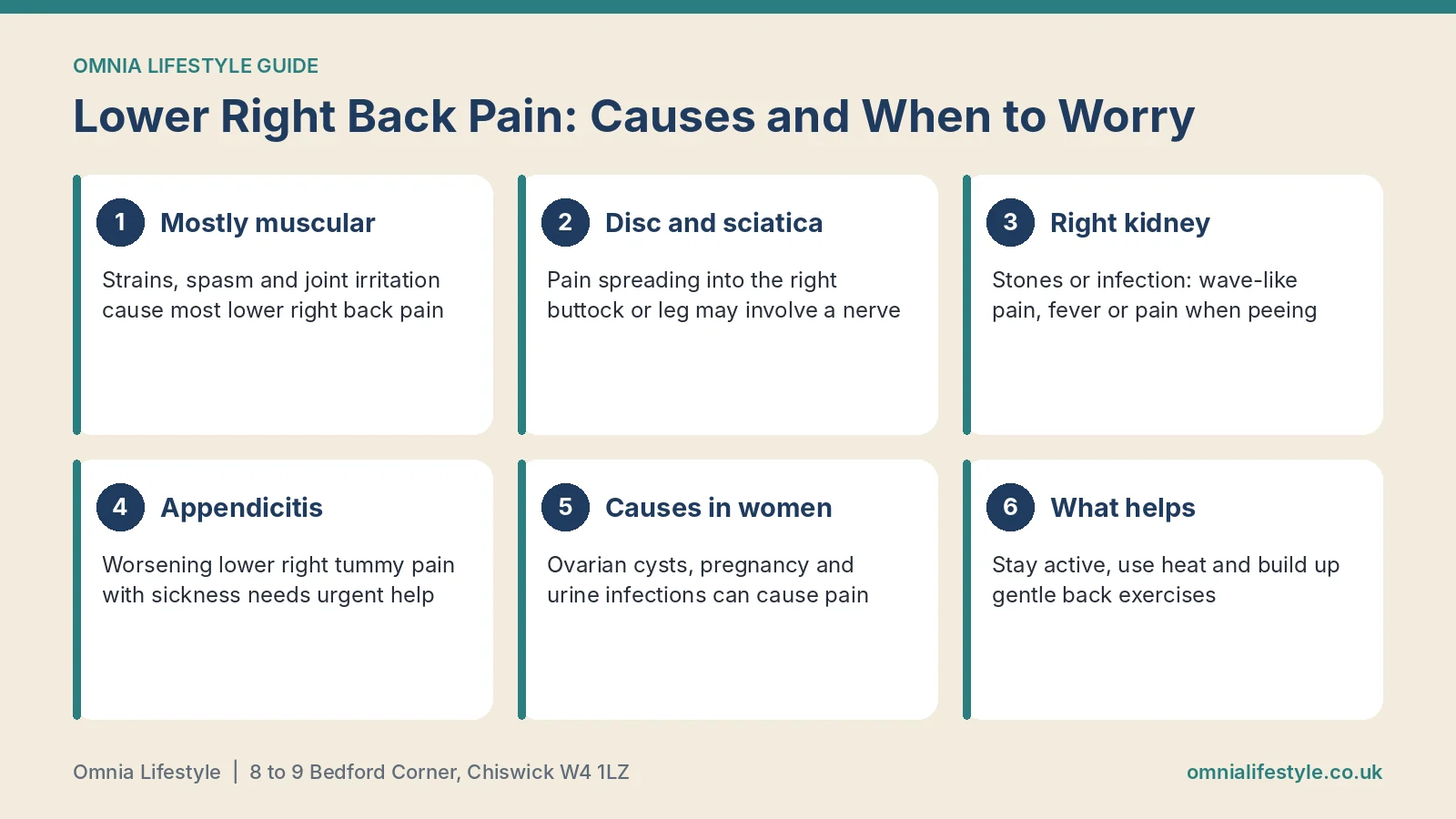
Lower right back pain is usually muscular: a strained muscle, an irritated joint or a disc problem in the lower back, often after lifting, twisting or long periods of sitting. It typically improves within a few weeks with gentle movement and simple exercises. Less often, the cause is the right kidney, the appendix or, in women, the right ovary. Get urgent help if back pain comes with fever, pain when peeing, worsening right-sided tummy pain, vomiting or leg numbness.
Why does my lower right back hurt?
Muscle and joint problems cause the large majority of lower back pain, on either side. When your lower right back hurts, it is often simply because one side of the back has been loaded more than the other, for example:
- Lifting and twisting to the right, such as loading a car boot or carrying a child on one hip
- Sports with a strong one-sided action, such as golf, tennis or cricket
- Sitting slumped to one side, or crossing the same leg every day
- Sleeping in an awkward position or on a sagging mattress
- Standing with your weight shifted onto the right leg
Pain that changes with movement and position, eases with rest or gentle activity, and is tender when you press the muscles is very likely to be mechanical back pain. For a full overview, see what causes back pain.
Muscular causes of lower right back pain
Back strain on the lower right side
A back strain on the lower right side happens when the muscles or ligaments beside the spine are overloaded. Typical features are:
- Pain that starts during or soon after an activity, or the next morning
- Tightness or spasm on the right side of the lower back
- Pain when bending, twisting or standing up from a chair
- Relief from changing position and gentle movement
The quadratus lumborum muscle
The quadratus lumborum runs from the bottom rib to the top of the pelvis on each side. When it tightens or goes into spasm, it can cause a deep ache in the lower back on the right side, sometimes making it hard to stand up straight or roll over in bed.
Facet joint pain
Small joints link each vertebra to the next. If a facet joint on the right side becomes irritated, it can cause localised soreness in the lower right back that is worse when leaning backwards, twisting to the right or standing for a long time.
Sacroiliac joint pain
The sacroiliac joints sit where the base of the spine meets the pelvis. Pain here is felt low down, in the bottom right of the back or the top of the buttock, and can be worse with climbing stairs, standing on one leg or rolling over. It is common in pregnancy and after giving birth.
Disc problems and sciatica
A bulging or slipped disc on the right can press on a nerve and cause pain travelling into the right buttock and down the leg, sometimes with tingling or numbness. This is known as sciatica. Buttock pain can also come from the piriformis muscle, covered in our guide to piriformis syndrome exercises.
Lower right back pain from organs
Organ-related pain is much less common, but it is important to recognise. Clues include pain that does not change with movement, pain that comes in waves, and other symptoms such as fever, sickness or changes in urine.
Right kidney: stones and infection
- Kidney stones: severe pain in the side and back, below the ribs, that often comes in waves and may spread to the groin. You may feel restless and unable to get comfortable, feel sick, and notice blood in your urine.
- Kidney infection: pain in the side or back with a high temperature, shivering, feeling sick, and pain or burning when peeing. It needs prompt treatment.
Appendicitis
Appendicitis usually starts as pain around the belly button that moves to the lower right of the tummy and gets steadily worse. It can sometimes be felt in the lower right back, particularly when the appendix lies behind the bowel. Pain that worsens when you cough or walk, with loss of appetite, sickness or a high temperature, needs urgent assessment.
Liver and gallbladder
Gallstone pain is felt in the upper right tummy and can spread to the right side of the back or shoulder blade, often after a fatty meal. It sits higher than typical lower right back pain, but it is worth knowing about if pain spreads upwards.
Low right back pain in women
Women can have the same muscle and joint causes as anyone else, plus a few others that are specific to the right side:
- Ovarian cyst: most cause no symptoms, but some cause a dull ache in the lower tummy, pelvis or lower back on one side. A cyst that bursts or twists the ovary (ovarian torsion) causes sudden, severe pain, often with vomiting, and needs A&E.
- Ectopic pregnancy: pain low on one side of the tummy, sometimes felt in the back or the tip of the shoulder, with vaginal bleeding or a missed period. Anyone who could be pregnant with these symptoms needs urgent help.
- Pregnancy: back and pelvic girdle pain are common as the body changes, and often respond to exercise and advice.
- Urine infections, which are more common in women and can spread to the kidney.
When to worry about lower right back pain
Call 999 if you have:
- Numbness around the genitals or bottom, or new difficulty peeing or loss of bladder or bowel control
- Numbness or weakness in both legs
- Back pain with chest pain, or sudden, severe pain with fainting or feeling very unwell
Go to A&E or get same-day help from NHS 111 if you have:
- Severe pain in the lower right of the tummy that is getting worse, especially with sickness or a high temperature
- Severe pain in the side or back that comes in waves, with blood in your urine
- Back pain with a high temperature, shivering and pain when peeing
- Sudden severe pelvic pain, or one-sided pain with bleeding if you could be pregnant
See your GP if:
- The pain has not improved after a few weeks of self-care
- It is worse at night or does not change with movement or rest
- You have unexplained weight loss, or have had cancer in the past
- Pain or numbness spreads down the leg and is getting worse
Lower right back pain relief: what helps
- Stay active: keep walking and doing normal activities as far as comfort allows. Bed rest tends to slow recovery.
- Heat or cold: a heat pack can ease muscle tension, and a cold pack wrapped in a cloth may help a new strain.
- Painkillers: anti-inflammatory painkillers such as ibuprofen may help if they are suitable for you. Check with a pharmacist if you are unsure.
- Change position often: avoid sitting in one position for long periods.
- Balance your loads: carry bags on alternate sides and avoid twisting while lifting.
- Exercise: gentle knee rolls, knee-to-chest stretches, bridges and walking are a good start. See our lower back pain exercises for eight moves with instructions.
How a physiotherapist helps
A physiotherapist will ask how the pain started, check for warning signs that need a GP or hospital, and examine how your back, hips and pelvis move. Treatment usually includes:
- An exercise programme to restore movement, then build strength and confidence
- Hands-on treatment, used alongside exercise, to ease pain and stiffness
- Advice on lifting, sitting, sleep and returning to work or sport
- Referral back to your GP if the pattern suggests a cause outside the back
NICE guidance for low back pain recommends exercise as a core part of treatment, with manual therapy only as part of a wider package that includes exercise.
Frequently asked questions
Is lower right back pain serious?
Usually not. Most lower right back pain is muscular and improves within a few weeks. Get prompt advice if it comes with fever, pain when peeing, tummy pain or vomiting.
How do I know if lower right back pain is my kidney?
Kidney pain is usually felt higher, in the side just below the ribs, and does not change much with movement. It often comes with fever, pain when peeing or blood in your urine.
What causes low right back pain in females?
Muscle and joint strain is still the most common cause. Ovarian cysts, pregnancy-related pain, urine infections and, rarely, ectopic pregnancy are other possibilities that need medical advice.
Can appendicitis cause lower right back pain?
Sometimes, but it usually causes pain in the lower right of the tummy that gets steadily worse. Seek urgent help if you have this kind of pain with sickness or a high temperature.
Why does my lower right back hurt when I sit?
Sitting for long periods, especially slumped or leaning to one side, loads the lower back unevenly. Regular breaks, a supportive chair and gentle exercise usually help.
Lower back pain treatment in Chiswick
Lower right back pain is assessed and treated at Omnia Lifestyle, 8 to 9 Bedford Corner, The Avenue, Chiswick W4 1LZ, close to Turnham Green station, on bus routes 94, E3 and 272. Limited parking is available on request when booking. Assessment checks for warning signs, identifies the likely source of your pain and sets out a plan of exercise and hands-on treatment.
Read more about back pain, sciatica and slipped discs, explore physiotherapy, or book an assessment.
This article is general information, not medical advice. If you have any of the warning signs listed above, seek medical attention.
Ready to book?
Physiotherapy


.jpg)
.jpg)