Part of ourMusculoskeletal (MSK) conditionscare
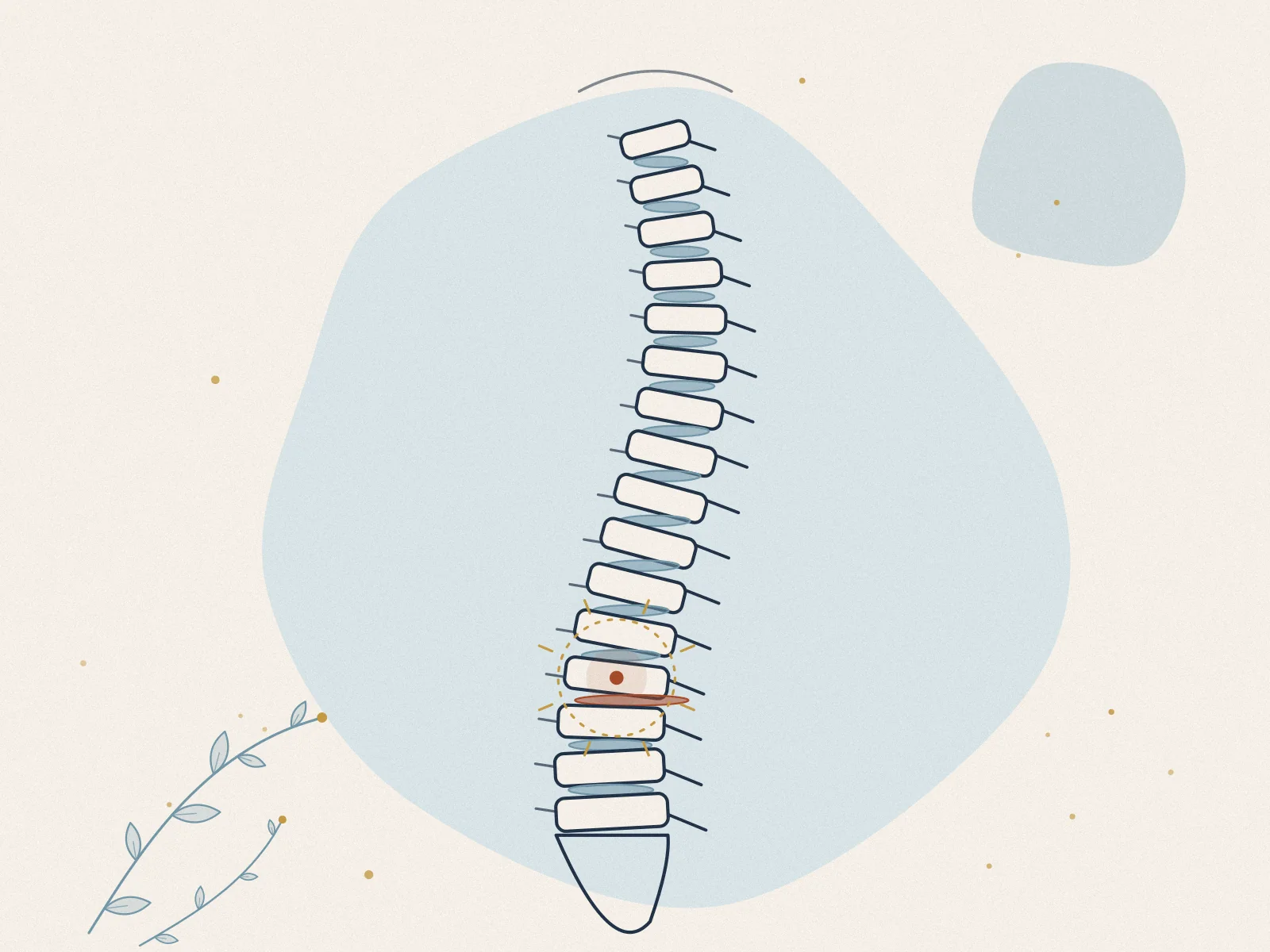
A slipped (herniated) disc occurs when a spinal disc bulges and irritates nearby nerves, causing back and leg pain. At Omnia Lifestyle in Chiswick we treat it with physiotherapy, acupuncture and manual therapy, combined after assessment.
Omnia Lifestyle, 8 to 9 Bedford Corner, The Avenue, Chiswick W4 1LZ. Two minutes from Turnham Green station. Call 020 4515 0000.
Questions we are asked
A slipped disc, more accurately a bulging or herniated disc, often causes lower back or neck pain that can spread into the buttock, leg or arm, with numbness, tingling or weakness. Pain is often worse when sitting, bending or coughing.
In everyday use, yes. Discs do not actually slip out of place. The soft centre of a disc can bulge or push through its outer layer and press on a nearby nerve. Many bulging discs seen on scans cause no pain at all.
Most people improve within six weeks, and the body often reabsorbs part of the disc bulge over several months. Staying gently active, with a structured physiotherapy programme, usually helps more than bed rest.
No. Discs are firmly attached to the vertebrae, so they cannot be pushed back in by manipulation. Treatment aims to calm the irritated nerve, restore movement and build strength while the disc settles, which physiotherapy and exercise do best.
Call 999 or go to A&E if you develop numbness around the genitals or bottom, problems passing urine or controlling your bowels, or weakness in both legs. These signs of cauda equina syndrome need same-day medical treatment.