Close

Part of ourMusculoskeletal (MSK) conditionscare

Hip Pain: what it is and how we help

Hip pain usually comes from the tendons on the outside of the hip, the joint itself, or the muscles of the groin and buttock, and it can also be referred from the lower back. At Omnia Lifestyle in Chiswick we treat it with physiotherapy, manual therapy and acupuncture, combined after assessment.

Omnia Lifestyle, 8 to 9 Bedford Corner, The Avenue, Chiswick W4 1LZ. Two minutes from Turnham Green station. Call 020 4515 0000.
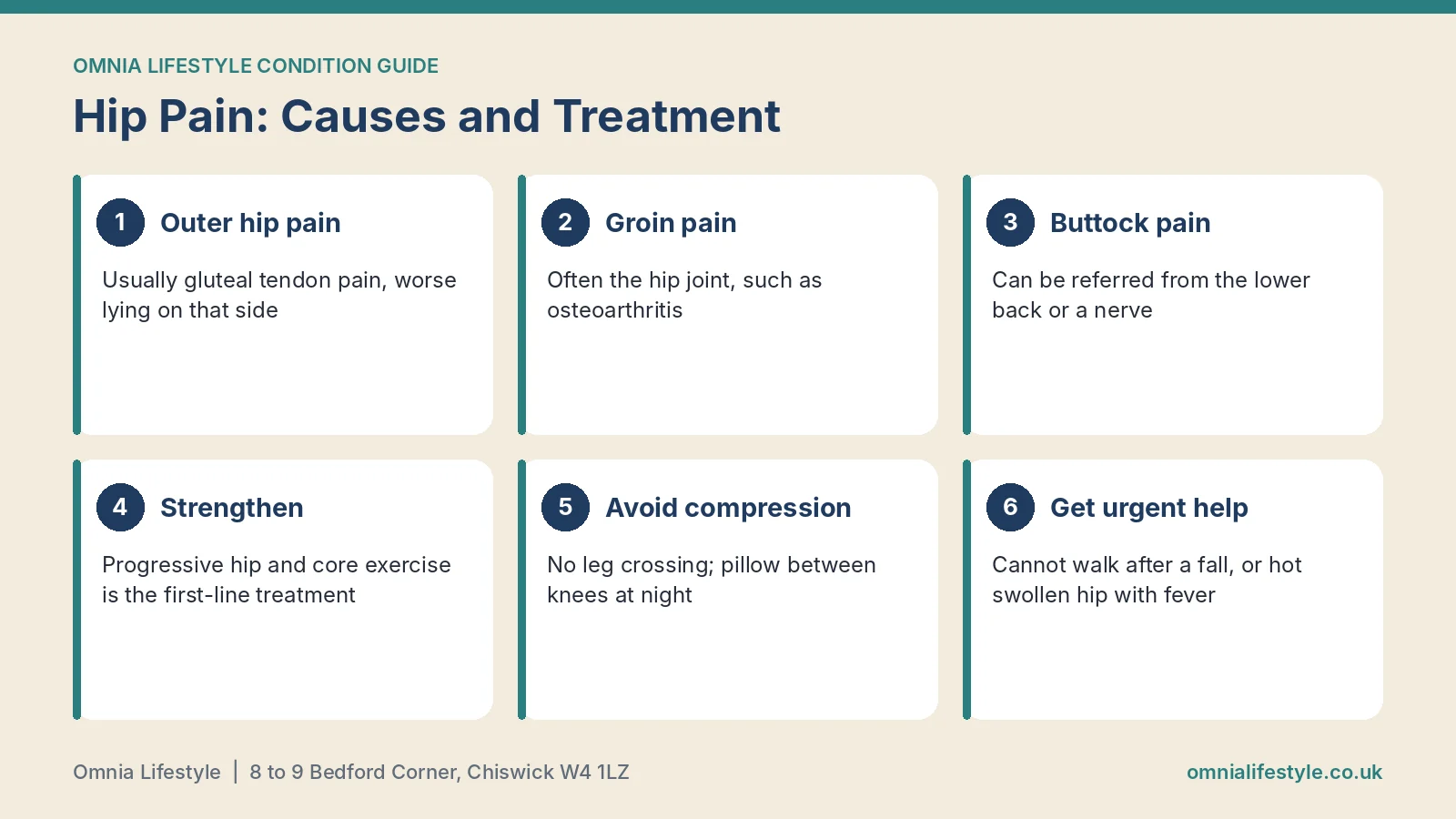
Hip pain causes and treatment: outer hip tendon pain, groin and joint pain, referred pain, strengthening and urgent warning signs

Hip pain at a glance

Hip pain is common at every age, from runners and gym-goers to people in their sixties and beyond. Most of it comes from the tendons and muscles around the hip or from wear in the joint itself, and the large majority improves with the right exercise programme rather than injections or surgery. Where you feel the pain, and what sets it off, usually points to the cause.

Symptoms of hip pain

  • Pain on the outside of the hip: often tender to touch, worse lying on that side, climbing stairs or standing on one leg.
  • Pain in the groin or front of the hip: often deep and aching, worse putting on socks, getting out of a car or after walking.
  • Pain in the buttock: sometimes spreading down the back of the thigh, which can come from the lower back or the deep buttock muscles.
  • Stiffness: especially first thing in the morning or after sitting, easing as you move.
  • Clicking or catching: sometimes harmless, sometimes a sign of a labral or cartilage problem.

What causes hip pain?

  • Gluteal tendinopathy (trochanteric bursitis): irritation of the tendons on the outside of the hip, the most common cause of outer hip pain, especially in women over 40. See our hip bursitis exercises.
  • Hip osteoarthritis: wear of the joint cartilage, causing groin pain and stiffness, usually over 50. Read more about osteoarthritis.
  • Hip flexor and groin strains: common in running, football and gym training. Our hip flexor stretches help tight, sore hips.
  • Femoroacetabular impingement and labral tears: a change in the shape of the joint that pinches the cartilage rim, often in younger active adults.
  • Referred pain: from the lower back, sacroiliac joint or a trapped nerve. If pain travels below the knee, see sciatica.
  • Piriformis and deep buttock pain: see piriformis syndrome exercises.

How is hip pain treated?

For most hip pain, treatment centres on a progressive strengthening programme for the hip and core muscles, advice on what to change in daily activity, and hands-on treatment or acupuncture to ease pain so you can move. Osteoarthritis responds well to exercise and weight management, which NICE recommends before considering surgery. Tendon pain improves with gradual loading and by avoiding positions that compress the tendons, such as crossing your legs or hanging on one hip.

How we help with hip pain in Chiswick

  • Physiotherapy: assessment to find the source of pain, then a strengthening programme matched to it.
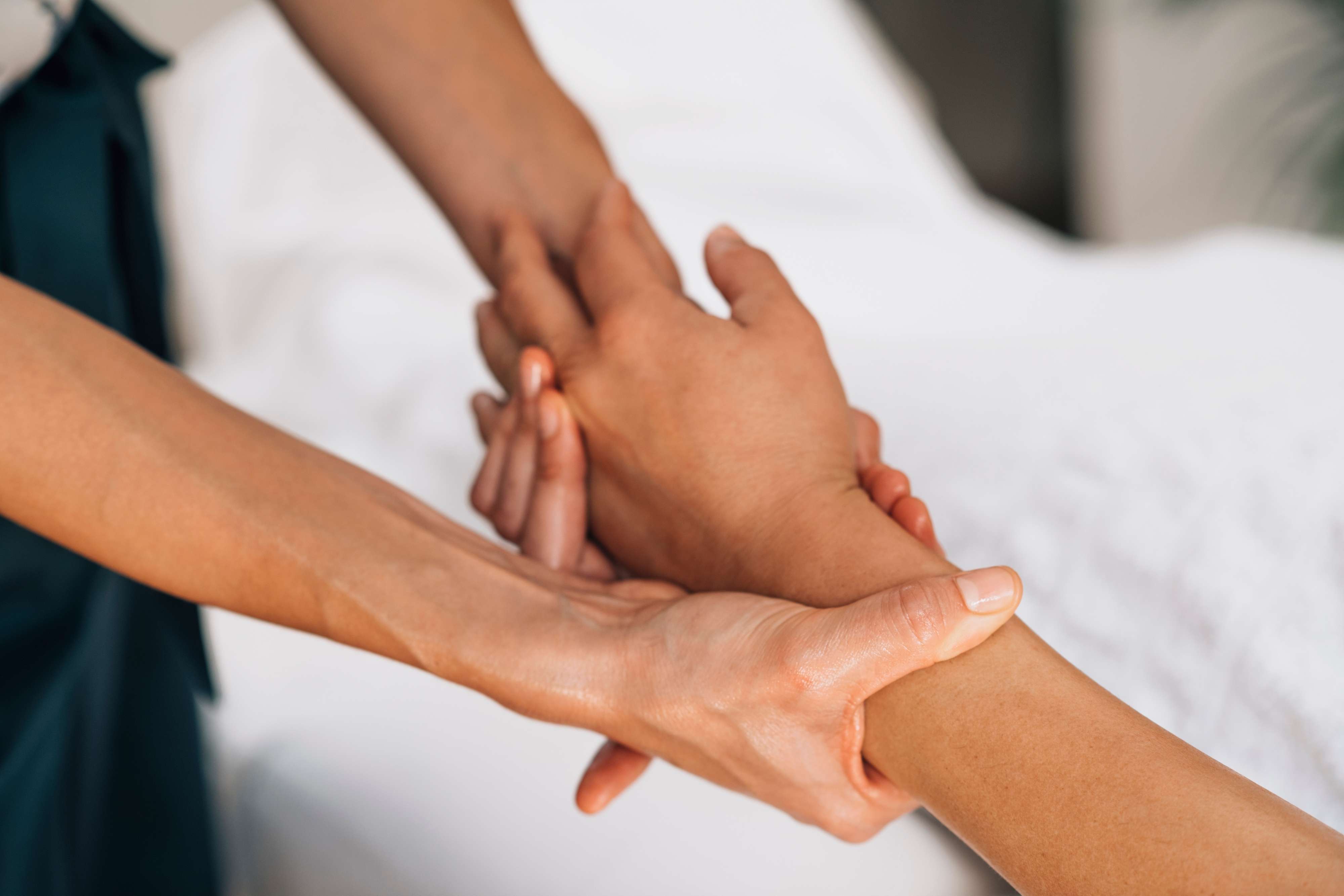
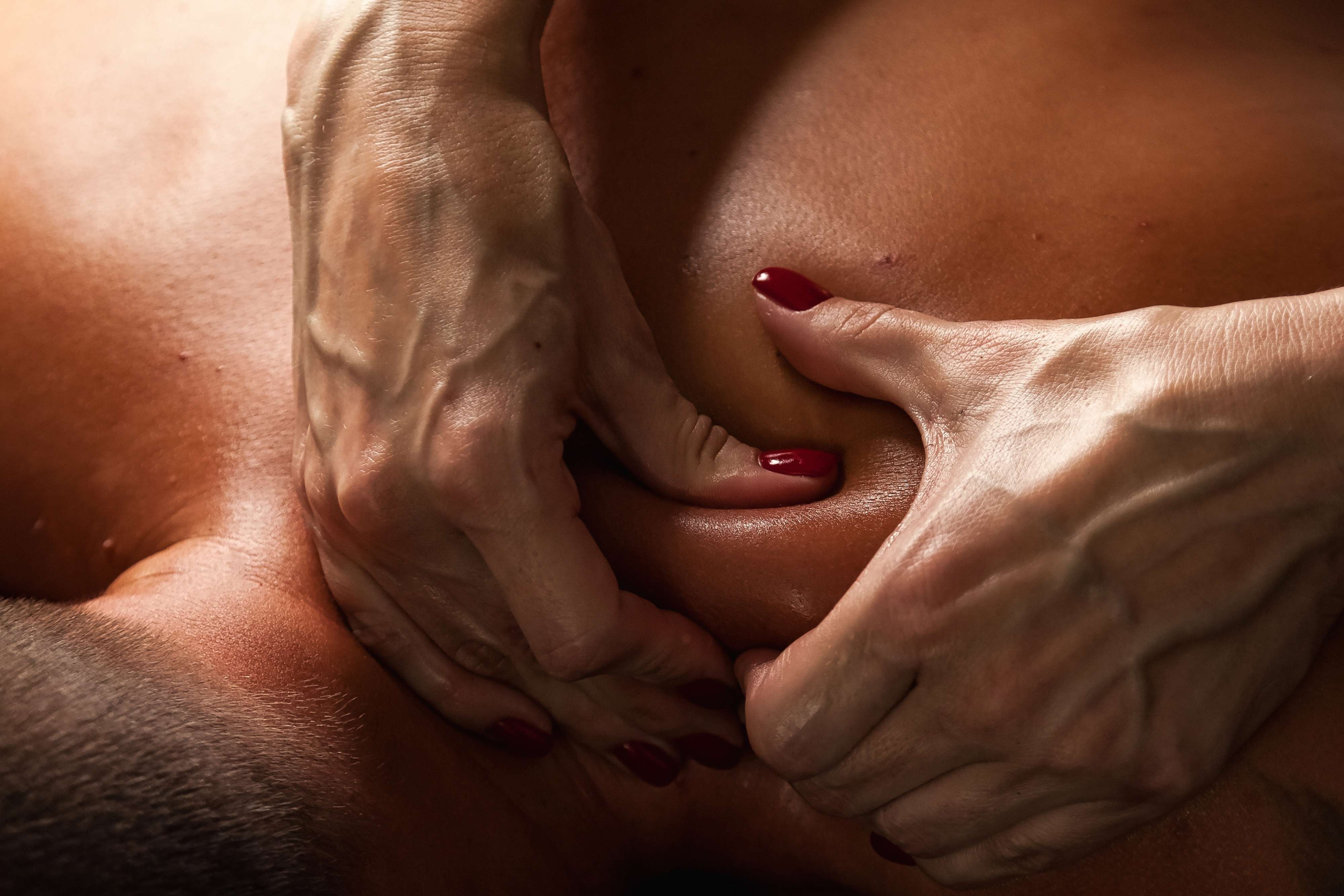
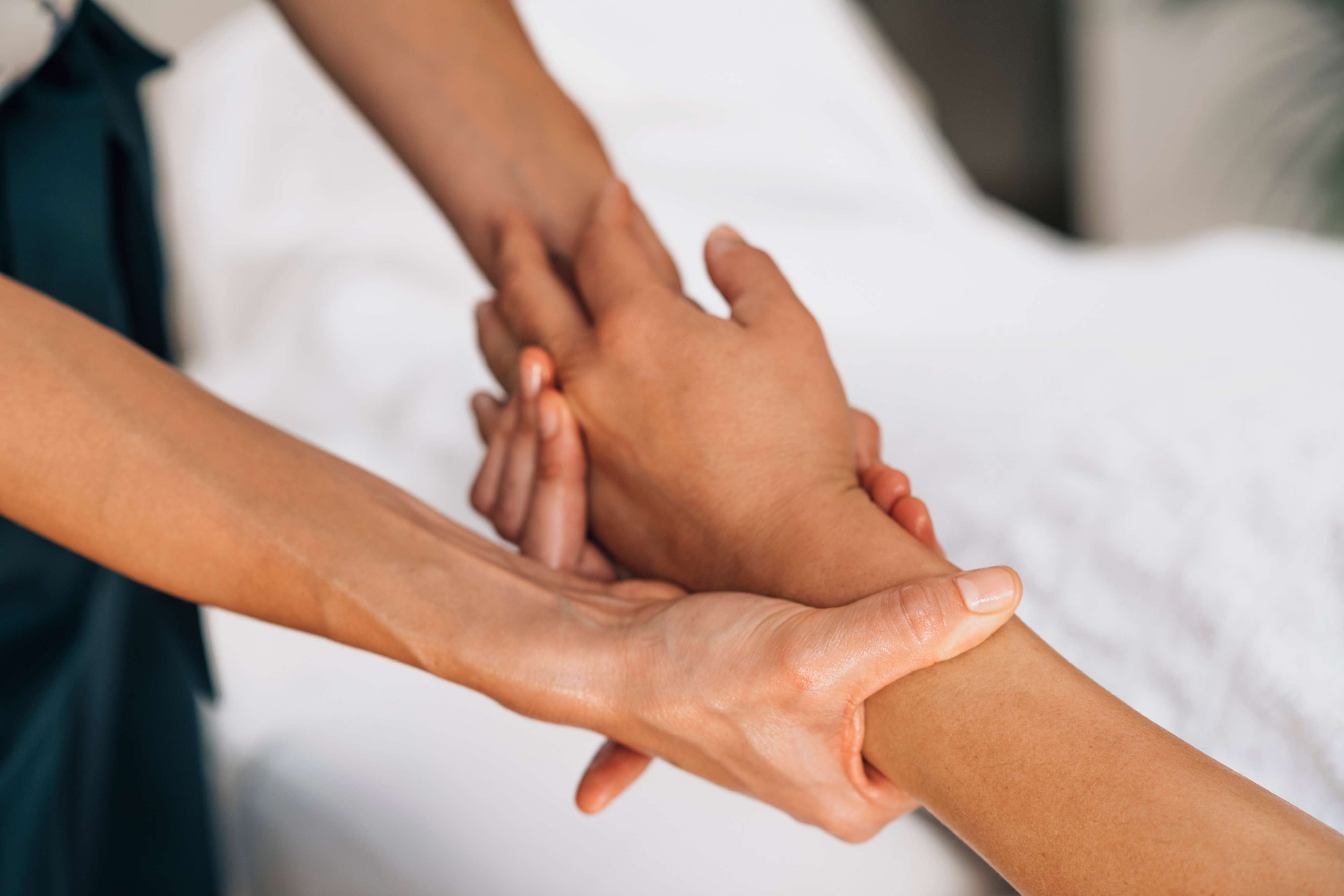
  • Manual therapy and massage: to ease tight hip and buttock muscles alongside exercise.
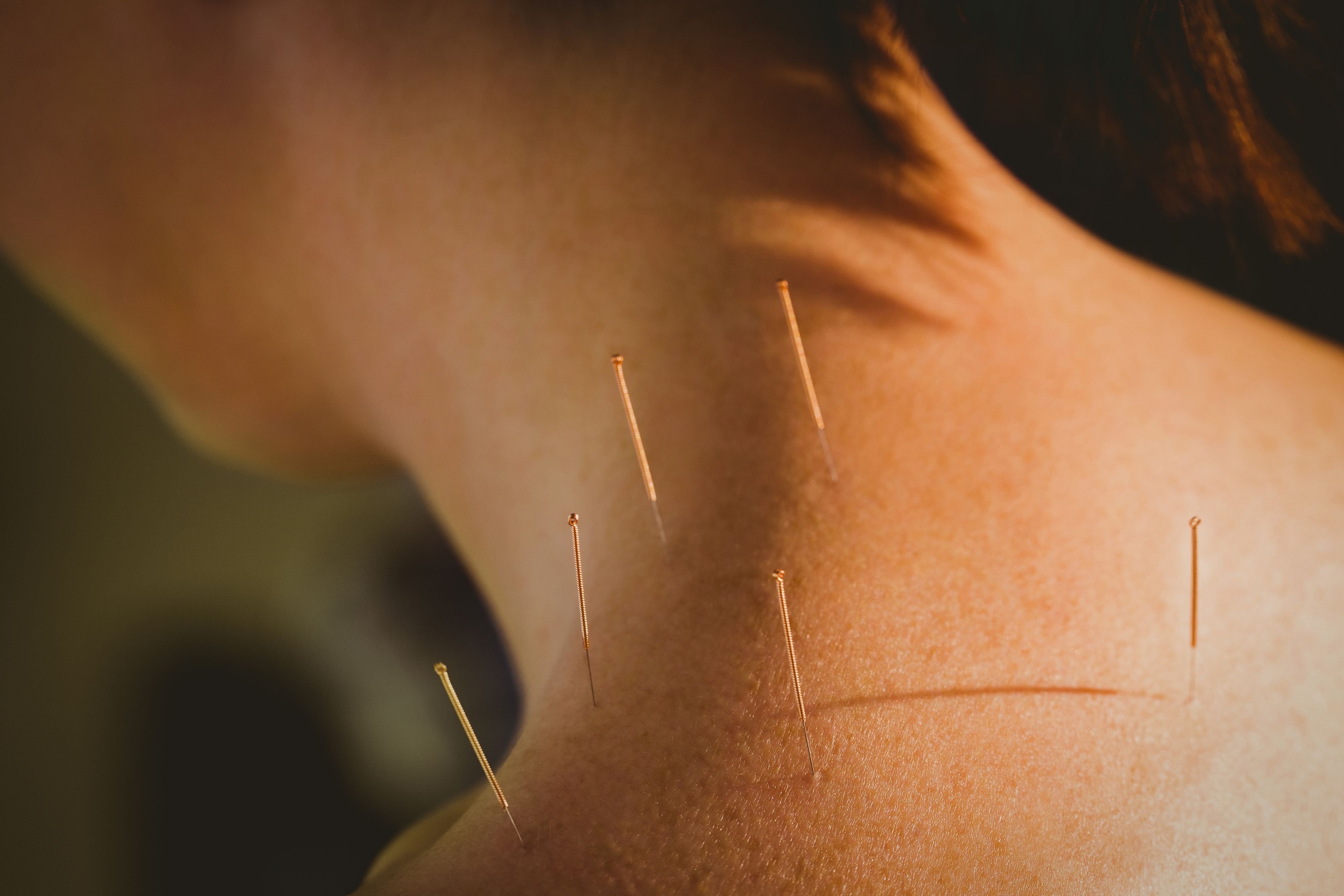
  • Acupuncture: to help settle pain so you can stay active.
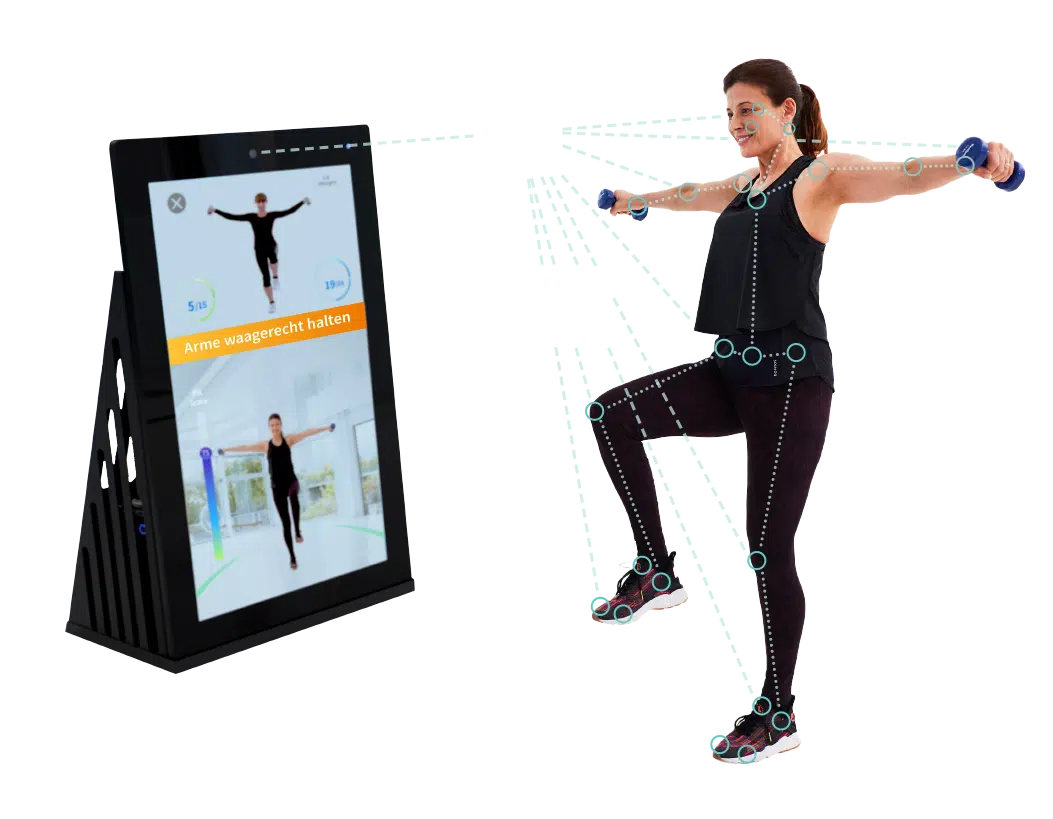
  • Pixformance: guided strength training to keep progress going between sessions.

What does the evidence say?

Exercise therapy is the best-supported treatment for hip osteoarthritis and for gluteal tendinopathy, improving pain and function for most people. Education about how to load the tendons is as important as the exercises themselves. Steroid injections may give short-term relief for tendon pain, but exercise gives better results over a year.

Why does my hip hurt when I walk?

Pain in the groin when walking often comes from the hip joint, while pain on the outside of the hip when walking or climbing stairs is more often tendon related. A limp, or pain that is getting steadily worse, is worth having assessed so the right exercises can start early.

Why does my hip hurt at night?

Lying on the sore side compresses the tendons on the outside of the hip. Sleeping on the other side with a pillow between your knees usually helps. Night pain that wakes you whatever your position should be checked by your GP.

Is it my hip or my back?

Pain felt in the buttock or back of the thigh is often coming from the lower back, especially if it comes with back stiffness or travels below the knee. Groin pain is more typical of the hip joint itself. An assessment tests both so treatment is aimed at the right place. See back pain.

What to expect at Omnia

Your first appointment starts with a detailed history and a hands-on assessment of how your hip, back and pelvis move and how strong the supporting muscles are. You leave with a clear explanation of what is causing your pain and a home programme, and we review and progress it at each visit. If your hip needs a scan or a specialist opinion, we refer back to your GP.

What you can do at home

  • Keep active with walking, cycling or swimming at a comfortable level
  • Avoid sitting with your legs crossed or standing hanging on one hip
  • Sleep on the other side with a pillow between your knees
  • Start gentle strengthening such as bridges and side-lying leg raises, building up slowly

When to see a doctor urgently

Call 999 or go to A&E if you cannot stand or walk after a fall, the leg looks shorter or turned outwards, or the hip is hot, red and swollen and you feel feverish or unwell. See your GP promptly for hip pain with unexplained weight loss or pain at night that does not ease.

Hip pain is assessed and treated at Omnia Lifestyle, 8 to 9 Bedford Corner, The Avenue, Chiswick W4 1LZ, close to Turnham Green station, on bus routes 94, E3 and 272. Limited parking is available on request when booking. Book online or call 020 4515 0000.

Related Therapies & Services

Questions we are asked

Hip Pain: your questions answered

What causes hip pain?

The most common causes are tendon pain on the outside of the hip (gluteal tendinopathy, often called trochanteric bursitis), osteoarthritis of the hip joint, groin and hip flexor strains, and pain referred from the lower back or sacroiliac joint. Where you feel the pain is the best first clue.

Is hip pain serious?

Most hip pain is not serious and improves with the right exercises. It needs urgent care after a fall if you cannot walk, or if the hip is hot, red and swollen with a fever, as these can mean a fracture or infection.

Why does my hip hurt at night?

Lying on the painful side compresses the tendons on the outside of the hip, which is the most common reason for night pain. A pillow between the knees and sleeping on the other side often help. Pain that wakes you whatever position you are in should be checked by your GP.

Can physiotherapy help hip pain?

Yes. Exercise-based physiotherapy is the first-line treatment for most hip pain, including osteoarthritis and tendon pain, and it helps many people delay or avoid surgery. Treatment starts with an assessment to find the source of the pain.

Can I get hip pain treatment near Chiswick without a GP referral?

Yes. You can book directly at Omnia Lifestyle, 8 to 9 Bedford Corner, The Avenue, Chiswick W4 1LZ, close to Turnham Green station. Physiotherapy and acupuncture are also recognised by several health insurers.

Thank you, we have your notes.

A member of our team will be in touch to arrange your call. If anything is urgent, please call 020 4515 0000.

An error has occurred somewhere and it is not possible to submit the form. Please try again later.

Book online

To book an appointment straight away you can use our book now button

Message us on WhatsApp