




Inflammation is the body's natural defence against injury and infection. Short bursts of inflammation help you heal. Problems arise when low-level inflammation stays switched on for months or years, which is linked with heart disease, type 2 diabetes, joint pain and ageing. The good news is that everyday habits have a strong effect on inflammation.
This guide explains what inflammation is, what causes chronic inflammation in the body, the signs to look for, and evidence-based ways to reduce inflammation naturally, including anti-inflammatory foods.
Quick answer
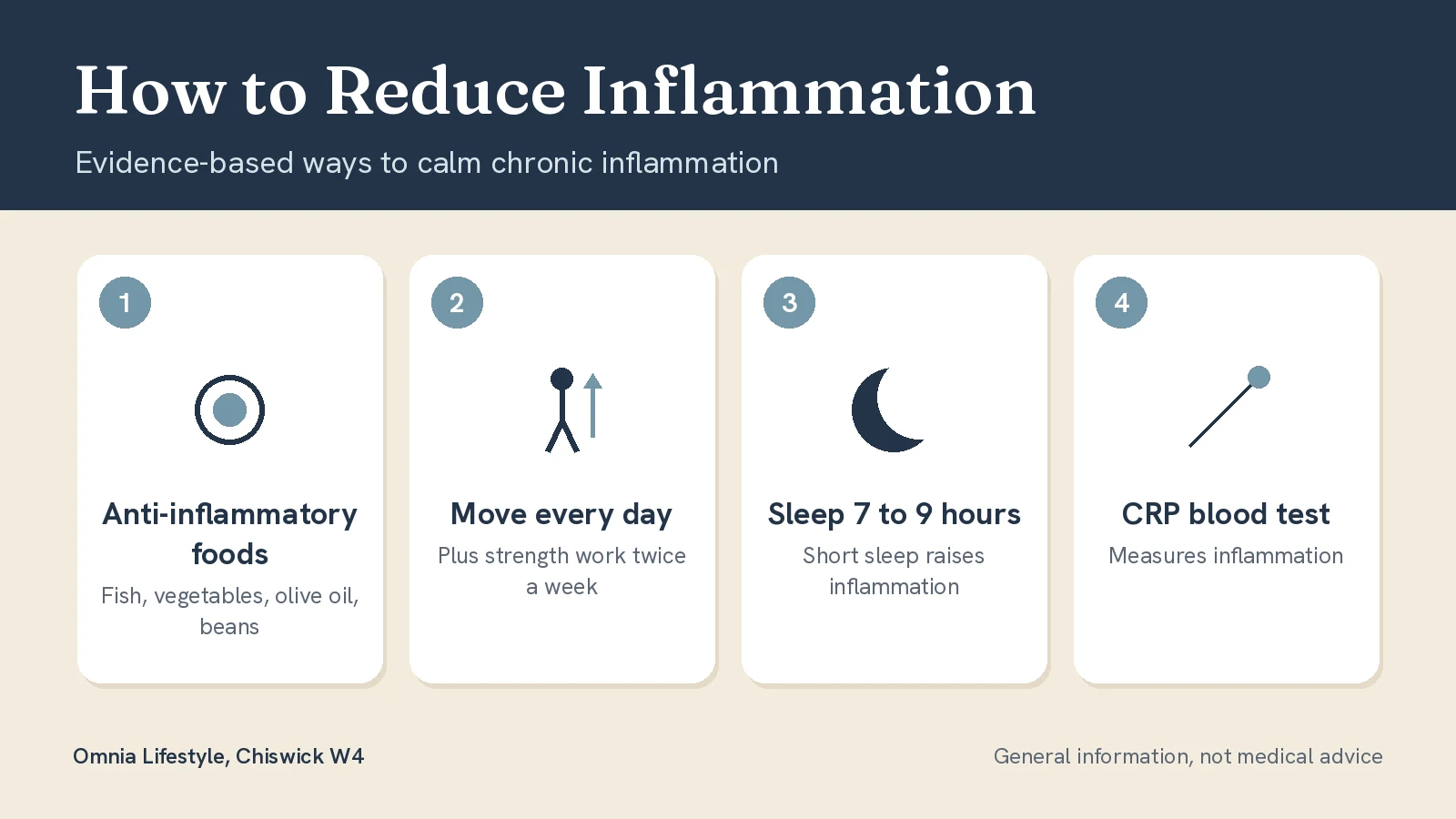
To reduce inflammation in the body, focus on the habits with the strongest evidence: regular physical activity, losing excess weight, especially around the waist, a Mediterranean-style diet rich in vegetables, fruit, oily fish, beans, wholegrains, nuts and olive oil, seven to nine hours of sleep, managing stress, not smoking and keeping alcohol low. Limiting ultra-processed foods, sugary drinks and processed meat also helps. Supplements have much weaker evidence. Inflammation can be measured with a CRP blood test.
What is inflammation?
Inflammation is the immune system's response to harm, such as an injury, infection or irritant. Acute inflammation causes redness, heat, swelling and pain around a cut, sprain or infection and settles within days as you heal. Chronic low-grade inflammation is quieter and longer lasting, often without obvious symptoms, and is linked with long-term conditions.
What causes inflammation in the body?
- Excess body fat, especially visceral fat around the organs
- Inactivity and long periods of sitting
- Diets high in ultra-processed food, refined carbohydrates and sugar
- Short or poor sleep
- Long-term stress
- Smoking and heavy alcohol use
- Ongoing infections and gum disease
- Autoimmune and inflammatory conditions, such as rheumatoid arthritis and inflammatory bowel disease, which need medical treatment
Signs of inflammation in the body
Chronic inflammation often has no clear symptoms. When present, signs can include ongoing aches and joint stiffness, tiredness, poor recovery after exercise, digestive discomfort and skin problems. These symptoms have many possible causes, so a blood test and a conversation with your GP are more reliable than symptoms alone.
How to reduce inflammation naturally
- Move every day. Regular activity lowers inflammatory markers. Aim for 150 minutes of moderate activity a week plus strength work twice a week.
- Lose excess weight, particularly around the waist, which reduces inflammation significantly.
- Eat a Mediterranean-style diet, as described below.
- Protect your sleep. Short sleep raises inflammatory markers.
- Manage stress with exercise, relaxation, yoga or tai chi.
- Stop smoking and keep alcohol within low-risk limits.
- Look after your teeth and gums, as gum disease contributes to inflammation.
Anti-inflammatory foods
No single food switches off inflammation, but an overall eating pattern makes a real difference. Foods linked with lower inflammation include:
- Oily fish such as salmon, mackerel and sardines
- Vegetables, especially leafy greens, and colourful fruit such as berries
- Beans, lentils and chickpeas
- Wholegrains such as oats and brown rice
- Nuts, seeds and extra virgin olive oil
- Herbs and spices such as turmeric, ginger and garlic
Foods that can increase inflammation
- Ultra-processed foods and snacks
- Sugary drinks and sweets
- Refined carbohydrates such as white bread and pastries
- Processed meats such as bacon, ham and sausages
- Excess alcohol
What about supplements?
Omega-3 fish oil, turmeric and vitamin D are popular, but the evidence that they reduce inflammation in healthy people is limited, and they cannot make up for diet, activity and sleep. Check with your GP or pharmacist before taking supplements, especially if you take other medicines. See what supplements should I take.
How is inflammation measured?
A blood test for C-reactive protein (CRP) measures inflammation. A standard CRP rises sharply with infections and inflammatory diseases, while a high-sensitivity CRP picks up the lower levels linked with chronic inflammation. Results should always be read alongside your symptoms and other tests. See private blood tests explained.
When to seek medical help
Call 999 if you have:
- Signs of sepsis, such as confusion, slurred speech, very fast breathing, mottled or blue skin, or feeling extremely unwell with an infection
Get same-day medical advice, from your GP or NHS 111, if:
- A joint is suddenly hot, red and very swollen, especially with a high temperature
- An area of skin is red, hot, swollen and spreading, with a high temperature
See your GP if you have:
- Persistent joint pain and swelling, or morning stiffness lasting more than 30 minutes
- Unexplained fever, night sweats or weight loss
- Persistent diarrhoea, blood in your stools or ongoing tummy pain
- Ongoing tiredness that does not improve
Frequently asked questions
How can I reduce inflammation in my body fast?
There is no instant fix for chronic inflammation. Changes to activity, diet and sleep start to lower inflammatory markers within weeks to months.
Is coffee inflammatory?
Moderate coffee drinking is not linked with higher inflammation and may be associated with lower levels in some studies.
Does exercise cause inflammation?
Hard exercise causes short-term inflammation that helps muscles adapt. Over time, regular exercise lowers chronic inflammation.
Can stress cause inflammation?
Yes. Long-term stress and poor sleep are linked with higher levels of inflammation.
Inflammation support in Chiswick
Chronic inflammation is supported at Omnia Lifestyle in Chiswick, W4, close to Turnham Green station, on bus routes 94, E3 and 272. Limited parking is available on request when booking. We can arrange a blood panel including CRP and an InBody scan to measure visceral fat, then build a plan around activity, nutrition, sleep and stress, with Ayurvedic guidance or red light therapy where helpful, and repeat measurements to track change.
Read more about chronic inflammation, see how to boost your immune system, how to reverse insulin resistance and our Vata diet plan, explore blood tests, InBody and fitness and nutrition, or book an appointment.
This article is general information, not medical advice. If you have any of the warning signs listed above, seek medical attention.


.jpg)
.jpg)