




Heavy periods are very common, and they are not something you simply have to put up with. Bleeding that soaks through protection, disrupts your day or leaves you exhausted can usually be reduced with the right treatment, and checking for a cause is an important first step.
This guide explains what counts as a heavy period, why your period may be heavy, including suddenly heavy this month or with clots after 40, the treatments that work and when to get help.
Quick answer
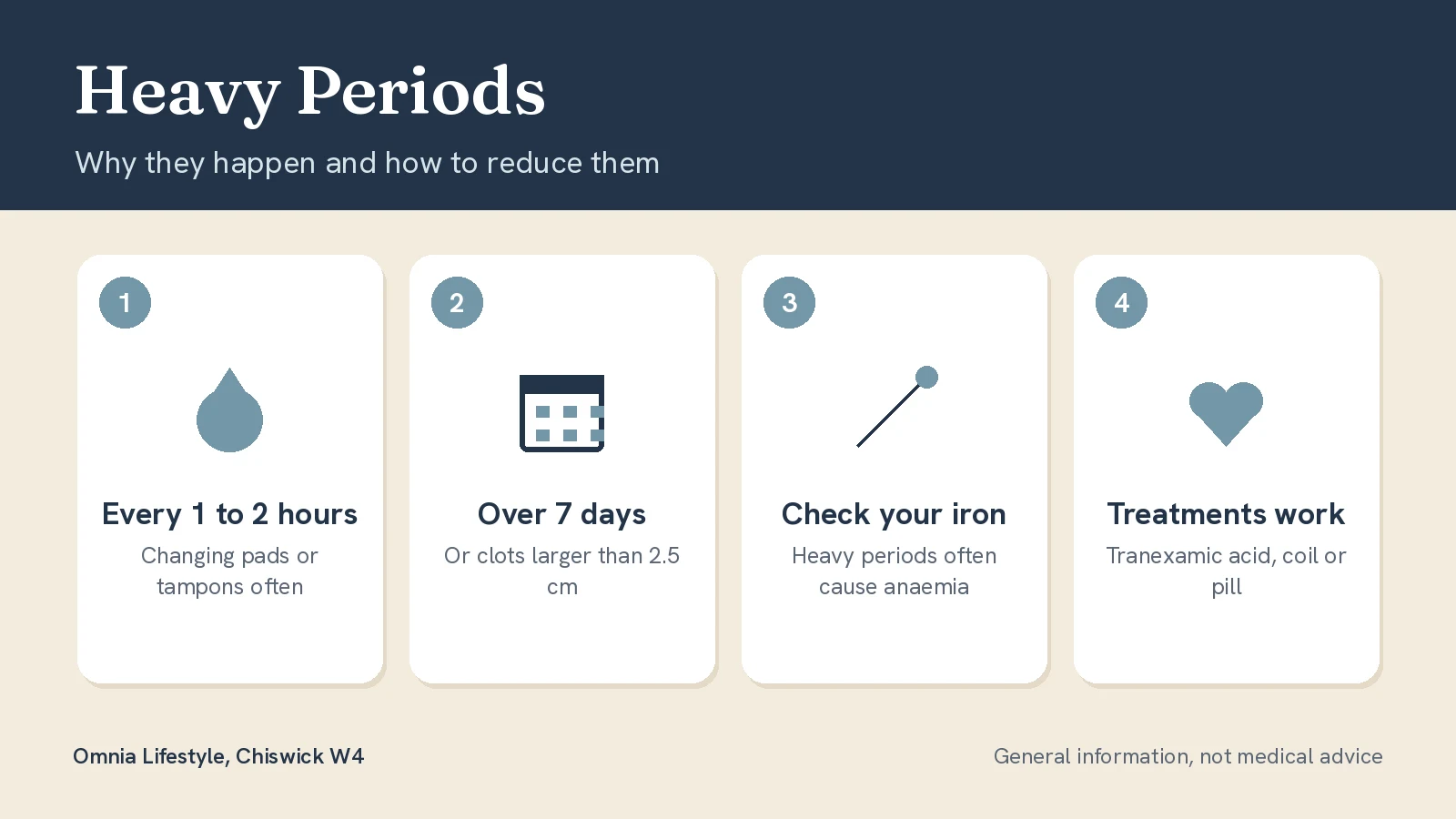
A period is heavy if it affects your daily life, for example if you change a pad or tampon every one to two hours, pass clots larger than about 2.5 cm, bleed through to clothes or bedding, or bleed for more than seven days. Often no cause is found, but fibroids, polyps, adenomyosis, endometriosis, PCOS, an underactive thyroid, some medicines, the copper coil and the perimenopause are common causes. Effective treatments include the hormonal coil, tranexamic acid, anti-inflammatory medicines and hormonal tablets. Heavy periods often cause low iron, so a blood test is worthwhile.
What counts as a heavy period?
- Changing a pad or tampon every one to two hours, or using two types of protection together
- Passing blood clots larger than about 2.5 cm
- Bleeding through to clothes or bedding
- Periods lasting more than seven days
- Avoiding work, exercise or social plans because of bleeding
- Feeling tired, short of breath or dizzy during or after periods
The medical term for heavy periods is menorrhagia, or heavy menstrual bleeding.
Why is my period so heavy?
In around half of people with heavy periods, no specific cause is found. Common causes include:
- Fibroids, non-cancerous growths in or around the womb
- Endometrial polyps, small growths in the lining of the womb
- Adenomyosis and endometriosis, often with painful periods. See how endometriosis is diagnosed
- PCOS, which can cause infrequent but heavy periods
- An underactive thyroid. See underactive thyroid symptoms
- The copper coil, especially in the first few months
- Medicines that thin the blood, such as anticoagulants
- Bleeding disorders, particularly if periods have been heavy since they started
- The perimenopause, when cycles become less predictable
- Rarely, cancer of the womb lining, which is why bleeding between periods or after the menopause should always be checked
Why is my period so heavy this month?
A one-off heavy period is often caused by a cycle where you did not ovulate, which can happen with stress, illness, weight change or the perimenopause. Stopping hormonal contraception can also bring heavier periods. If there is any chance you could be pregnant, a heavy bleed could be an early miscarriage, so take a pregnancy test and seek advice. If heavy periods continue for more than a couple of cycles, see your GP.
Heavy periods with clots after 40
Heavier periods and clots are common in the perimenopause, as hormone levels fluctuate. Fibroids and adenomyosis are also more common in your 40s. Small clots are normal, but regularly passing large clots, flooding, or bleeding between periods or after sex should be checked by your GP, who may arrange an ultrasound scan. See how long the menopause lasts.
How to stop heavy periods
There is no safe way to stop a period instantly, but heavy bleeding can be reduced significantly. Treatments your GP may offer include:
- The hormonal coil (LNG-IUS). The first choice for many people, it can greatly reduce bleeding and lasts several years.
- Tranexamic acid. Tablets taken during your period that help the blood clot and reduce flow.
- Anti-inflammatory medicines, such as mefenamic acid or ibuprofen, which reduce both bleeding and pain.
- The combined pill or progestogen tablets.
- Procedures, such as removing polyps or fibroids, endometrial ablation, or, if other treatments have not helped, hysterectomy.
What you can do
- Keep a diary of how often you change protection, clots and how many days you bleed
- Eat iron-rich foods such as red meat, beans, lentils and dark green vegetables
- Ask your GP for a blood test if you feel tired, breathless or dizzy
- Use heat and gentle movement to ease cramps
- Period pants and menstrual cups can help with heavy flow
When to seek medical help
Call 999 if you have:
- Very heavy bleeding with fainting, chest pain, breathlessness or a racing heart
- Heavy bleeding with severe tummy pain when you are, or could be, pregnant
Get same-day medical advice, from your GP or NHS 111, if:
- You are soaking through a pad or tampon every hour for more than two hours
- You feel dizzy or faint during your period
- You might be pregnant and are bleeding heavily
See your GP if:
- Heavy periods affect your daily life or have changed recently
- You bleed between periods, after sex or after the menopause
- You feel tired or short of breath, which may mean low iron
- You have pelvic pain or pressure
Frequently asked questions
Are blood clots in my period normal?
Small clots are normal, especially on heavier days. Frequent clots larger than about 2.5 cm suggest heavy bleeding worth checking.
Can heavy periods cause anaemia?
Yes. Heavy periods are the most common cause of iron deficiency anaemia in women, causing tiredness, breathlessness and pale skin.
Does ibuprofen help heavy periods?
Anti-inflammatory medicines such as ibuprofen can reduce bleeding as well as pain, if they are suitable for you.
Can stress cause heavy periods?
Stress can disrupt ovulation, which can lead to an irregular and sometimes heavier period.
Menstrual health support in Chiswick
Menstrual health is supported at Omnia Lifestyle in Chiswick, W4, close to Turnham Green station, on bus routes 94, E3 and 272. Limited parking is available on request when booking. We can arrange blood tests for iron, ferritin, thyroid and hormones and share them with your GP, and offer acupuncture, yoga and Ayurvedic guidance alongside your medical care, passing anything that needs investigation to your GP.
Read more about menstrual disorders and endometriosis and adenomyosis, see how to stop period pain fast, irregular periods and why you may be tired all the time, explore blood tests, acupuncture and yoga, or book an appointment.
This article is general information, not medical advice. If you have any of the warning signs listed above, seek medical attention.


.jpg)
.jpg)