




Headaches are one of the most common health complaints, and most are not a sign of anything serious. In the vast majority of cases the headache itself is the problem, triggered by everyday factors such as dehydration, poor sleep, stress or muscle tension in the neck and jaw. Far less often, a headache is a symptom of another condition that needs medical attention.
This guide explains what causes headaches, the main types, how to work out your own triggers and the warning signs that need urgent help.
Quick answer
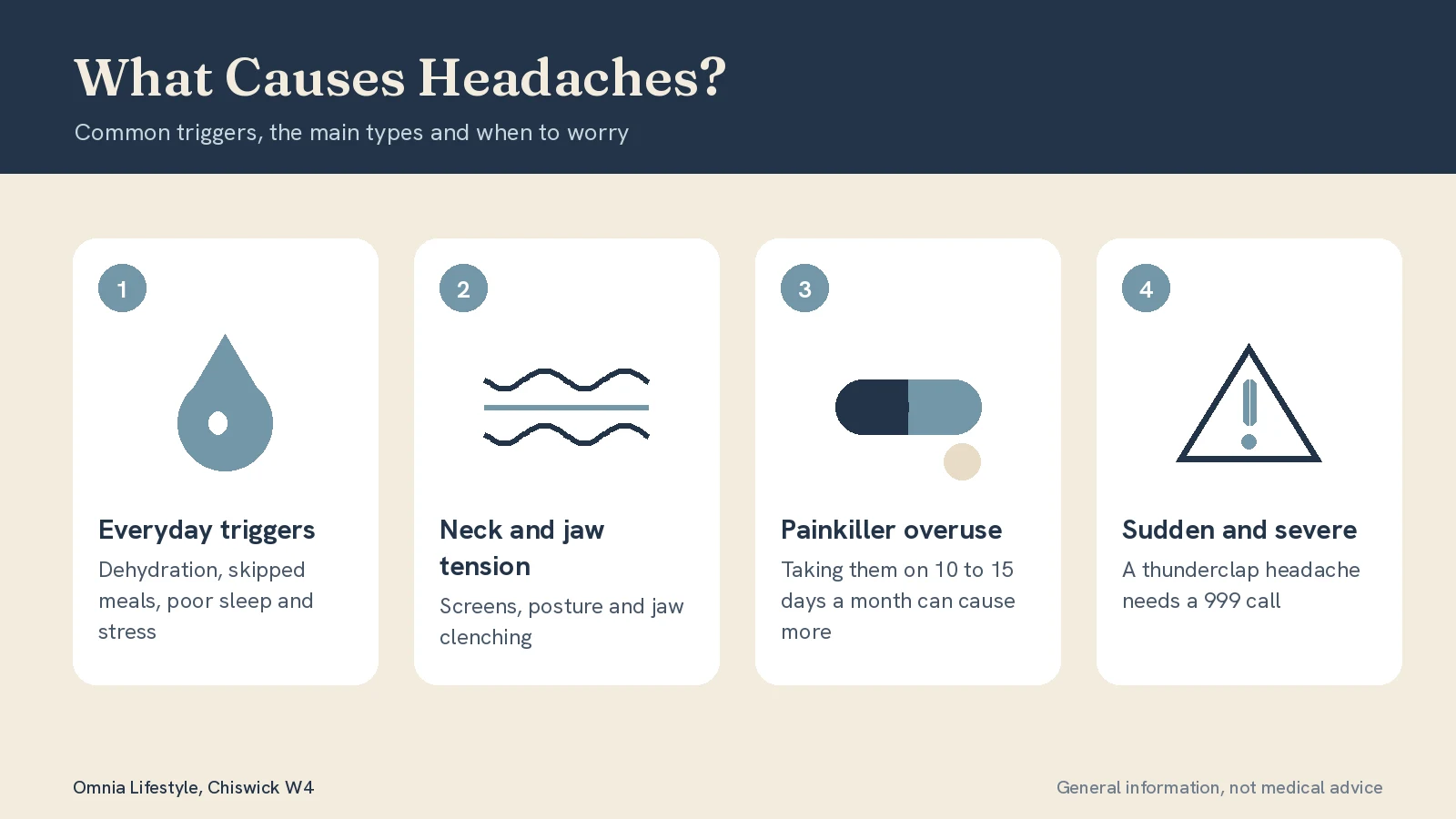
Most headaches are caused by a combination of everyday triggers: not drinking enough, skipping meals, poor or irregular sleep, stress, long hours at a screen, neck and jaw tension, alcohol, caffeine changes and hormonal shifts. Taking painkillers too often can itself cause daily headaches. A sudden, severe headache, or a headache with weakness, confusion, a stiff neck and fever, needs a 999 call.
Primary and secondary headaches
Doctors divide headaches into two groups. Primary headaches, such as tension-type headache and migraine, are conditions in their own right and account for most headaches. Secondary headaches are caused by something else, such as a cold, a hangover, a head injury or, rarely, a serious problem inside the head.
The main types of headache
- Tension-type headache. The most common type. A dull, tight pressure, like a band around the head, usually on both sides.
- Migraine. A throbbing, often one-sided headache with nausea and sensitivity to light and sound, sometimes with visual disturbance beforehand. See our page on migraine.
- Cervicogenic headache. Pain that starts in the neck and spreads into the head, often worse with certain neck positions.
- Medication overuse headache. A daily or near-daily headache caused by taking painkillers too often.
- Cluster headache. Rare but severe pain around one eye, often with a watery eye and runny nostril on the same side, coming in bouts.
Everyday triggers
- Dehydration and skipped meals
- Too little, too much or irregular sleep
- Stress, and the let-down period after stress, such as weekends and holidays
- Screens and posture. Long periods looking down at a laptop or phone strain the neck and shoulders.
- Jaw clenching and teeth grinding, often at night. See our guide to easing TMJ jaw pain.
- Caffeine. Both too much and suddenly cutting down can trigger headaches.
- Alcohol, especially in larger amounts
- Hormonal changes around periods, pregnancy and the menopause
- Uncorrected eyesight problems, which an eye test can check
- Colds, flu and sinus infections
Can painkillers cause headaches?
Yes. Taking painkillers such as paracetamol, ibuprofen or aspirin on 15 or more days a month, or codeine-based painkillers or triptans on 10 or more days a month, can lead to medication overuse headache. The headache often improves after the painkiller is stopped or reduced, but this should be planned with your GP, as headaches can get worse for a short time before they get better.
Why do I keep getting headaches?
Frequent headaches usually have more than one cause working together, such as poor sleep, stress, neck tension and regular painkiller use. Keeping a headache diary for a few weeks, noting when headaches start, what you were doing, what you ate and drank, your sleep and any medicine taken, is the most reliable way to spot your pattern.
What helps
Drink water, eat if you have missed a meal, take a screen break and get fresh air. Gentle neck and shoulder stretches and relaxing the jaw help tension headaches. Over the longer term, regular sleep, meals and activity, and treating neck and jaw tension, reduce how often headaches happen. NICE guidance says a course of up to ten acupuncture sessions can be considered to prevent chronic tension-type headache and migraine. For exercises, see neck pain exercises.
When to seek medical help
Call 999 if you have:
- A sudden, severe headache that peaks within about five minutes, often described as the worst headache ever
- A headache with weakness, numbness, drooping of the face, slurred speech, confusion or loss of vision
- A headache with fever, a stiff neck and a rash, or a fit
- A headache after a head injury with vomiting, drowsiness or confusion
Get same-day medical advice, from your GP or NHS 111, if:
- You are over 50 and have a new headache with scalp tenderness or jaw pain when chewing, as this can be a sign of temporal arteritis, which can affect your sight
- You have a headache with a painful red eye and blurred vision
- You are pregnant and have a severe headache with vision problems or sudden swelling of the face, hands or feet
- You have a weakened immune system or a history of cancer and develop a new headache
See your GP if:
- Headaches are frequent, getting worse or have changed in character
- A headache is worse when you cough, strain or lie down, or wakes you from sleep
- You are taking painkillers for headaches on many days each month
Frequently asked questions
Why do I have a headache every day?
Daily headaches are often caused by painkiller overuse, ongoing stress, poor sleep or neck tension. Any new daily headache should be checked by your GP.
Can dehydration cause a headache?
Yes. Even mild dehydration can trigger a headache. Drinking regularly through the day helps prevent this.
Can stress cause headaches?
Yes. Stress is one of the most common triggers for tension-type headaches and migraines, often through muscle tension and poor sleep.
Should I worry about a headache that will not go away?
Most persistent headaches are not serious, but a headache lasting several days, getting worse, or coming with any of the warning signs above should be checked by a doctor.
Headache support in Chiswick
Headaches are assessed and treated at Omnia Lifestyle in Chiswick, W4, close to Turnham Green station, on bus routes 94, E3 and 272. Limited parking is available on request when booking. We take a full headache history and check your neck, jaw and shoulders, and we ask you to keep your GP involved where medication is part of your care.
Read more about headaches and migraines and neck and shoulder pain, see acupuncture for neck pain, explore acupuncture, physiotherapy and manual therapy, or book an appointment.
This article is general information, not medical advice. If you have any of the warning signs listed above, seek medical attention.


.jpg)
.jpg)