




Social anxiety is much more than shyness. It is an intense, persistent fear of being watched, judged or embarrassed in social situations, and it can make everyday things such as meetings, phone calls or eating in front of others feel overwhelming. It is one of the most common anxiety problems, it usually starts in the teenage years, and it is very treatable.
This guide explains what social anxiety feels like, what causes it, whether it counts as a disability in the UK and how it is treated.
Quick answer
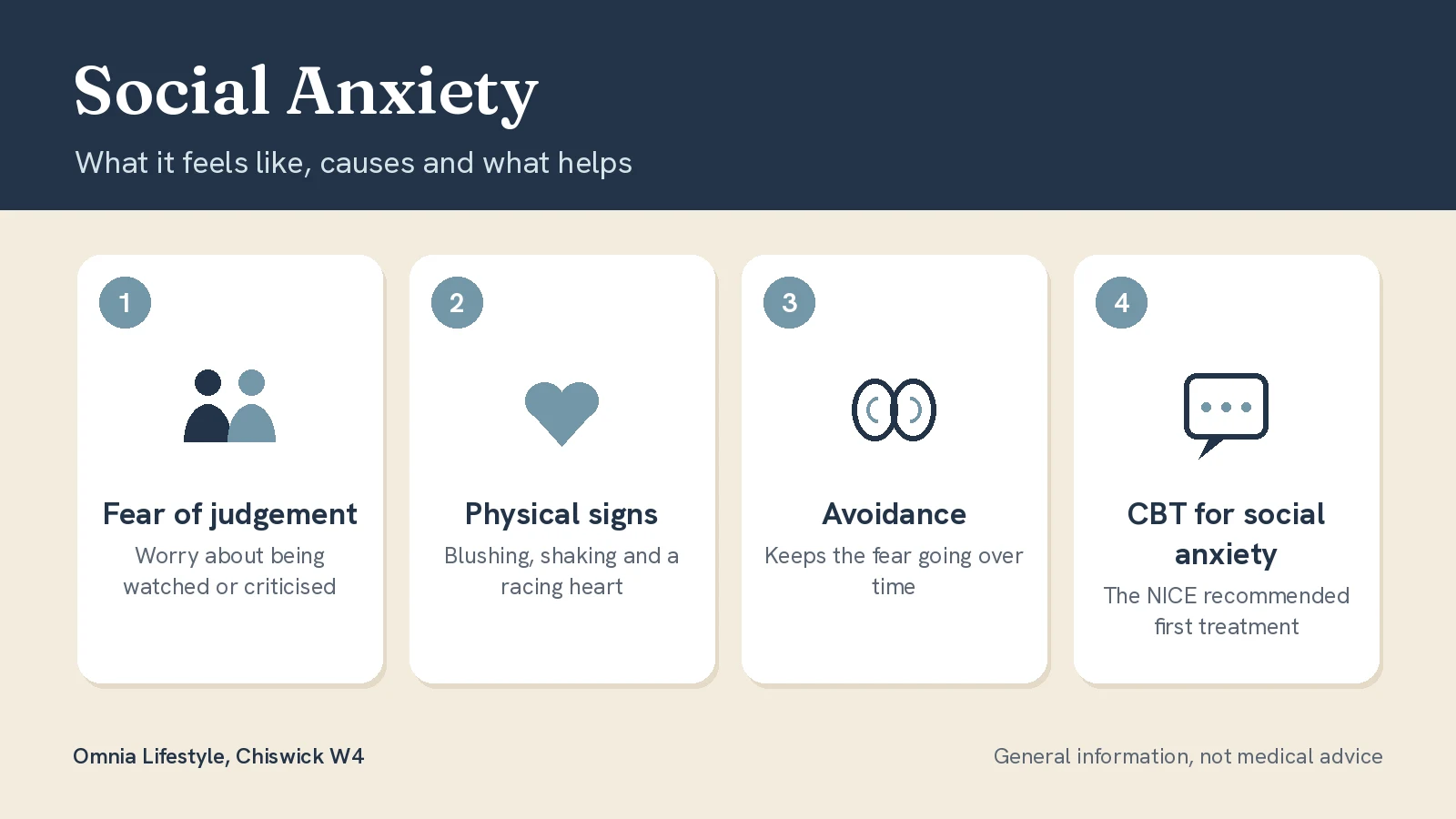
Social anxiety, also called social anxiety disorder or social phobia, is a long-lasting fear of social situations because of worry about being judged or humiliated. It causes worry before events, physical symptoms such as blushing, sweating, shaking and a racing heart, and avoidance of situations. It is caused by a mix of temperament, family and life experiences, and is kept going by avoidance. It can count as a disability under the Equality Act 2010 if it has a substantial, long-term effect on daily life. NICE recommends individual CBT developed specifically for social anxiety as the first treatment.
What is social anxiety?
Most people feel nervous before a presentation or a party. Social anxiety disorder is different: the fear is intense, lasts for months, is out of proportion to the situation and leads you to avoid things or endure them with great distress. It often affects school, work and relationships.
What does social anxiety feel like?
Thoughts and feelings
- Dreading social situations for days or weeks beforehand
- Fear of saying something foolish or being criticised
- Feeling that everyone is watching you
- Going over conversations afterwards, focusing on what went wrong
- Low self-confidence
Physical symptoms
- Blushing, sweating, trembling or a shaky voice
- A racing or pounding heart
- Feeling sick or needing the toilet
- Your mind going blank
Behaviour
- Avoiding situations such as meetings, parties, phone calls or eating in public
- Using safety behaviours, such as rehearsing what to say, avoiding eye contact or staying near the exit
- Using alcohol to get through social events
What causes social anxiety?
- Temperament: some people are naturally more cautious or inhibited from childhood
- Family: social anxiety can run in families, through both genes and learned patterns
- Life experiences: bullying, harsh criticism, humiliation or rejection, particularly when young
- What keeps it going: avoidance and safety behaviours stop you learning that situations are manageable, and focusing on yourself during conversations makes you more self-conscious
Is social anxiety a disability?
It can be. Under the Equality Act 2010, a mental health condition counts as a disability if it has a substantial and long-term adverse effect on your ability to carry out normal day-to-day activities. Long-term usually means it has lasted, or is likely to last, at least 12 months. Many people with social anxiety meet this definition, which means employers must consider reasonable adjustments, such as written rather than spoken presentations or advance notice of meetings. Eligibility for benefits such as Personal Independence Payment depends on how the condition affects your daily life, not on the diagnosis itself. Citizens Advice and ACAS can give free guidance.
How social anxiety is treated
- CBT for social anxiety. NICE recommends individual cognitive behavioural therapy developed specifically for social anxiety disorder, usually up to 14 sessions over about four months. It helps you test feared predictions, drop safety behaviours and shift attention outwards.
- Supported self-help based on CBT, for people who prefer not to have face-to-face therapy.
- Medication. An SSRI such as escitalopram or sertraline may be offered if you prefer medication or therapy has not helped enough.
- Short-term psychodynamic therapy may be offered if you decline CBT and medication.
You can refer yourself to NHS Talking Therapies without seeing your GP.
Self-help for social anxiety
- Face feared situations gradually, starting with easier ones, rather than avoiding them
- Try dropping one safety behaviour at a time and notice what happens
- Focus on the conversation and the other person rather than on yourself
- Challenge predictions, such as everyone noticing you blush
- Keep caffeine low and avoid using alcohol to cope
- Practise slow breathing before and during events. See how to cope with anxiety
When to seek help
Call 999 or go to A&E if:
- You feel unable to keep yourself safe, or you or someone else is in immediate danger
Get urgent help the same day if:
- You have thoughts of harming yourself. Call NHS 111 and choose the mental health option, or call Samaritans free on 116 123, day or night
See your GP or refer yourself to NHS Talking Therapies if:
- Social anxiety is affecting your work, studies or relationships
- You are avoiding important situations
- You rely on alcohol or drugs to cope socially
- You also feel low or hopeless
Frequently asked questions
Is social anxiety the same as shyness?
No. Shyness is a personality trait that usually eases as you warm up. Social anxiety is more intense and persistent, and leads to distress and avoidance.
Can social anxiety go away?
Without treatment it often lasts for years, but CBT helps most people, and many recover fully or manage it well.
Can children have social anxiety?
Yes. It often starts in childhood or the teenage years. Speak to your GP if a child is avoiding school or social situations because of fear.
Does alcohol help social anxiety?
It may give short-term relief, but it makes anxiety worse afterwards, stops you learning to cope and can lead to dependence.
Anxiety support in Chiswick
Support for anxiety is available at Omnia Lifestyle in Chiswick, W4, close to Turnham Green station, on bus routes 94, E3 and 272. Limited parking is available on request when booking. Clinical psychology is provided by Prof (Dr) Diwakar Sukul, Chartered Clinical Psychologist, in person or by secure video, which can feel easier when face-to-face appointments are daunting. Some people combine this with yoga, tai chi or acupuncture. We can signpost you to your GP or NHS Talking Therapies if that is the better route.
Read more about stress and anxiety, see generalised anxiety disorder, anxiety symptoms, what a panic attack is and whether Ayurveda helps stress and anxiety, explore clinical psychology, yoga and tai chi, or book an appointment.
This article is general information, not medical or legal advice. If you feel unable to keep yourself safe, call 999 or go to A&E.

.jpg)
.jpg)