




Everyone feels anxious sometimes. Anxiety becomes an anxiety disorder when it is persistent, out of proportion to what is happening and hard to control, and when it starts to affect daily life. Generalised anxiety disorder, or GAD, is one of the most common, and it responds well to treatment.
This guide explains what an anxiety disorder is, what GAD is and how it feels, how it is diagnosed and the treatments recommended in the UK.
Quick answer
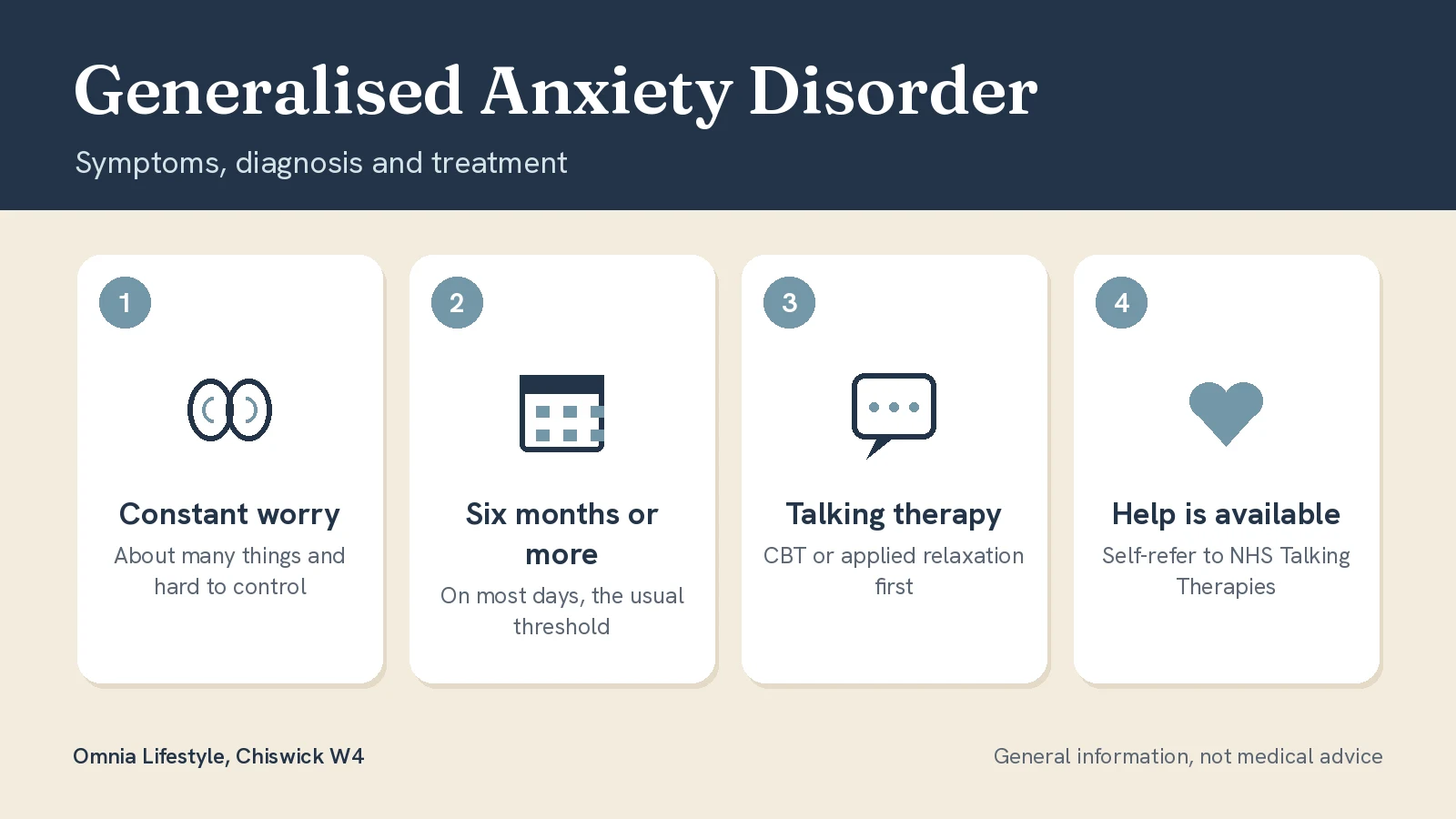
An anxiety disorder is a mental health condition in which anxiety is ongoing, excessive and difficult to control. Generalised anxiety disorder (GAD) means worrying about lots of different everyday things on most days, usually for six months or more, with symptoms such as restlessness, tiredness, poor concentration, irritability, muscle tension and poor sleep. It affects up to 5 in 100 people in the UK. NICE recommends a stepped approach: self-help and guided self-help first, then cognitive behavioural therapy (CBT) or applied relaxation, with medication such as sertraline as an option. You can refer yourself to NHS Talking Therapies.
What is an anxiety disorder?
Anxiety is a normal response to threat or pressure. In an anxiety disorder, it becomes frequent, intense or long-lasting, and is out of proportion to the situation. The main types are:
- Generalised anxiety disorder (GAD): persistent worry about many different things
- Panic disorder: repeated, unexpected panic attacks and fear of having more. See what a panic attack is
- Social anxiety disorder: intense fear of being judged in social situations. See social anxiety
- Specific phobias, such as fear of flying, heights or needles
- Health anxiety: persistent worry about having a serious illness
Obsessive-compulsive disorder (OCD) and post-traumatic stress disorder (PTSD) are closely related conditions that also involve high anxiety.
What is generalised anxiety disorder?
GAD is a long-term condition in which you feel anxious about a wide range of situations and issues, rather than one specific thing. As soon as one worry is resolved, another often takes its place. The worry is hard to switch off, and it is usually present on more days than not for at least six months.
Symptoms of GAD
- Constant worry that is hard to control
- Feeling restless, on edge or unable to relax
- Tiring easily
- Difficulty concentrating, or your mind going blank
- Irritability
- Muscle tension, aches and headaches
- Difficulty falling or staying asleep
- Physical signs such as a racing heart, sweating, dizziness or stomach upset
For a fuller picture of how anxiety affects the body and mind, see anxiety symptoms.
What causes GAD?
There is rarely a single cause. Possible factors include genes and family history, an imbalance in brain chemicals involved in mood, a history of stressful or traumatic experiences, long-term physical illness, and alcohol or drug use. Some people develop GAD without any clear reason.
How GAD is diagnosed
Your GP will ask about your symptoms, how long you have had them and how they affect your life. You may be asked to complete a short questionnaire, such as the GAD-7, which scores how often you are bothered by key symptoms. Your GP may also check for physical causes, such as an overactive thyroid, and ask about caffeine, alcohol and medicines.
How GAD is treated
NICE recommends a stepped approach, starting with the least intensive treatment likely to help:
- Step 1: information and monitoring. Understanding GAD and the options, with your GP keeping track of how you are.
- Step 2: low-intensity support. Guided self-help based on CBT, working through a structured programme with support from a practitioner, or psychoeducation groups.
- Step 3: high-intensity therapy or medication. Individual CBT, usually over 12 to 15 weekly sessions, or applied relaxation, which teaches you to relax your muscles in situations that cause anxiety. Medication is an option, usually a selective serotonin reuptake inhibitor (SSRI) such as sertraline.
- Step 4: specialist care for severe or complex anxiety.
You can refer yourself to NHS Talking Therapies without seeing your GP. SSRIs usually take a few weeks to work and can cause side effects at first. Do not stop them suddenly without advice. Benzodiazepines, such as diazepam, are not recommended for GAD except very briefly in a crisis.
Self-help that makes a difference
- Exercise regularly, which reduces anxiety for many people
- Cut down on caffeine and alcohol
- Keep a regular sleep routine
- Set aside a short daily worry time, rather than worrying all day
- Practise slow breathing, relaxation or mindfulness
- Talk to someone you trust
For practical techniques, see how to cope with anxiety.
When to seek help
Call 999 or go to A&E if:
- You feel unable to keep yourself safe, or you or someone else is in immediate danger
Get urgent help the same day if:
- Your anxiety comes with thoughts of harming yourself. Call NHS 111 and choose the mental health option, or call Samaritans free on 116 123, day or night
See your GP or refer yourself to NHS Talking Therapies if:
- Worry is affecting your work, relationships, sleep or health
- You have felt anxious most days for several weeks
- You are using alcohol or drugs to cope
- You have physical symptoms such as chest pain that have not been checked
Frequently asked questions
Can GAD be cured?
Many people recover fully or manage their anxiety well with treatment. Symptoms can return during stressful periods, but the skills learned in therapy help again.
What is the difference between anxiety and GAD?
Anxiety is a normal feeling. GAD is a condition in which worry is excessive, hard to control and present most days for months.
Is an anxiety disorder a disability?
It can be under the Equality Act 2010 if it has a substantial, long-term effect on your daily life. We explain this in our guide to social anxiety.
Can acupuncture or yoga help GAD?
Some people find them calming, and yoga has evidence for reducing anxiety symptoms. They work best alongside, not instead of, talking therapy and GP care.
Anxiety support in Chiswick
Support for anxiety is available at Omnia Lifestyle in Chiswick, W4, close to Turnham Green station, on bus routes 94, E3 and 272. Limited parking is available on request when booking. Clinical psychology is provided by Prof (Dr) Diwakar Sukul, Chartered Clinical Psychologist, in person or by secure video, and some people combine this with acupuncture, VedaPulse stress testing, yoga or tai chi. We can signpost you to your GP or NHS Talking Therapies if that is the better route.
Read more about stress and anxiety, see how to cope with anxiety, anxiety symptoms and whether acupuncture helps anxiety, explore clinical psychology, acupuncture, yoga and tai chi, or book an appointment.
This article is general information, not medical advice. If you feel unable to keep yourself safe, call 999 or go to A&E.


.jpg)
.jpg)