




Depression is common, affecting around one in six adults in the UK at some point, and it is treatable. It is more than feeling sad for a few days. It is a persistent low mood or loss of interest that affects how you think, feel and function. Recognising the signs is an important first step, for yourself or for someone you care about.
This guide explains the signs and symptoms of depression, how to know if you have it, what causes it, how it is treated in the UK and where to get help.
Quick answer
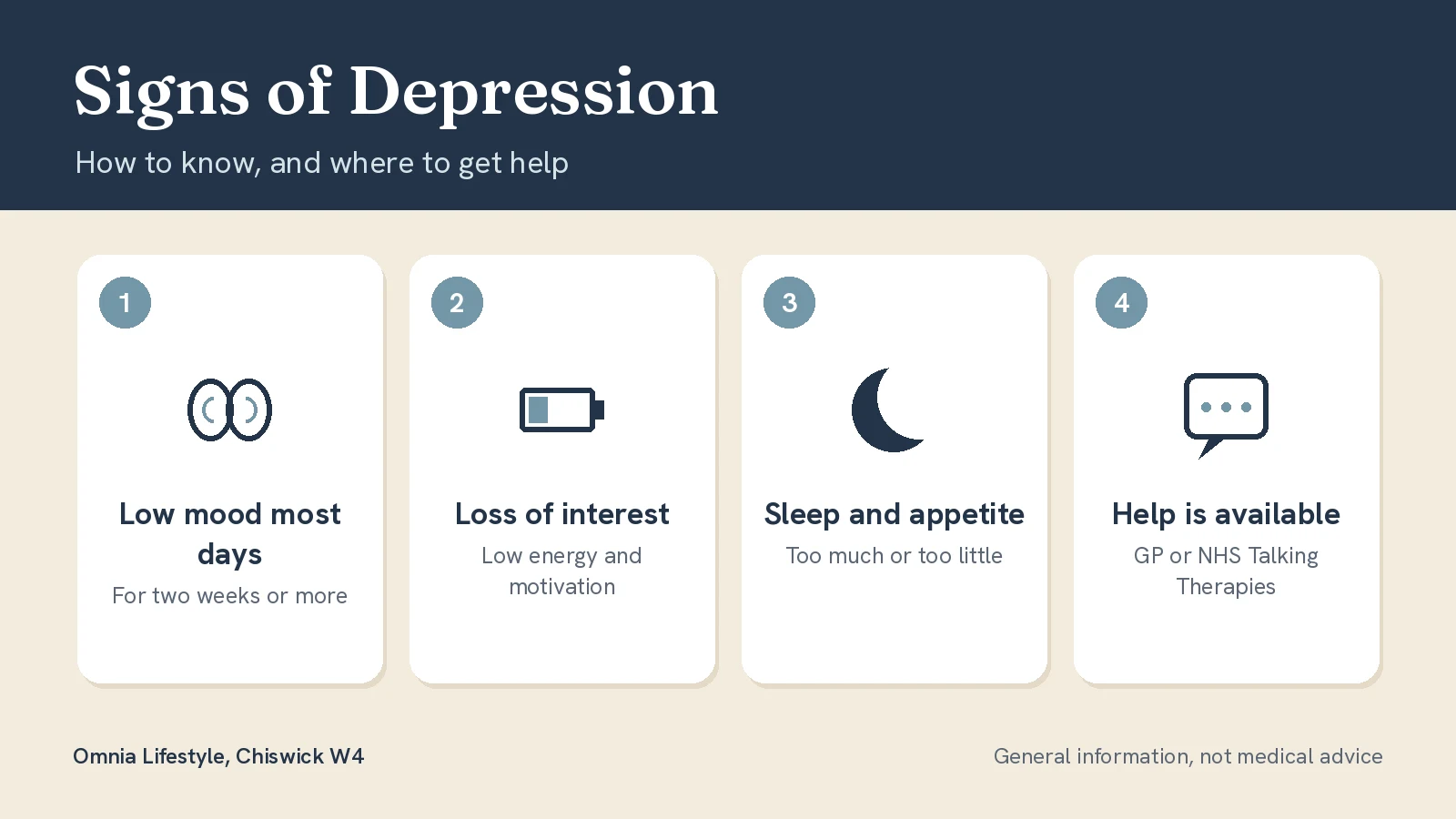
The main signs of depression are low mood or loss of interest and pleasure in things you used to enjoy, most of the day, nearly every day, for at least two weeks. Other symptoms include tiredness, changes in sleep and appetite, poor concentration, feelings of guilt or worthlessness, and sometimes thoughts of self-harm or suicide. Depression is a recognised mental illness and is treatable with talking therapies, exercise, self-help and, for some people, medication. You can refer yourself to NHS Talking Therapies or speak to your GP.
If you feel unable to keep yourself safe, call 999 or go to A&E now. You can also call NHS 111 and choose the mental health option, or call Samaritans free on 116 123, day or night.
Signs and symptoms of depression
How you may feel
- Low, sad or empty most of the time
- Losing interest or pleasure in things you used to enjoy
- Hopeless, guilty or worthless
- Irritable, anxious or tearful
- Having thoughts of self-harm or suicide
Changes in your body and behaviour
- Tiredness and low energy
- Sleeping too much or too little, or waking early
- Changes in appetite or weight
- Moving or speaking more slowly, or feeling restless
- Aches and pains without a clear cause
- Withdrawing from friends, family and activities
- Difficulty concentrating, remembering or making decisions
How do you know if you have depression?
Everyone has low days. Depression is different in how long it lasts and how much it affects you. If you have felt low or lost interest in things for most of the day, nearly every day, for at least two weeks, along with several of the symptoms above, it may be depression. A GP can assess you, often using a short questionnaire called the PHQ-9, and may arrange blood tests to rule out physical causes such as an underactive thyroid or anaemia. See underactive thyroid symptoms.
Types of depression
- Mild, moderate and severe depression, based on the number and impact of symptoms
- Postnatal depression, which can develop in the year after having a baby
- Seasonal affective disorder, depression that follows a seasonal pattern, usually in winter
- Bipolar disorder, in which episodes of depression alternate with periods of high mood, previously called manic depression
What causes depression?
There is usually no single cause. Depression can be triggered by stressful life events such as bereavement, relationship problems, job loss or money worries, and is more likely with long-term illness or pain, loneliness, alcohol or drug use, a family history of depression and hormonal changes, such as after childbirth or around the menopause. Sometimes it develops without an obvious reason.
How depression is treated
NICE recommends offering a choice of treatments, depending on how severe depression is and what you prefer:
- Guided self-help based on cognitive behavioural therapy (CBT)
- Group therapies, such as group CBT, behavioural activation or mindfulness-based therapy
- Group exercise, which is a recognised treatment for less severe depression
- Individual talking therapy, such as CBT, behavioural activation or counselling
- Antidepressant medicines, often combined with talking therapy for more severe depression
You can refer yourself to NHS Talking Therapies without seeing your GP. Antidepressants usually take a few weeks to work. Do not stop them suddenly without advice.
Self-help that can make a difference
- Tell someone you trust how you are feeling
- Stay active, even a short walk outside each day
- Plan one small, manageable activity each day
- Keep a regular sleep routine
- Limit alcohol, which worsens mood
- Stay in touch with people, even briefly
If anxiety is also part of the picture, see generalised anxiety disorder.
When to seek help
Call 999 or go to A&E if:
- You feel unable to keep yourself safe, or you or someone else is in immediate danger
Get urgent help the same day if:
- You have thoughts of harming yourself or ending your life. Call NHS 111 and choose the mental health option, or call Samaritans free on 116 123, day or night
See your GP or refer yourself to NHS Talking Therapies if:
- Low mood or loss of interest has lasted more than two weeks
- Depression is affecting your work, relationships or daily life
- You are using alcohol or drugs to cope
- You have had depression before and feel it returning
Frequently asked questions
Is depression a mental illness?
Yes. Depression is a common, recognised mental illness. It is not a sign of weakness, and it is treatable.
Can depression go away on its own?
Mild depression sometimes improves without treatment, but support speeds recovery and reduces the chance of it returning. Do not wait if you are struggling.
Can physical illness cause depression?
Yes. Long-term pain and illness increase the risk of depression, and some conditions, such as an underactive thyroid, can cause low mood.
Does exercise help depression?
Yes. Regular exercise, especially in a group, improves mood and is recommended by NICE for less severe depression.
Depression support in Chiswick
Support for low mood and depression is available at Omnia Lifestyle in Chiswick, W4, close to Turnham Green station, on bus routes 94, E3 and 272. Limited parking is available on request when booking. Clinical psychology is provided by Prof (Dr) Diwakar Sukul, Chartered Clinical Psychologist, and some people combine this with structured exercise, yoga, tai chi or acupuncture alongside, never instead of, talking therapy or medication. If we are concerned about your safety, we will help you get urgent support.
Read more about depression support and stress and anxiety, see how to cope with anxiety and what insomnia is, explore clinical psychology, fitness and nutrition and yoga, or book an appointment.
This article is general information, not medical advice. If you feel unable to keep yourself safe, call 999 or go to A&E.


.jpg)
.jpg)