




Osteoarthritis is the most common form of arthritis in the UK, affecting the knees, hips, hands and spine. It can be painful and frustrating, but it is not simply wear and tear, and it does not inevitably get worse. The right treatment, built around exercise, helps most people move more and hurt less.
This guide explains the best treatments for osteoarthritis according to NICE guidance, what works for knees, hips and hands, the role of painkillers and injections, and when surgery is considered.
Quick answer
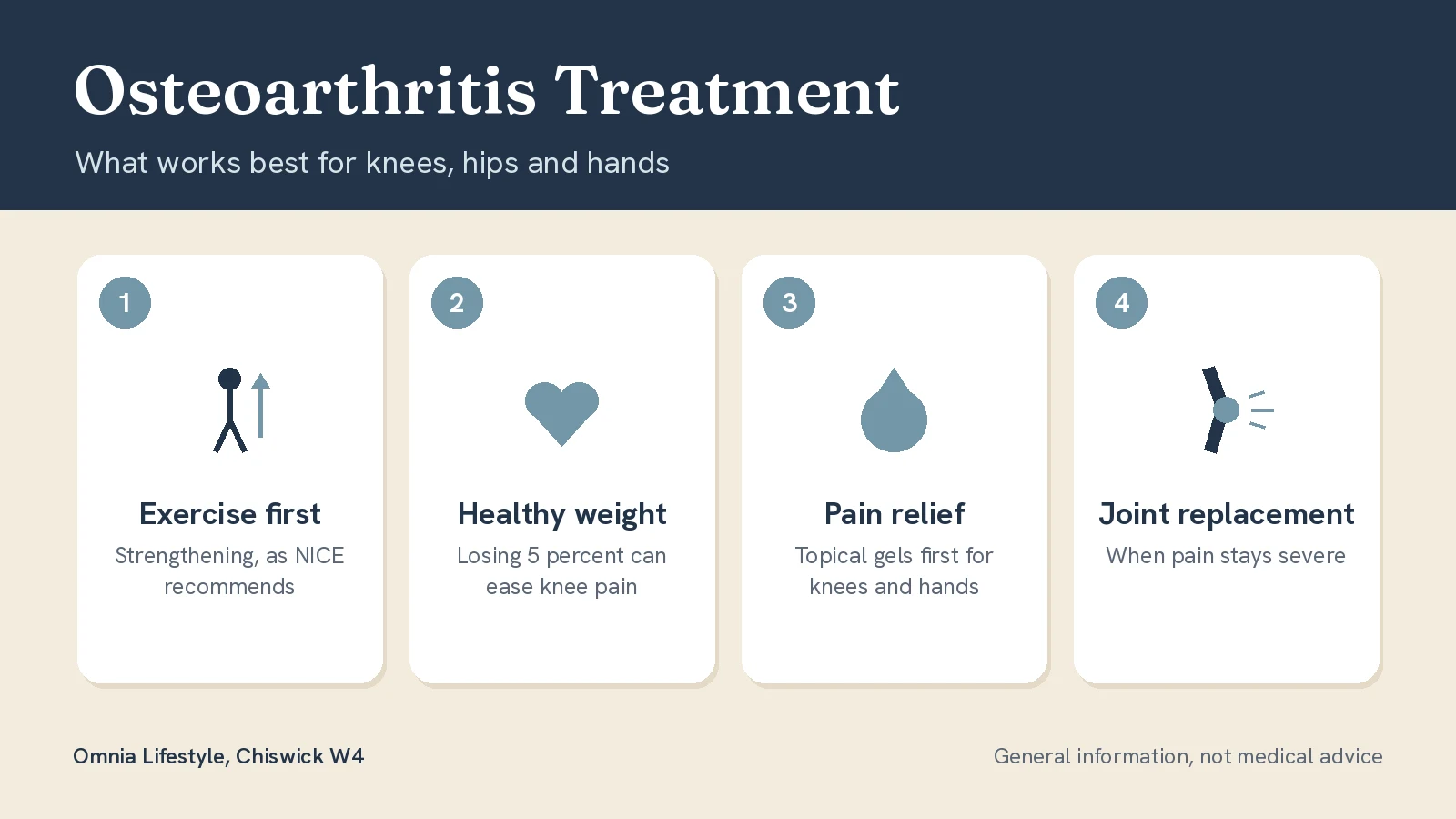
The best treatment for osteoarthritis is regular exercise, including strengthening the muscles around the joint, plus weight loss if you are overweight. These are recommended by NICE for everyone with osteoarthritis. Topical anti-inflammatory gels are the first painkiller to try for knee and hand osteoarthritis. Oral anti-inflammatories can be used at the lowest dose for the shortest time. Steroid injections give short-term relief in a flare. Joint replacement is considered when pain and loss of function remain severe despite these treatments.
What osteoarthritis feels like
- Joint pain that is worse with activity and eases with rest
- Stiffness after rest or first thing in the morning, usually lasting under 30 minutes
- A grinding or creaking feeling
- Bony swelling, particularly at the finger joints
- Flares after a busy day
For early signs by type of arthritis, see what arthritis feels like, and for how it progresses, see the 4 stages of osteoarthritis.
The core treatments
- Exercise. Strengthening the muscles around the joint and general aerobic activity reduce pain and improve function, with benefits building over eight to twelve weeks. It is as effective as many painkillers.
- Weight loss. For people who are overweight, losing even 5 percent of body weight can noticeably reduce knee and hip pain.
- Information and self-management. Understanding that activity is safe, pacing, and planning for flares.
Painkillers and injections
- Topical anti-inflammatory gels, such as ibuprofen or diclofenac gel, are the first choice for knee osteoarthritis and can be used for other joints, including the hands.
- Oral anti-inflammatories can help but should be used at the lowest dose for the shortest time, often with stomach protection, and are not suitable for everyone.
- Paracetamol and weak opioids are not routinely recommended for osteoarthritis, except occasionally for short periods.
- Steroid injections into the joint can give short-term relief, usually for a few weeks, when other treatments have not helped enough.
NICE does not recommend glucosamine, hyaluronic acid injections or keyhole washouts of the knee for osteoarthritis. Always discuss medicines with your GP or pharmacist.
Treatment for knee osteoarthritis
Strengthening the thigh and hip muscles is the most effective treatment for knee osteoarthritis. Walking, cycling and swimming keep the joint moving. Cushioned, supportive shoes help, and a walking stick held in the opposite hand can take load off a painful knee. See our exercises for knee pain.
Treatment for hip osteoarthritis
Strengthening the buttock and thigh muscles, gentle range of movement exercises and staying active help hip osteoarthritis. Weight loss reduces load on the joint. Hip replacement has excellent long-term results for people with severe pain and stiffness.
Osteoarthritis in the hands and feet
Hand osteoarthritis often affects the joints at the ends of the fingers and the base of the thumb. Hand exercises, heat, topical gels and a splint for the thumb base help. In the feet, the big toe joint is most often affected. Stiff-soled, roomy shoes and insoles can reduce pain.
When is surgery considered?
Joint replacement is considered when osteoarthritis has a substantial effect on your quality of life and non-surgical treatments have not helped enough. Age, weight and X-ray findings alone should not prevent referral. Knee and hip replacements are among the most successful operations, and strengthening beforehand improves recovery.
When to seek medical help
Call 999 or go to A&E if:
- You have a sudden severe injury and cannot move the joint or bear weight, or the limb looks deformed
Get same-day medical advice, from your GP or NHS 111, if:
- A joint suddenly becomes hot, red and very swollen, especially with a high temperature
- You have a replaced joint that becomes red, hot or newly painful
See your GP if:
- Joint pain is affecting your sleep, work or daily life
- Several joints are swollen and stiff for more than 30 minutes in the morning, which could be inflammatory arthritis
- You are losing weight without trying or pain wakes you every night
- You are using painkillers most days
Frequently asked questions
Can osteoarthritis be cured?
The joint changes cannot be reversed, but symptoms often improve a great deal with exercise and weight loss, and many people have long periods with little pain.
Is walking good for osteoarthritis?
Yes. Walking is one of the best activities for knee and hip osteoarthritis. Build up gradually and wear supportive shoes.
Should I rest a painful arthritic joint?
Short rests during a flare are fine, but long periods of rest weaken muscles and increase stiffness. Keep moving within comfort.
Does acupuncture help osteoarthritis?
NICE does not recommend acupuncture for osteoarthritis, because trials show little benefit over sham treatment.
Osteoarthritis care in Chiswick
Osteoarthritis is treated at Omnia Lifestyle in Chiswick, W4, close to Turnham Green station, on bus routes 94, E3 and 272. Limited parking is available on request when booking. Our physiotherapists assess strength, movement and walking and build a progressive programme you can do at home or with Pixformance guided training. Tai chi and red light therapy can be added for comfort, and we refer to your GP where injections or a surgical opinion may help.
Read more about osteoarthritis, knee pain and joint pain, see the stages of osteoarthritis and whether arthritis is hereditary, explore physiotherapy, Pixformance, tai chi and red light therapy, or book an assessment.
This article is general information, not medical advice. If you have any of the warning signs listed above, seek medical attention.



.jpg)
.jpg)