

Book at our Chiswick clinic
LPG Endermologie
Dimpled thighs are so common that most people assume they are looking at cellulite. Sometimes, though, what looks like cellulite is lipoedema (spelled lipedema in the US), a long-term condition of the fat tissue that needs a different approach. This guide covers one question: lipedema or cellulite, and how can you tell? For the wider picture of the condition, read our guide to lipoedema vs lymphoedema.
Not sure what you are dealing with? Your first LPG Endermologie visit is a 60-minute Discovery Session for £99, including a consultation and a full treatment. Book online or call 020 4515 0000.
Quick answer
Cellulite is harmless surface dimpling that does not hurt. Lipoedema is a long-term condition with painful, heavy limbs, easy bruising and feet left unaffected, so see a GP for diagnosis. At Omnia Lifestyle in Chiswick W4, LPG Endermologie can improve the look of cellulite and support comfort in lipoedema, but it does not make lipoedema go away.
What is the difference between lipedema and cellulite?
Cellulite is about the surface of the skin. Lipoedema is about how much fat sits under it, where it sits and how it feels. The signs below are the ones a GP is likely to ask about.
| Sign | Cellulite | Lipoedema |
|---|---|---|
| What it is | Dimpling where fibrous bands pull the skin down and fat pushes up | A long-term condition in which fat builds up out of proportion to the rest of the body |
| Pain | Not painful | Often painful, tender or heavy |
| Bruising | Not a typical feature | Bruises easily |
| Where it shows | Thighs, buttocks and stomach | Both sides equally: bottom, thighs, lower legs, sometimes arms |
| Feet | Not relevant | Usually not affected |
| Skin | Dimpled, normal feel | Soft and cool, and may look dimpled |
| Who gets it | 80% to 90% of women after puberty, under 10% of men | More common in women; can occur at a healthy weight |
| Health impact | Harmless and cosmetic | A medical condition that can affect mobility and mental health |
Figures for cellulite come from Cleveland Clinic. Signs of lipoedema come from the NHS.
Lipedema vs cellulite pictures: what should you look for?
Many people search for lipedema vs cellulite pictures, but photographs are a poor guide, because lighting and posture change how any leg looks. We do not use client photographs here. These questions are more useful in front of a mirror:
- Does it hurt? Press gently on the area. Cellulite is not sore. Tenderness or aching points away from it.
- Is it the same on both sides? Lipoedema usually affects both sides equally.
- Where does it stop? Lipoedema usually leaves the feet alone, so the leg can look much fuller than the foot.
- Is your lower body out of proportion? A slim upper body with a much larger lower body is worth mentioning to your GP.
- Do you bruise without knocking yourself? Easy bruising is a common sign of lipoedema.
This is a guide to what to raise with your GP, not a way to diagnose yourself.
Lipedema legs vs cellulite: can you have both?
Yes. Cellulite is so common that many people with lipoedema have it too, and the NHS notes that skin affected by lipoedema can look dimpled. That is why dimples alone do not settle the question. If your legs are also painful, heavy or easily bruised, treat those symptoms as the important part.
What does lipedema fat feel like compared with cellulite?
The NHS describes skin affected by lipoedema as soft and cool. Our guide to lipoedema vs lymphoedema explains the small nodules some people feel in the fat underneath. Cellulite does not usually come with a change in how the area feels, only how it looks. To learn why it forms, see what causes cellulite.
When should you see a GP?
- You have symptoms of lipoedema, or you have never been assessed and think you may have it.
- Swollen legs, ankles or feet have not improved after a few days.
- Skin or swelling has changed without a clear reason, or you have unexplained pain.
Ask for an urgent GP appointment or contact NHS 111 if your legs become swollen, red, hot and painful and you have flu-like symptoms. The NHS says this may be cellulitis, a skin infection that needs antibiotics. Despite the similar name, cellulitis has nothing to do with cellulite.
What helps each one?
Cellulite. Strength work, a steady weight and skin-smoothing treatments can improve how it looks. Our guide to how to get rid of cellulite covers what works and what does not.
Lipoedema. The NHS says there is no treatment that makes it go away, but care can help and may stop it getting worse. That includes healthy eating, regular exercise, compression, moisturising and support for your mental health. Liposuction may be considered for severe symptoms, although it may not be available on the NHS, and NICE says the procedure should only be used in the context of research.
Our team treats lipoedema as part of comfort-focused care alongside your medical team. Omnia is the only clinic in London offering LPG Endermologie, manual lymphatic drainage (30 minutes £65, 60 minutes £90) and Body Ballancer compression (from £45) under one roof. See lipoedema treatment in London for how this works.
How does LPG Endermologie fit in?
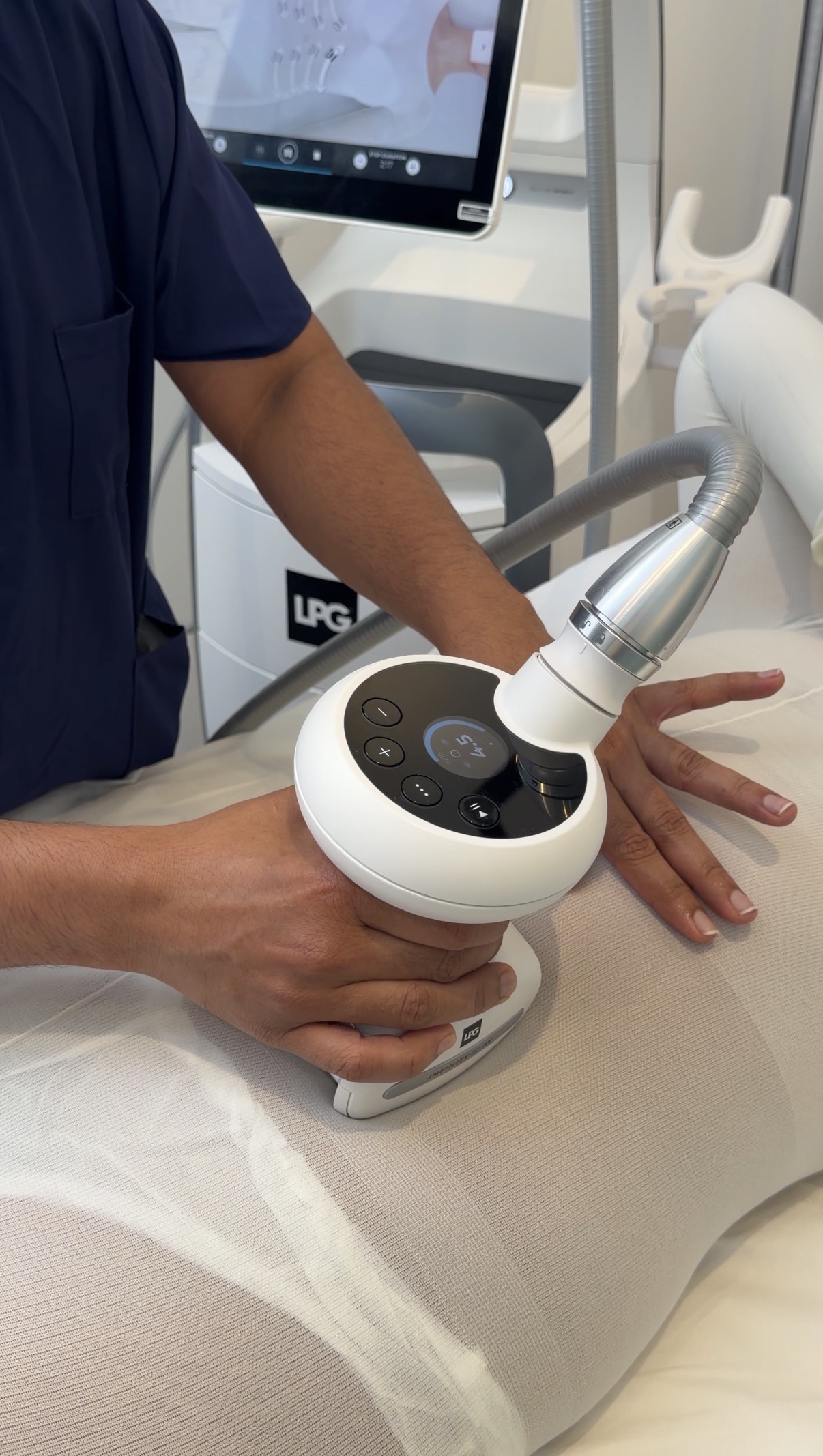
At Omnia we use the Cellu M6 Infinity, which works the skin with motorised rollers and controlled suction. There are no needles, no heat and no downtime. For cellulite, most people notice change after 6 to 8 sessions, and stubborn or fibrous cellulite usually takes around 10 to 12, with a weekly course then monthly maintenance. Results vary, and no treatment is permanent.
The evidence for LPG on cellulite is mixed, and our review of what the research says sets out both sides. We are not aware of strong trials of LPG for lipoedema, so treat it as support for comfort and not as a treatment for the condition itself. See cellulite treatment in London if your concern is cellulite.
Who is LPG Endermologie not for?
- LPG Endermologie is not used on the abdomen in pregnancy.
- It is not suitable with active cancer, an infection, phlebitis or a blood clot, open wounds or inflamed skin.
- If you have a circulatory or blood disorder, recent surgery, a pacemaker or an implanted device, get advice from your doctor or surgeon first.
- If you have not been diagnosed and your legs are painful, swollen or changing, see your GP before booking any treatment.
Frequently asked questions
Can you tell lipoedema from cellulite by looking?
Not reliably. Both can look dimpled. Pain, easy bruising, the pattern on both sides and unaffected feet are more useful than how the skin looks.
Can slim people have lipoedema?
Yes. The NHS says lipoedema is not caused by being overweight, and people at a healthy weight can develop it.
Is lipoedema worse than cellulite?
They are different things. Cellulite is harmless. Lipoedema can cause pain and affect daily life, which is why it deserves a medical assessment.
Why do I have dimples but no pain?
Painless dimples on the thighs, buttocks or stomach are most likely to be cellulite. If you are unsure, ask your GP.
Can LPG Endermologie help lipoedema?
Some people use it for comfort alongside medical care, but it does not make lipoedema go away. Speak to your GP first, then talk it through at a Discovery Session.
Lipoedema and cellulite care in Chiswick
Omnia Lifestyle is at 8 to 9 Bedford Corner, The Avenue, Chiswick W4 1LZ, close to Turnham Green station, on bus routes 94, E3 and 272. Limited parking is available on request when booking. LPG sessions run Monday to Saturday.
Book LPG Endermologie in Chiswick: Discovery Session £99 for 60 minutes, including consultation and treatment, then follow-up sessions from £70. You pay after your treatment. Book online or call 020 4515 0000.
Sources
- NHS: Lipoedema
- NICE: Liposuction for chronic lipoedema, interventional procedures guidance 721
- Cleveland Clinic: Cellulite
- Güleç AT. Treatment of cellulite with LPG endermologie. International Journal of Dermatology, 2009
- Collis N et al. Cellulite treatment: a myth or reality. Plastic and Reconstructive Surgery, 1999
Last updated 4 November 2026. This article is general information, not medical advice.
Ready to book?
LPG Endermologie