


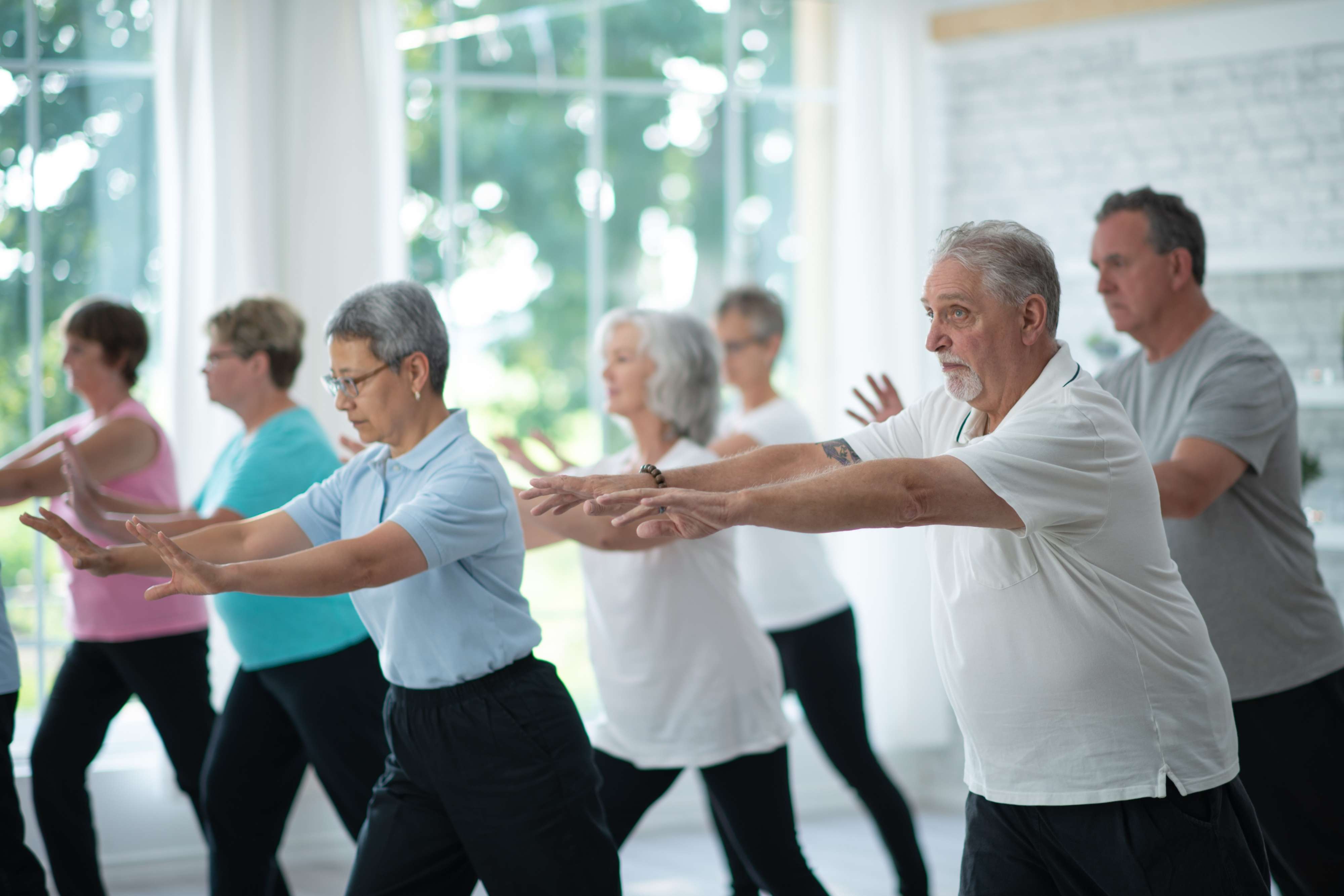


Qigong (also written qi gong, chi gong or chi kung) is the easiest way into the Chinese movement arts. The exercises are short, simple and repeated with the breath, so you get something useful from the first session and can practise at home straight away.
This guide explains what qigong is, what the evidence says about it, and gives you a ten-minute beginner routine based on the Eight Brocades, one of the oldest and most widely practised qigong sets. Every exercise has a seated version.
What is qigong?
Qigong is a family of Chinese exercises that coordinate posture, gentle movement and breathing. The name roughly means working with qi, the energy or breath of the body in Chinese medicine. In practice, a qigong exercise is a simple movement repeated slowly in time with your breath, with relaxed attention on how your body feels.
It differs from tai chi mainly in structure. Tai chi links many movements into a long sequence called a form, which takes months to learn. Qigong exercises stand alone and are usually repeated six to eight times, so they are quicker to learn. Read more in tai chi vs qi gong.
What are the benefits of qigong?
Qigong has been studied less than tai chi, but the research is growing. A 2026 umbrella review in the British Journal of Sports Medicine, which pooled 1,744 trials of traditional Chinese exercise including qigong and the Eight Brocades (baduanjin), found benefits for musculoskeletal pain and function, with the strongest evidence in knee osteoarthritis. Read our summary of the review.
Trials also suggest improvements in balance, flexibility, perceived stress, sleep quality and mood, though many studies are small and the evidence is less certain. The honest summary: qigong is a safe, low-impact way to move more and breathe more slowly, and most people feel calmer within the first session.
Before you start
- Wear loose clothing and flat shoes, or practise barefoot on a non-slip floor.
- Stand with feet hip-width apart and knees soft, never locked.
- Breathe through your nose if you can, slowly and without forcing.
- Move within comfort. Qigong should never hurt. Make every movement smaller if you need to.
- Use a chair for balance or for the seated versions.
The ten-minute Eight Brocades routine
Repeat each exercise six to eight times, slowly, linking the movement to your breath.
1. Holding up the sky
Interlace your fingers in front of your belly. Breathe in as you raise your hands up the front of your body, turning the palms to face the ceiling above your head. Breathe out as you separate the hands and float them down to your sides.
Why it helps: lengthens the whole body, opens the chest and sets the rhythm of slow breathing.
Seated: the same movement, sitting tall at the front of a chair.
2. Drawing the bow
Step into a wide stance with knees gently bent. Cross your wrists in front of your chest, then breathe in as you push your left hand out to the left, index finger pointing up, while your right hand draws back as if pulling a bowstring. Breathe out and return to the centre. Alternate sides.
Why it helps: opens the shoulders and upper back, and builds leg strength.
Seated: keep the arm movement and sit tall.
3. Separating heaven and earth
Breathe in as your left palm presses up above your head and your right palm presses down beside your hip. Breathe out as both hands return in front of your belly. Alternate sides.
Why it helps: a gentle stretch through the sides of the body and the abdomen.
4. Looking back
Arms relaxed by your sides, breathe in as you slowly turn your head to look over your right shoulder, rolling the palms outwards. Breathe out as you return to the centre. Alternate sides. Keep the movement small and comfortable.
Why it helps: mobilises the neck and upper back, useful for anyone who sits at a desk.
5. Swaying the head and tail (optional)
From a wide stance with hands resting on your thighs, shift your weight slowly to one side, letting the upper body lean with it, then move back through the centre to the other side. Keep the range small. Skip this one if you have knee or back pain, or do it seated by gently shifting your weight between your sitting bones.
6. Reaching down to the feet
Breathe in as you raise your arms in front of you. Breathe out as you slide your hands down the back of your legs towards your feet, bending forward only as far as is comfortable with soft knees. Roll back up slowly.
Take care: if you have back problems, osteoporosis or high blood pressure, keep the bend small or skip this exercise.
7. Punching with focus
From a wide stance, rest loose fists at your waist. Breathe out as you slowly extend your left fist forward, then draw it back as you breathe in. Alternate sides. The movement is slow and controlled, not a strike.
Why it helps: builds leg strength and focus, and coordinates breath with effort.
8. Rising onto the toes
Stand with feet together or hip-width apart. Breathe in as you rise gently onto your toes, then breathe out as you lower your heels down with a soft bounce. Hold a chair for balance if you need to.
Why it helps: works the calves and ankles, which matter for balance, and is a gentle way to finish.
Finish
Stand still with hands resting on your lower belly and take three slow breaths before moving on with your day.
How often to practise qigong
Ten minutes on most days is more useful than one long session a week. Morning practice suits many people, but any regular time works. Most people notice a calmer mood quickly, while changes in flexibility, balance and strength build over eight to twelve weeks.
Who should take advice first
Qigong is gentle, but speak to your GP before starting if you have had a recent fall, unexplained dizziness, recent surgery, severe osteoporosis or a heart condition that is not well controlled. If dizziness is part of the picture, our vestibular assessment can look for a treatable cause.
Frequently asked questions
Is qigong good for beginners?
Yes. Qigong is usually the easiest starting point in the Chinese movement arts because each exercise is short and repeated. Many people start with qigong and add tai chi later.
Can I do qigong sitting down?
Yes. Most qigong exercises can be done seated, which makes them suitable if balance, pain or fatigue limit standing practice.
What is the difference between qigong and tai chi?
Qigong is a set of simple standalone exercises; tai chi is a longer flowing sequence. See tai chi vs qi gong.
Can I learn qigong from videos?
You can start with simple routines like this one, but a teacher who can correct your posture helps you learn faster and protects your knees and back. Most people combine a weekly class with short home practice.
Is qigong good for older adults?
Yes. It is low impact, can be done seated, and works balance, breathing and gentle strength. Read is tai chi good for older adults for the related evidence.
Qigong and tai chi classes in Chiswick
Our group qigong and tai chi classes are £15 a class. Each class opens with qigong breathing and warm-up exercises before moving into Wu-style tai chi, taught by a sixth-generation lineage holder and a senior practitioner, with a seated option throughout. Beginners and over 50s are welcome and can join at any point.
Classes are at Omnia Lifestyle, 8-9 Bedford Corner, The Avenue, Chiswick, London W4 1LZ, two minutes from Turnham Green station, on bus routes 94, E3 and 272, and an easy trip from Hammersmith, Acton, Kew and Ealing. Limited parking is available on request when booking.
Read more about tai chi and qi gong in Chiswick, try our tai chi exercises for beginners, or ask about the next group class.
This article is general information, not medical advice. If you have a medical condition or a history of falls, speak to your GP before starting a new exercise practice.


.jpg)
.jpg)