



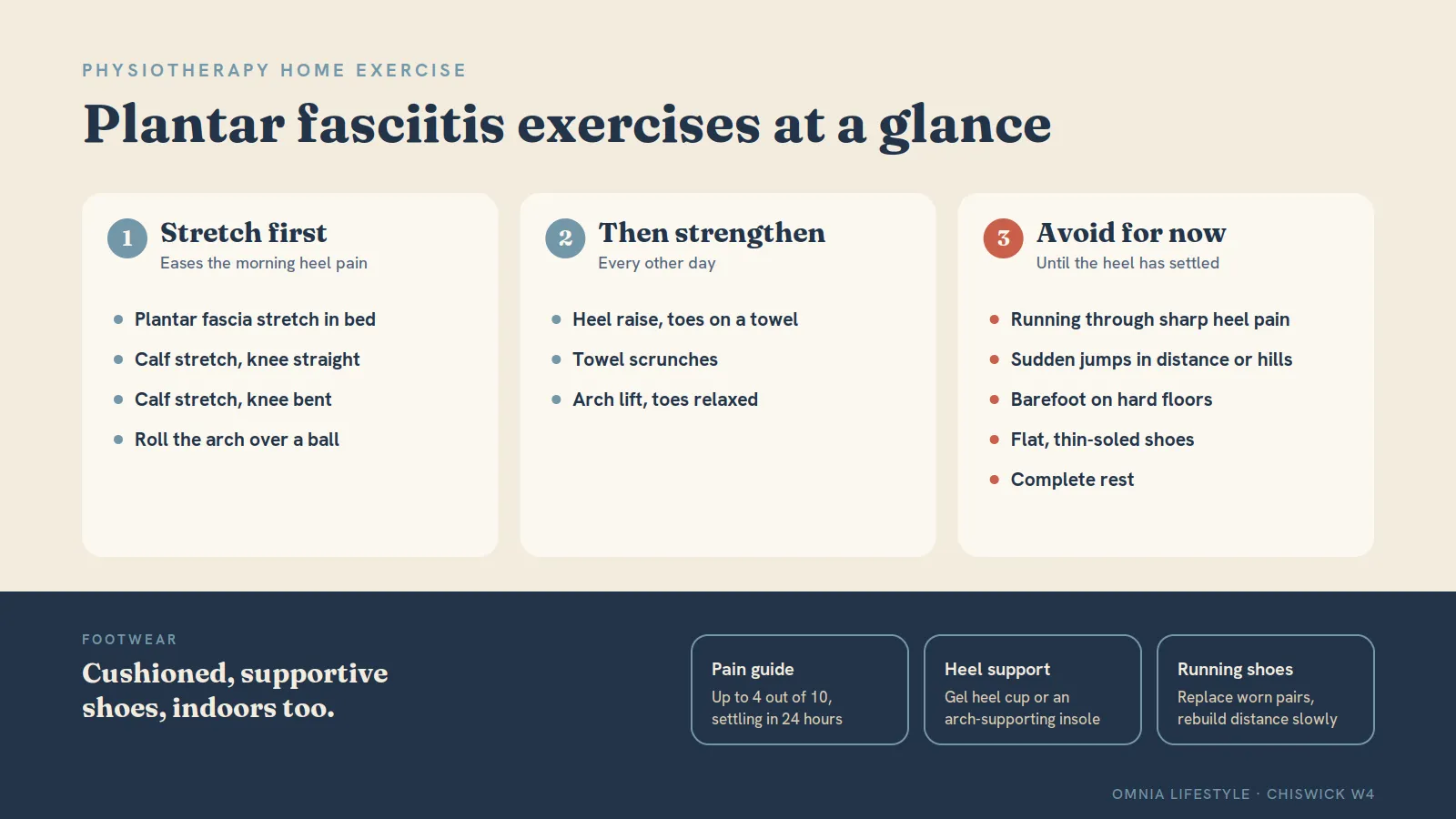


Plantar fasciitis is the most common cause of pain under the heel. The plantar fascia is a strong band of tissue that runs from the heel bone to the base of the toes and supports the arch of the foot. When it is loaded beyond what it is conditioned for, the attachment at the heel becomes painful. The hallmark is a sharp pain under the heel with the first steps in the morning, or when standing after sitting for a while, which eases as you get moving and returns after long periods on your feet.
This guide covers the exercises that help plantar fasciitis, how hard to push, footwear and everyday changes, and the signs that mean your heel should be assessed rather than exercised.
What plantar fasciitis actually is
Despite the name, it is mainly a problem of tissue overload rather than inflammation, which is why some clinicians now call it plantar heel pain. It is most common between the ages of 40 and 60, in people who spend long hours standing, in runners who have increased their distance, and after a change to flatter or less supportive shoes. Tight calf muscles and a higher body weight both increase the strain on the fascia.
Most cases settle within a year. The right exercises and footwear changes usually shorten that considerably.
General principles before specific exercises
Reduce the load, do not stop moving. Cut back long walks, running and prolonged standing for a few weeks, but keep active. Cycling and swimming maintain fitness without loading the heel.
Stretch first, then strengthen. Stretching eases the morning pain. Strengthening builds the capacity of the fascia so that the pain does not return.
Some discomfort is acceptable. Pain of up to about 4 out of 10 during exercise is fine if it settles within 24 hours. Heel pain that is clearly worse the next morning means you did too much.
Exercises to start with
Plantar fascia stretch
Sit and cross the affected foot over the opposite knee. Take hold of the toes and pull them back toward your shin until you feel a stretch along the arch. Hold for 10 seconds and repeat 10 times. Do this three times a day, and in particular before your first steps in the morning. This specific stretch has good research support.
Calf stretch with the knee straight
Stand facing a wall with the affected leg behind you, heel on the floor and knee straight. Lean forward until you feel a stretch in the calf. Hold for 30 seconds and repeat three times.
Calf stretch with the knee bent
From the same position, bend the back knee slightly while keeping the heel down. The stretch moves lower, toward the Achilles tendon. Hold for 30 seconds and repeat three times.
Rolling the arch
Sitting down, roll the arch of your foot over a ball or a chilled water bottle for one to two minutes. This eases discomfort, particularly at the end of the day.
Exercises to build strength
Heel raise with the toes on a towel
Stand on the edge of a step with a rolled towel under your toes so that they are bent upwards. Holding a rail, rise onto your toes over three seconds, pause for two seconds at the top, and lower over three seconds. Begin with both feet and three sets of 12 every other day. Progress to the affected leg alone, and later add weight in a rucksack. This slow, heavy loading is the best supported strengthening exercise for plantar fasciitis.
Towel scrunches
Sit with your foot flat on a towel on a smooth floor. Use your toes to scrunch the towel toward you, then push it away. Continue for one to two minutes. This works the small muscles that support the arch.
Arch lift
Standing or sitting with the foot flat, draw the ball of the foot toward the heel so that the arch lifts, without curling the toes. Hold for five seconds and repeat 10 times.
Footwear and everyday changes
- Wear cushioned, supportive shoes with a slightly raised heel, including indoors. Trainers are usually the most comfortable choice.
- Avoid walking barefoot on hard floors, and avoid flat, thin-soled shoes and flip-flops.
- Gel heel cups or arch-supporting insoles bought over the counter help many people in the short term.
- Replace worn running shoes, and build distance back gradually.
- Break up long periods of standing where you can.
What to avoid, at least initially
- Running or long walks through sharp heel pain.
- Sudden increases in distance, hills or speed work.
- Barefoot walking and unsupportive footwear.
- Complete rest. The fascia needs gradual loading to recover.
Why a generic exercise sheet sometimes fails
Many sheets contain stretches only. Stretching eases symptoms, but without strengthening the pain often returns as soon as activity increases. Others miss the footwear and load changes that allow the heel to settle in the first place.
Heel pain also has other causes, including a stress fracture of the heel bone, an irritated nerve, thinning of the fat pad under the heel, and referred pain from the lower back. These need a different approach, which is why persistent heel pain is worth having assessed.
When to seek medical attention
Seek urgent medical attention if:
- You felt a sudden pop or tearing in the arch, followed by bruising or swelling
- The pain followed a fall or jump from a height, or you cannot put weight on the heel
- The foot is hot, red and swollen, or you feel feverish and unwell
See your GP or a physiotherapist if:
- Pain has lasted more than a few weeks without improvement
- You have numbness, tingling or burning in the foot
- The heel hurts at rest or at night
- Both heels are painful and you also have back stiffness in the morning
- You have diabetes. Foot problems should always be checked promptly
Frequently asked questions
How long does plantar fasciitis take to heal?
Most people improve within three to six months with consistent exercises and footwear changes, and the large majority recover within a year.
Why is it worse first thing in the morning?
The fascia and calf tighten while you sleep with your feet pointed. The first steps stretch the sore attachment suddenly. Doing the plantar fascia stretch before you get out of bed reduces this.
Is walking good for plantar fasciitis?
Gentle walking in supportive shoes is fine. Long walks, hard surfaces and walking barefoot tend to aggravate it in the early stages.
Do insoles help?
Over-the-counter heel cups and arch supports help many people in the short term. Custom orthotics have not been shown to work better for most people.
What about steroid injections or shockwave therapy?
A steroid injection can give short-term relief but carries a small risk of rupture of the fascia and thinning of the heel fat pad. Shockwave therapy is an option for cases that have not improved after several months of exercise. Both are decisions to discuss with a clinician.
Can I keep running?
Often yes, at a reduced volume, on softer and flatter surfaces, provided the pain stays low and is no worse the next morning. If it is, switch to cycling or swimming for a few weeks.
Heel pain assessment and treatment in Chiswick
Heel and foot pain are assessed and treated at Omnia Lifestyle in Chiswick, W4, close to Turnham Green station, on bus routes 94, E3 and 272. Limited parking is available on request when booking. Assessment confirms whether the plantar fascia is the source of the pain, looks at how you walk and what you wear, and sets a stretching and strengthening programme at the right level.
Read more about sports injuries, see our guide to gait analysis, explore physiotherapy, or book an assessment.
This article is general information, not medical advice. If you have any of the warning signs listed above, seek medical attention.


.jpg)
.jpg)