




Search for a lymphatic drainage machine and you will find everything from hospital compression systems to vibrating handheld gadgets. They are sold with the same promise, but they work in very different ways and the evidence behind them ranges from reasonable to non-existent.
This guide explains the main types of lymphatic drainage machine, what each one actually does, what the evidence supports, and how a clinic system differs from a device you buy for home.
Quick answer
A lymphatic drainage machine applies mechanical pressure to help move lymph fluid out of the tissues. The two types with a real clinical track record are sequential compression systems, also called pressotherapy, and mechanical roll and suction devices such as LPG Endermologie. Handheld vibration, suction cups and electrical stimulation gadgets have little evidence behind them. The right choice depends on your goal: fluid and heaviness, post-surgical swelling, or skin texture and contouring.
Types of lymphatic drainage machine
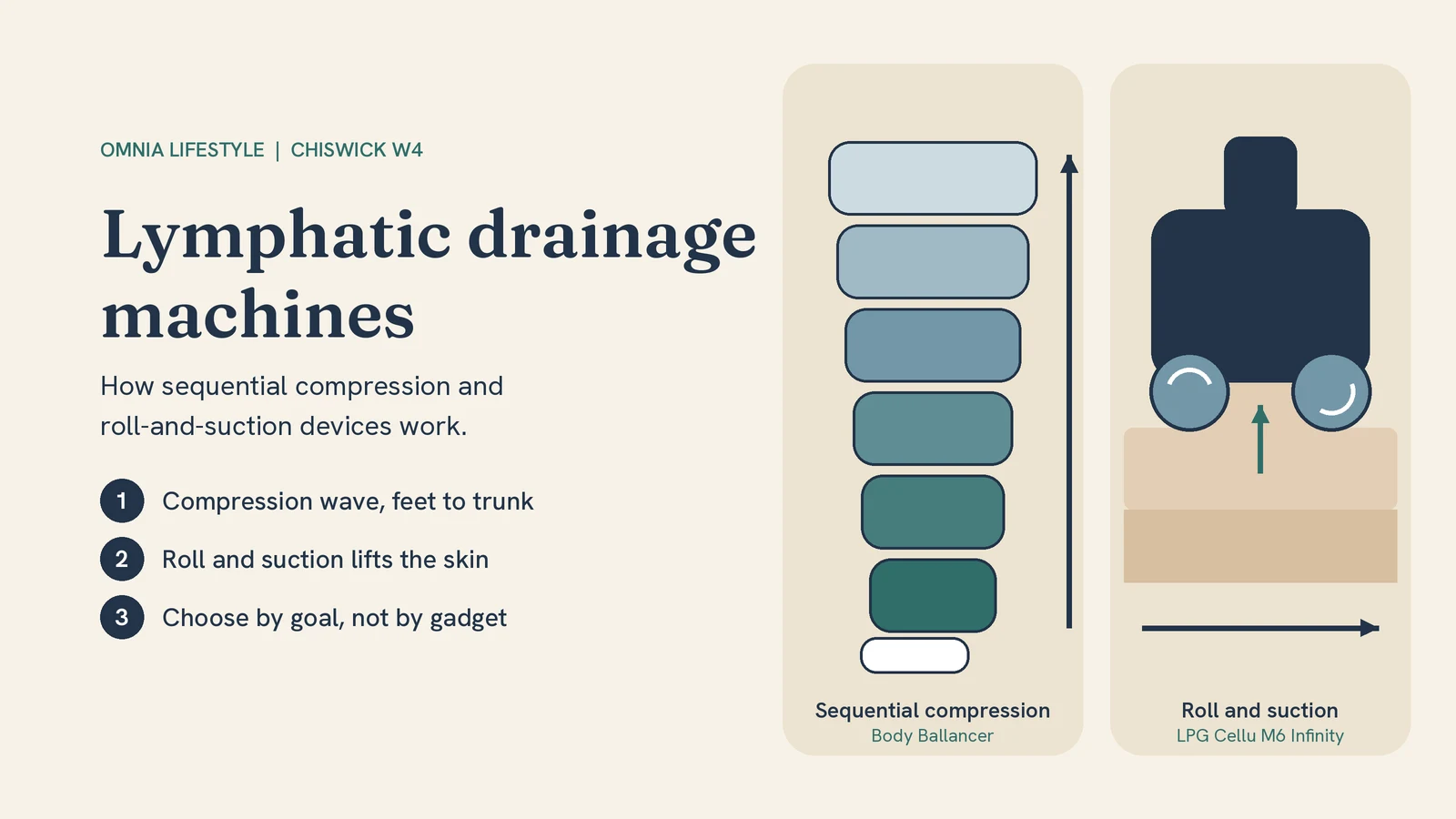
1. Sequential compression (pressotherapy)
You wear a garment over the legs, abdomen or arms that is divided into chambers. The chambers inflate one after another, starting furthest from the trunk, creating a wave of pressure that moves fluid towards the lymph nodes. Clinical systems such as the Body Ballancer use many overlapping chambers and fine pressure control; consumer compression boots use fewer chambers and simpler programmes.
What the evidence shows: intermittent pneumatic compression has been studied for decades, mainly in lymphoedema and venous conditions, where it is used as an addition to standard care rather than a replacement for it. For general fluid retention, heavy legs and recovery after exercise, people commonly report feeling lighter, and measured limb volume often falls after a session, though the effect is temporary without regular use.
2. Mechanical roll and suction (LPG Endermologie)
A treatment head with motorised rollers and controlled suction lifts and rolls the skin. The LPG Cellu M6 Infinity is the latest generation of this technology, with separate settings for draining, firming and smoothing.
What the evidence shows: Endermologie has published research on cellulite, skin quality, scar tissue and circulation. It supports lymphatic flow, but it is primarily a skin and contouring treatment rather than a clinical lymphatic treatment. Our guide to whether LPG Endermologie works sets out the studies.
3. Vacuum and suction cup devices
Vacuum body machines and silicone suction cups pull the skin upwards, in a similar way to cupping. They are widely sold for cellulite and puffiness. There is little independent evidence that home suction devices improve lymphatic drainage, and strong suction can bruise.
4. Handheld and electrical gadgets
Vibration massagers, electric gua sha tools, microcurrent and EMS devices, and heated or infrared rollers are often marketed as lymphatic drainage machines. Some feel pleasant and may reduce facial puffiness briefly, but there is no good evidence that they drain lymph any better than gentle hands or simple exercise.
5. Manual tools
Gua sha stones, facial rollers and dry brushes are not machines, but they are often bought for the same purpose. Used with light pressure they can support facial drainage in the same way as the hands. See our facial lymphatic drainage guide for technique.
Machine or manual lymphatic drainage?
Machines are consistent, cover large areas and require nothing of you during the session. A trained therapist adapts in ways no machine can: working around scar tissue, redirecting fluid when a pathway is blocked, and treating the face and neck. As a rule:
- Lymphoedema and post-surgical swelling: manual lymphatic drainage first, with compression added once your therapist or surgeon agrees.
- Heavy legs, water retention and recovery: sequential compression is often the practical choice, and it suits regular use.
- Skin texture, cellulite and contouring: LPG Endermologie, often alongside compression.
- Facial puffiness: manual drainage. Compression garments do not treat the face.
Our detailed comparison of MLD, compression and LPG covers each situation.
Clinic machines vs home devices
- Pressure control. Clinical compression systems set pressure by body area and adjust it to you. Many home boots use fixed programmes.
- Coverage. A full clinical garment covers legs, hips and abdomen with overlapping chambers. Home boots usually treat the lower legs and thighs only.
- Screening. A clinic checks for conditions where compression is unsafe before you start. A home device cannot.
- Cost over time. Home compression boots cost several hundred pounds. For occasional use, clinic sessions are usually better value; for daily maintenance after a clinic course, a home device can make sense.
Are lymphatic drainage machines safe?
Clinical systems used by trained staff are safe for most people. Compression and suction should not be used, or only with medical advice, if you have:
- A suspected or recent deep vein thrombosis
- Untreated or unstable heart failure
- Active infection or cellulitis in the area
- Kidney failure
- Active, untreated cancer
- Peripheral arterial disease or significant nerve damage in the legs, for compression
- Pregnancy, for some treatment areas
Swelling in one leg only, especially with pain or warmth, needs medical assessment before any treatment.
Lymphatic drainage machines at Omnia
Omnia is the only clinic in London offering manual lymphatic drainage, Body Ballancer compression therapy and LPG Endermologie on the Cellu M6 Infinity under one roof. That means we can recommend the treatment that suits your goal rather than the only one we have, and combine them where it helps.
- Body Ballancer compression therapy: 30 minutes £45, 60 minutes £60
- LPG Endermologie: £99 Discovery Session including consultation, tissue assessment and a full 60-minute treatment
- Manual lymphatic drainage: from £65 for 30 minutes
For contouring programmes, progress is measured with Styku 3D body scanning, so you can see the change rather than guess at it.
Frequently asked questions
Do lymphatic drainage machines work?
Sequential compression and LPG Endermologie have a clinical track record for fluid, heaviness and skin quality. Most handheld gadgets do not. Results from any machine are temporary without regular use or lifestyle support.
How often should I use one?
For heavy legs or fluid retention, one or two compression sessions a week for four to six weeks, then maintenance. Endermologie courses usually run for ten to fifteen sessions. Your therapist should set out a plan rather than an open-ended package.
Can I use a lymphatic drainage machine after surgery?
Only with your surgeon's agreement on timing. Manual lymphatic drainage is usually the first step, with compression added later.
Do home compression boots work?
They can relieve heavy legs and help recovery after training. They are less adjustable than clinical systems and cannot screen you for conditions where compression is unsafe, so start with professional advice. Read more in does Body Ballancer work.
Will a lymphatic drainage machine help me lose weight?
No. Any change on the scale is fluid, not fat, and it returns. Machines can reduce puffiness and circumference temporarily, which is useful, but they are not a weight loss treatment.
Lymphatic drainage machines in Chiswick
We offer Body Ballancer compression therapy, LPG Endermologie and manual lymphatic drainage at Omnia Lifestyle, 8-9 Bedford Corner, The Avenue, Chiswick, London W4 1LZ, a short walk from Turnham Green station and on bus routes 94, E3 and 272. Limited parking is available on request when booking.
Learn more about pressotherapy in London and LPG Endermologie in London, try our lymphatic drainage exercises at home, or book online.
This article is general information, not medical advice. If you have a medical condition, unexplained swelling or swelling in one limb, speak to your GP before starting any treatment.


.jpg)
.jpg)