





Many people blame a slow metabolism for weight gain or low energy. Metabolism does matter, but much of what is sold as metabolism boosting has little effect. The good news is that a few evidence-based habits make a real difference.
This guide explains what sets your metabolism, what genuinely helps, what does not, and when a slow metabolism might point to a medical problem.
What metabolism is
Metabolism is the energy your body uses every day. Most of it goes on basic functions such as breathing, circulation and keeping warm, known as your basal metabolic rate. The rest is used digesting food and moving, including everyday activity such as walking, standing and fidgeting.
What sets your metabolism
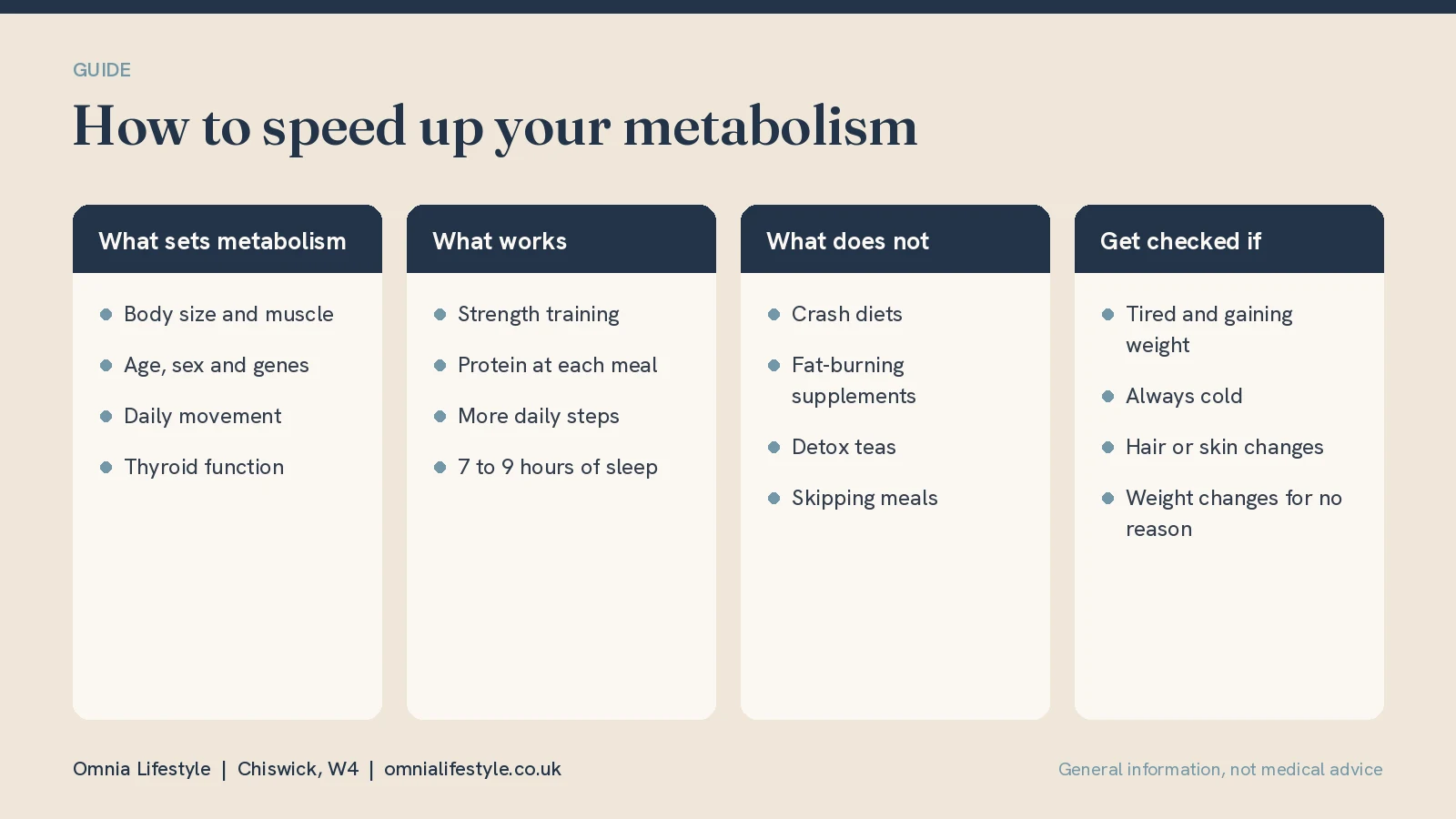
- Body size and muscle: larger bodies and more muscle use more energy.
- Age, sex and genes: large studies suggest metabolism stays fairly stable through most of adulthood and slows more noticeably after about 60.
- Daily movement: the biggest variable you control.
- Thyroid function: an underactive thyroid slows metabolism.
- Dieting history: severe or repeated dieting can lower energy use.
What genuinely helps
Strength training
Building and keeping muscle is one of the most effective ways to support metabolism, especially as you get older. Aim for two or three sessions a week working the major muscle groups.
Protein at each meal
The body uses more energy digesting protein than fat or carbohydrate, and protein helps preserve muscle when losing weight.
More everyday movement
Steps, stairs, standing and household activity add up to a large share of daily energy use. Breaking up long periods of sitting makes a measurable difference.
Good sleep
Short or poor sleep disrupts the hormones that control appetite and energy, and makes activity harder.
Avoiding crash diets
Very low calorie diets cause the body to conserve energy and lose muscle, which can make weight regain more likely.
What does not work
- Fat-burning supplements and metabolism-boosting pills
- Detox teas and cleanses
- Single foods such as chilli or green tea, which have only tiny effects
- Skipping meals, which tends to increase hunger later
When a slow metabolism may be medical
See your GP or ask about a blood test if you are tired and gaining weight without changing your habits, always feel cold, or notice dry skin, thinning hair, constipation or low mood. These can be signs of an underactive thyroid, which is common and treatable.
Measuring your metabolism
A body composition scan can estimate your basal metabolic rate and show how much muscle and fat you carry, so you can track whether changes in weight come from fat or muscle.
To understand the number behind your daily energy use, see what basal metabolic rate is.
Frequently asked questions
Does metabolism slow down with age?
Less than most people think. Research suggests it stays fairly steady through most of adulthood and declines more noticeably after about 60. Loss of muscle and activity explains much of the change people notice earlier.
Can you have a fast metabolism and gain weight?
Yes. Weight depends on the balance between energy taken in and energy used, as well as hormones, sleep and medicines.
Does drinking water speed up metabolism?
Only very slightly. Staying hydrated is worthwhile, but it is not a weight loss tool on its own.
Does the menopause slow metabolism?
The menopause changes where fat is stored and is linked to muscle loss. Strength training and protein help counter this.
Metabolism and body composition testing in Chiswick
Omnia Lifestyle offers InBody body composition scans, metabolism-focused coaching and blood tests at our clinic in Chiswick, W4, close to Turnham Green station, on bus routes 94, E3 and 272. Limited parking is available on request when booking.
Read more about slow metabolism, weight management and thyroid disorders, see whether HRT causes weight gain, explore InBody scans, fitness and nutrition and blood tests, or book an appointment.
This article is general information, not medical advice. If you have any of the warning signs listed above, see your GP.


.jpg)
.jpg)