


Book at our Chiswick clinic
Blood Test
HbA1c is the blood test most often used in the UK to check for type 2 diabetes and prediabetes. Unlike a single blood sugar reading, it shows your average blood sugar over roughly the last three months, which makes it a reliable picture of how your body is handling glucose day to day.
This guide explains what HbA1c measures, the UK ranges for normal, prediabetes and diabetes, when the result can be misleading, what to do if yours is raised, and how often to retest.
Quick answer
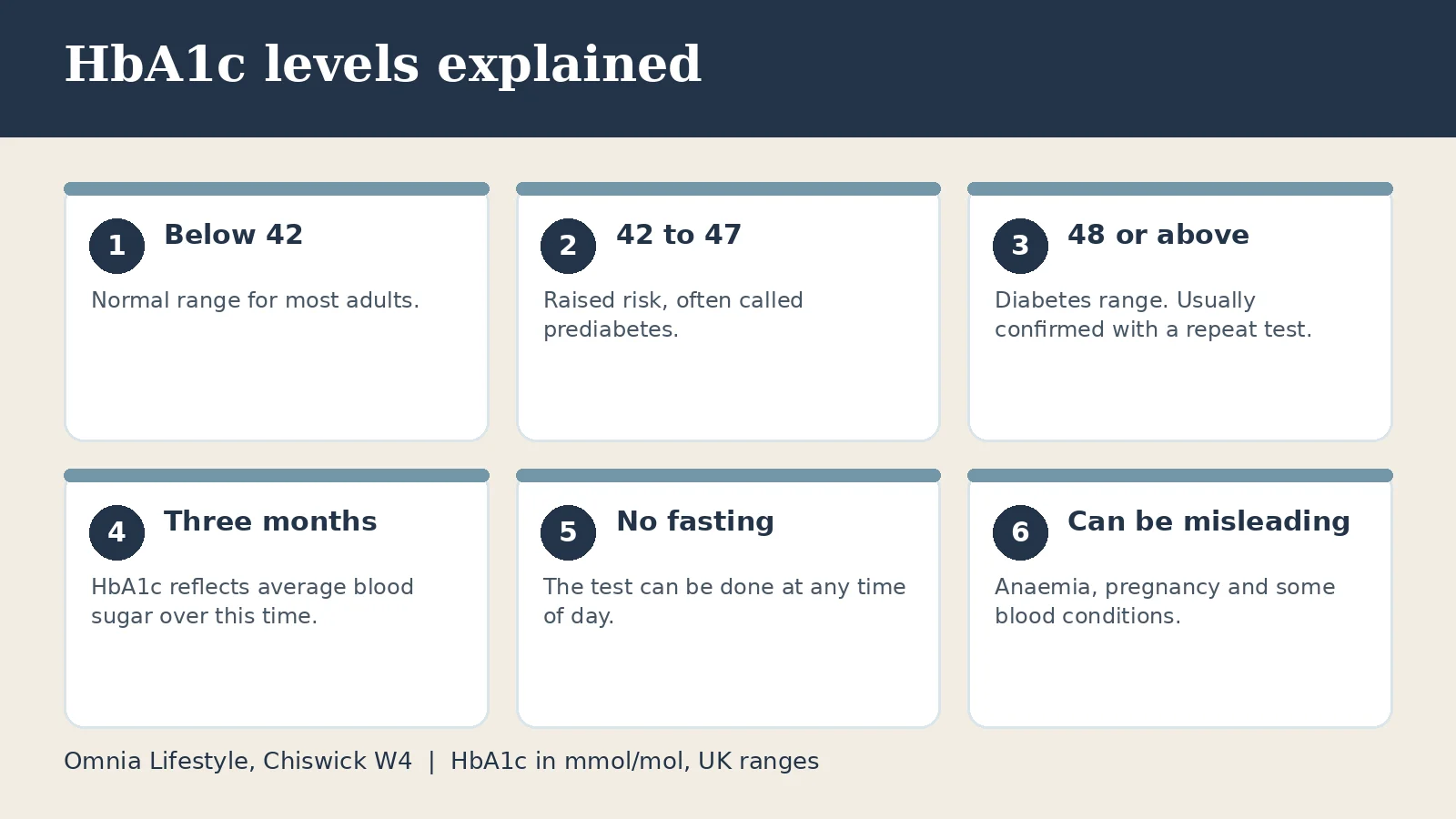
In the UK, HbA1c is reported in mmol/mol. Below 42 is in the normal range. From 42 to 47 means a higher risk of type 2 diabetes, often called prediabetes. A result of 48 or above is in the diabetes range and is usually confirmed with a second test unless you have clear symptoms. No fasting is needed. If your result is raised, losing a modest amount of weight, moving more and changing your diet can bring it down, and many people with prediabetes return to the normal range.
What HbA1c measures
Glucose in your blood sticks to haemoglobin, the protein inside red blood cells. The higher your blood sugar over time, the more haemoglobin becomes coated, or glycated. Because red blood cells live for around three months, the proportion of glycated haemoglobin reflects your average blood sugar over that period, with the most recent weeks counting most.
What your result means
- Below 42 mmol/mol (below 6.0%): normal range.
- 42 to 47 mmol/mol (6.0 to 6.4%): raised risk of type 2 diabetes, often called prediabetes or non-diabetic hyperglycaemia. This is the stage where change makes the most difference.
- 48 mmol/mol or above (6.5% or above): in the diabetes range. Without symptoms, a second test is usually done to confirm the diagnosis.
Some results are still given as a percentage, especially in older reports or from overseas laboratories. The two scales measure the same thing.
When HbA1c can be misleading
Because HbA1c depends on red blood cells, anything that changes how long they live can make the result unreliable:
- Iron deficiency can push HbA1c up, while some other anaemias push it down
- Pregnancy, when other tests are used to check for diabetes
- Inherited haemoglobin variants, such as sickle cell trait
- Recent blood loss or a blood transfusion
- Advanced kidney disease and some medicines
- Rapidly rising blood sugar, such as suspected type 1 diabetes, when HbA1c lags behind
If any of these apply, your doctor may use a fasting glucose or glucose tolerance test instead. This is one reason a full health check that includes a full blood count and ferritin alongside HbA1c gives a clearer picture. See ferritin levels explained.
Symptoms of high blood sugar
Prediabetes rarely causes symptoms, which is why testing matters. In diabetes, symptoms can include:
- Feeling very thirsty
- Passing urine more often, especially at night
- Tiredness
- Unexplained weight loss
- Blurred vision
- Itching around the genitals or repeated thrush
- Cuts and wounds that are slow to heal
See a GP urgently if you have marked thirst, frequent urination and weight loss, or feel very unwell, as blood sugar may need checking the same day.
Who should be tested
Testing is worth considering if you are over 40, carry weight around your waist, have a close family member with type 2 diabetes, are of South Asian, African or African-Caribbean heritage, had diabetes in pregnancy, have polycystic ovary syndrome, or have high blood pressure or high cholesterol. Read more about what causes type 2 diabetes.
What to do if your HbA1c is raised
- Lose a modest amount of weight if you carry extra. Losing around 5 to 10 per cent of body weight can make a real difference to blood sugar.
- Move more. Aim for at least 150 minutes of moderate activity a week, plus muscle-strengthening exercise twice a week. Muscle is the biggest user of glucose in the body.
- Cut back on sugary drinks, refined carbohydrates and large portions, and build meals around vegetables, pulses, whole grains, protein and healthy fats.
- Limit alcohol, sleep well and manage stress, all of which affect blood sugar.
- Speak to your GP. People in the prediabetes range may be referred to the NHS Diabetes Prevention Programme, and anyone in the diabetes range needs medical follow-up.
Many people with prediabetes, and some with early type 2 diabetes, bring their HbA1c back into the normal range with sustained change. See whether type 2 diabetes can be reversed.
How often should HbA1c be checked?
If your result is normal and you have no risk factors, routine checks such as the NHS Health Check every five years are usually enough. People in the prediabetes range are usually advised to retest at least once a year. After making changes, a retest after about three months shows whether they are working, because HbA1c reflects the previous three months.
Frequently asked questions
Do I need to fast for an HbA1c test?
No. HbA1c can be measured at any time of day, with or without food.
Is an HbA1c of 40 good?
Yes. A result of 40 mmol/mol is in the normal range, although results close to 42 are worth keeping an eye on if you have risk factors.
Is an HbA1c of 45 prediabetes?
Yes. A result between 42 and 47 mmol/mol is in the prediabetes range and is a good reason to make changes now and retest.
Can stress raise HbA1c?
Ongoing stress, poor sleep and illness can raise blood sugar, which over time can be reflected in HbA1c.
What is the difference between HbA1c and a glucose test?
A glucose test shows your blood sugar at one moment, which varies with meals. HbA1c shows the average over about three months, so it is more useful for diagnosis and monitoring.
Blood sugar testing in Chiswick
Omnia Lifestyle offers private blood testing at 8 to 9 Bedford Corner, The Avenue, Chiswick W4 1LZ, close to Turnham Green station, on bus routes 94, E3 and 272. Limited parking is available on request when booking. Samples are analysed by the Randox accredited laboratory, no GP referral is needed, and a practitioner explains your result and what to do next.
Blood sugar is checked in our health checks, such as Omnia Essential and the Standard Screen, alongside cholesterol, kidney and liver function. Ask us which check includes HbA1c when you book, compare every blood test and price, or read our guide to cholesterol levels.
This article is general information, not medical advice. Discuss your results with your GP or practitioner.
Ready to book?
Blood Test



.jpg)
.jpg)