




Worry about weight gain is one of the most common reasons women hesitate to start hormone replacement therapy (HRT). It is an understandable concern, because many women do gain weight around the time of the menopause. But the research is reassuring: HRT itself does not usually cause weight gain.
This guide explains what the evidence shows, why weight changes around the menopause, the early side effects that can feel like weight gain, and what genuinely helps.
The short answer
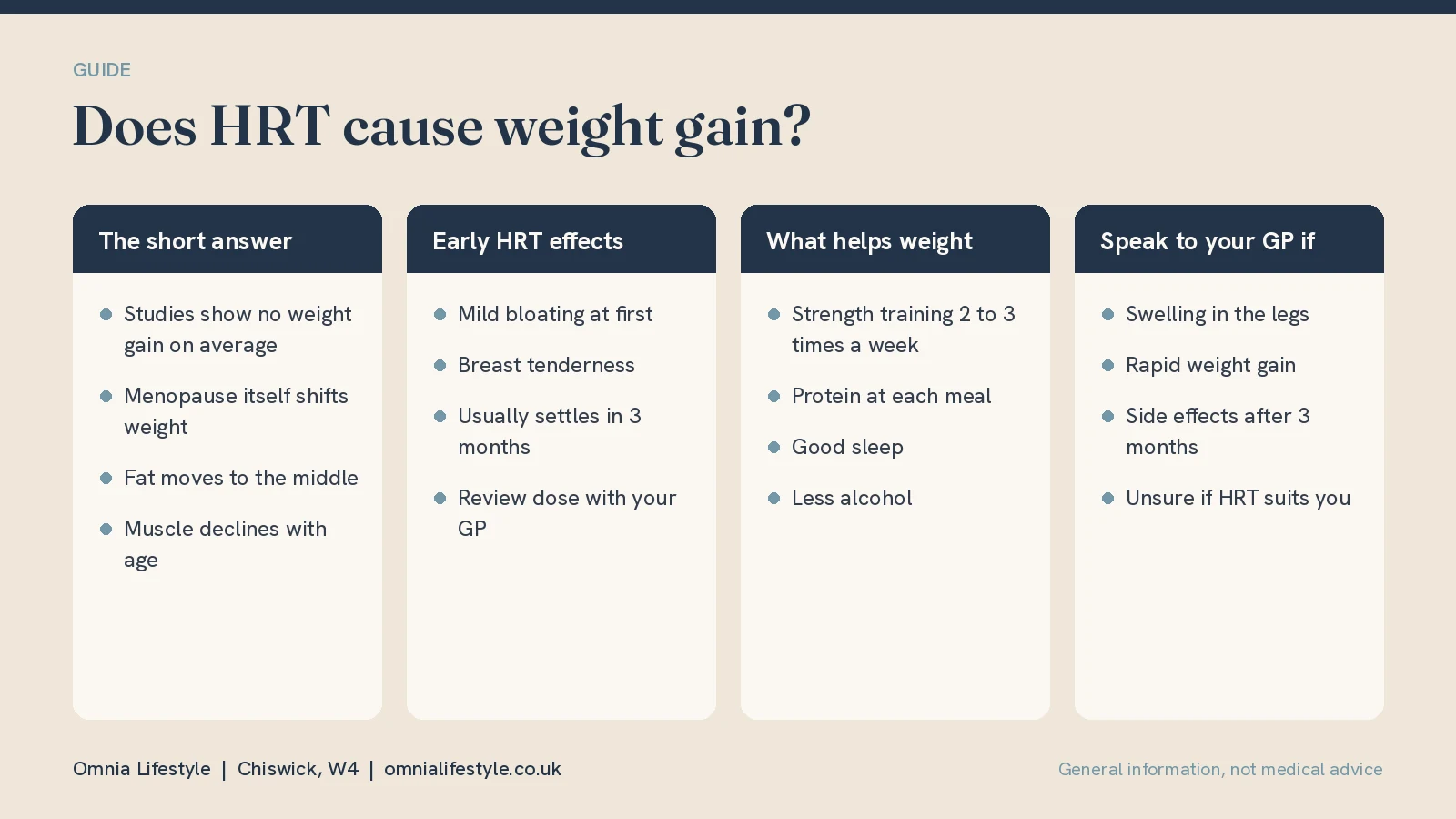
Studies comparing women taking HRT with women taking a placebo have not found that HRT causes weight gain on average. Weight gain around midlife is mainly linked to the menopause transition itself and to ageing, not to the hormones used in HRT. Some research even suggests HRT may help reduce the build-up of fat around the middle.
Why weight changes around the menopause
- Fat moves to the middle: as oestrogen falls, the body tends to store more fat around the tummy rather than the hips and thighs.
- Muscle declines: muscle mass naturally falls with age, which reduces the energy the body uses each day.
- Sleep is disrupted: night sweats and broken sleep affect appetite hormones and energy.
- Life changes: stress, caring responsibilities and less time for exercise often coincide.
Early HRT side effects that can feel like weight gain
In the first few weeks to months, some women notice mild bloating, fluid retention or breast tenderness. These usually settle within about three months. If they do not, your GP may suggest a different dose, type or way of taking HRT, such as a patch or gel rather than tablets.
What genuinely helps with menopause weight
- Strength training two or three times a week to protect muscle and bone
- Protein at each meal to support muscle and keep you fuller for longer
- Daily movement, such as brisk walking
- Good sleep, which HRT may help with by reducing night sweats
- Less alcohol, which adds calories and disrupts sleep
- Tracking body composition rather than just weight, because the scales do not show changes in muscle and fat
Speak to your GP if
- You notice swelling in your legs or ankles
- You gain weight rapidly or unexpectedly
- Side effects continue after three months
- You are unsure whether HRT is right for you
Rapid or unexplained weight gain can have other causes, such as an underactive thyroid, so it is worth checking.
Not sure whether menopause has started? See when menopause starts and the first signs.
Frequently asked questions
Does oestrogen make you gain weight?
Not in the doses used in HRT. Falling oestrogen during the menopause is more closely linked to changes in where fat is stored.
Does progesterone cause bloating?
Some women notice bloating or fluid retention with certain types of progestogen. Your GP can suggest alternatives if this is a problem.
Will I lose weight if I stop HRT?
Not usually, because HRT is not the cause of most weight gain. Stopping HRT can bring back symptoms such as night sweats and poor sleep.
Can HRT help with menopause belly fat?
Some studies suggest HRT may reduce the build-up of fat around the middle, but strength training, diet and sleep make the biggest difference.
Menopause weight support in Chiswick
Omnia Lifestyle supports women with menopause and weight changes alongside their GP, with InBody body composition scans and strength coaching at our clinic in Chiswick, W4, close to Turnham Green station, on bus routes 94, E3 and 272. Limited parking is available on request when booking.
Read more about hormonal weight gain and menopause symptoms, see how long menopause lasts, explore InBody scans and fitness and nutrition, or book an appointment.
This article is general information, not medical advice. Speak to your GP about whether HRT is right for you.


.jpg)
.jpg)