


Book at our Chiswick clinic
Blood Test
Vitamin B12 keeps your nerves healthy and helps your body make red blood cells. Low levels are common, develop slowly and are easy to miss, because the early symptoms, such as tiredness and low mood, overlap with so many other things. Left untreated for a long time, B12 deficiency can cause nerve damage, so knowing how to read your result matters.
This guide explains what vitamin B12 does, how results are interpreted, the symptoms and causes of low B12, how it is treated, and what a high result can mean.
Quick answer
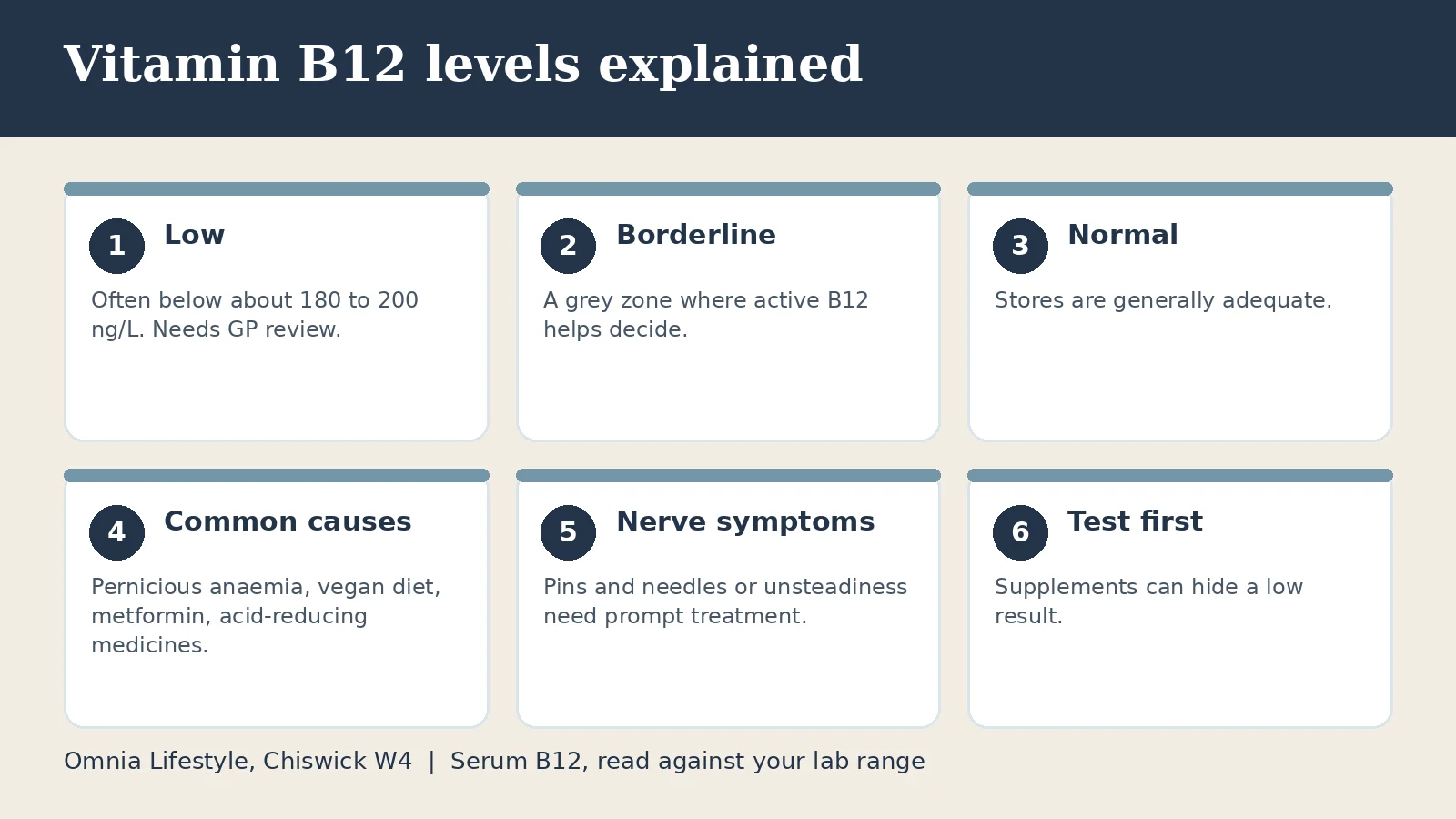
Vitamin B12 is usually measured as total serum B12. Laboratory ranges vary, but levels below about 180 to 200 ng/L generally suggest deficiency, and results just above that fall into a grey zone where an active B12 test can help. Common causes include pernicious anaemia, a vegan diet without supplements, and medicines such as metformin and acid-reducing tablets. Pins and needles, numbness or unsteadiness with low B12 need prompt treatment. Avoid starting supplements before testing, because they can hide a low result.
What vitamin B12 does
Your body needs vitamin B12 to make healthy red blood cells, to keep the nerves and their protective coating working properly, and to make DNA. It works closely with folate, another B vitamin, which is why the two are often tested together. The body stores several years' worth of B12 in the liver, so deficiency usually develops gradually.
What your result means
- Low: generally below about 180 to 200 ng/L, although each laboratory sets its own range. Deficiency is likely, particularly with symptoms.
- Borderline: results just above the lower limit can still reflect deficiency in someone with symptoms. An active B12 test (holotranscobalamin), or other markers, can help decide.
- Within range: stores are generally adequate, although symptoms with a low-normal result are worth discussing.
- High: usually from supplements or injections. A high level without supplements can occasionally reflect liver or blood conditions and is worth mentioning to your GP.
Always read your result against the range printed on your report. Results are sometimes given in pmol/L rather than ng/L.
Symptoms of low vitamin B12
- Tiredness and lack of energy
- Pins and needles or numbness in the hands and feet
- A sore, red, smooth tongue and mouth ulcers
- Pale or slightly yellow skin
- Breathlessness and a racing heartbeat
- Problems with memory, concentration, mood or irritability
- Unsteadiness or problems with balance and walking
- Changes in vision
See your GP promptly if you have nerve symptoms such as numbness, pins and needles, unsteadiness or memory problems, because B12 deficiency affecting the nerves needs treatment without delay to reduce the risk of lasting damage.
Common causes
- Pernicious anaemia: an autoimmune condition, and the most common cause in the UK, in which the stomach cannot absorb B12 from food. It is usually checked with intrinsic factor antibodies.
- Diet: B12 is found almost entirely in animal foods, so vegans, and some vegetarians, need fortified foods or a supplement.
- Medicines: long-term metformin and acid-reducing medicines such as omeprazole can reduce absorption.
- Gut conditions and surgery: coeliac disease, Crohn's disease and weight loss surgery or surgery on the stomach or small bowel.
- Older age, when stomach acid falls, and heavy alcohol use.
How low B12 is treated
Treatment depends on the cause. If the problem is diet, B12 tablets and fortified foods are usually enough. If the body cannot absorb B12, as in pernicious anaemia, injections of hydroxocobalamin are usually given, often frequently at first and then every two to three months for life. People with nerve symptoms are usually started on injections promptly. Your GP will also check folate, because both need to be corrected, and will usually repeat blood tests to confirm the response.
Do not start B12 supplements before you are tested if you can avoid it. They raise blood levels quickly and can make it harder to find the cause of a deficiency.
Getting enough B12 from food
Good sources include meat, fish, eggs, milk, cheese and yoghurt. If you eat few or no animal foods, choose fortified breakfast cereals, plant milks and yeast extract, and consider a daily supplement.
Frequently asked questions
Can low B12 cause anxiety or depression?
Low B12 can affect mood, memory and concentration. It is one of the reasons blood tests are worth doing when low mood comes with tiredness or other physical symptoms.
Does low B12 cause weight gain?
Not directly, but tiredness and low energy can make it harder to stay active.
How long does it take to feel better after B12 treatment?
Many people feel more energetic within days to weeks. Nerve symptoms can take longer, often months, and may not fully recover if they have been present for a long time.
Should vegans test their B12?
Yes, periodically, especially if not using fortified foods or a supplement reliably.
Is folate tested at the same time?
Often, because low folate and low B12 cause similar changes in the blood and are treated differently. Ask when you book if you would like both checked.
Vitamin B12 testing in Chiswick
Omnia Lifestyle offers private vitamin B12 testing at 8 to 9 Bedford Corner, The Avenue, Chiswick W4 1LZ, close to Turnham Green station, on bus routes 94, E3 and 272. Limited parking is available on request when booking. Samples are analysed by the Randox accredited laboratory, no GP referral is needed, and a practitioner explains your result and what to do next.
B12 is included in the Tired All The Time blood test alongside iron, thyroid, vitamin D and other common causes of fatigue. Compare every blood test and price, or read our guides to ferritin levels and vitamin D levels.
This article is general information, not medical advice. Discuss your results and any treatment with your GP or practitioner.
Ready to book?
Blood Test



.jpg)
.jpg)