


Book at our Chiswick clinic
Red Light Therapy
Red light therapy has moved from sports science labs and dermatology clinics into gyms, salons and homes, and the claims made for it have grown along the way. Some are backed by reasonable evidence. Others are not, and it can be hard to tell which is which.
This guide explains what red light therapy is, what it does in the body, the benefits with the strongest research behind them, the claims that are weaker, how it compares with green, yellow and other light therapies, and who should check with a doctor before trying it.
Quick answer
Red light therapy uses low-level red and near-infrared light to stimulate cells, a process called photobiomodulation. The best evidence for its benefits is in skin rejuvenation and collagen, some types of wound healing, muscle recovery after exercise and joint pain, although many studies are small. Evidence for weight loss, fat loss and mood is weak, and hair results vary from person to person. It is not a cure for any condition and works best as part of a wider plan.
What is red light therapy?
Red light therapy, also called photobiomodulation or low-level light therapy, exposes the skin and the tissues beneath it to specific wavelengths of light. It uses two kinds of light:
- Red light, which you can see. It is absorbed mainly in the skin, so it is used most for skin-related goals.
- Near-infrared light, which you cannot see. It travels deeper, into muscle, tendons and around joints, so it is used more for recovery and pain.
A few points are worth knowing from the start:
- There is no UV. Red light therapy does not tan and does not carry the UV-related risks of sunbeds.
- It should not burn. Used correctly, most people feel nothing more than gentle warmth.
- Devices vary widely. They range from handheld wands and face masks to panels, full-body beds and targeted lasers. Power, distance and session length all change the dose, which is one reason results vary.
What does red light therapy do?
Most cells contain mitochondria, the structures that produce the energy cells need to work and repair. Red and near-infrared light is absorbed by a molecule in the mitochondria called cytochrome c oxidase. Laboratory research suggests this can boost energy production, change signalling inside the cell and reduce some markers of inflammation.
In practice, red light therapy is thought to:
- Support tissue repair, including the cells that make collagen
- Improve local circulation in the treated area
- Calm inflammation, which may ease pain and stiffness
- Help muscles recover after hard exercise
Much of this comes from laboratory and animal studies, and human trials are more mixed. Dose matters, and more is not always better. Our guide to laser versus LED red light therapy explains how the two main kinds of device differ.
Red light therapy benefits with the strongest evidence
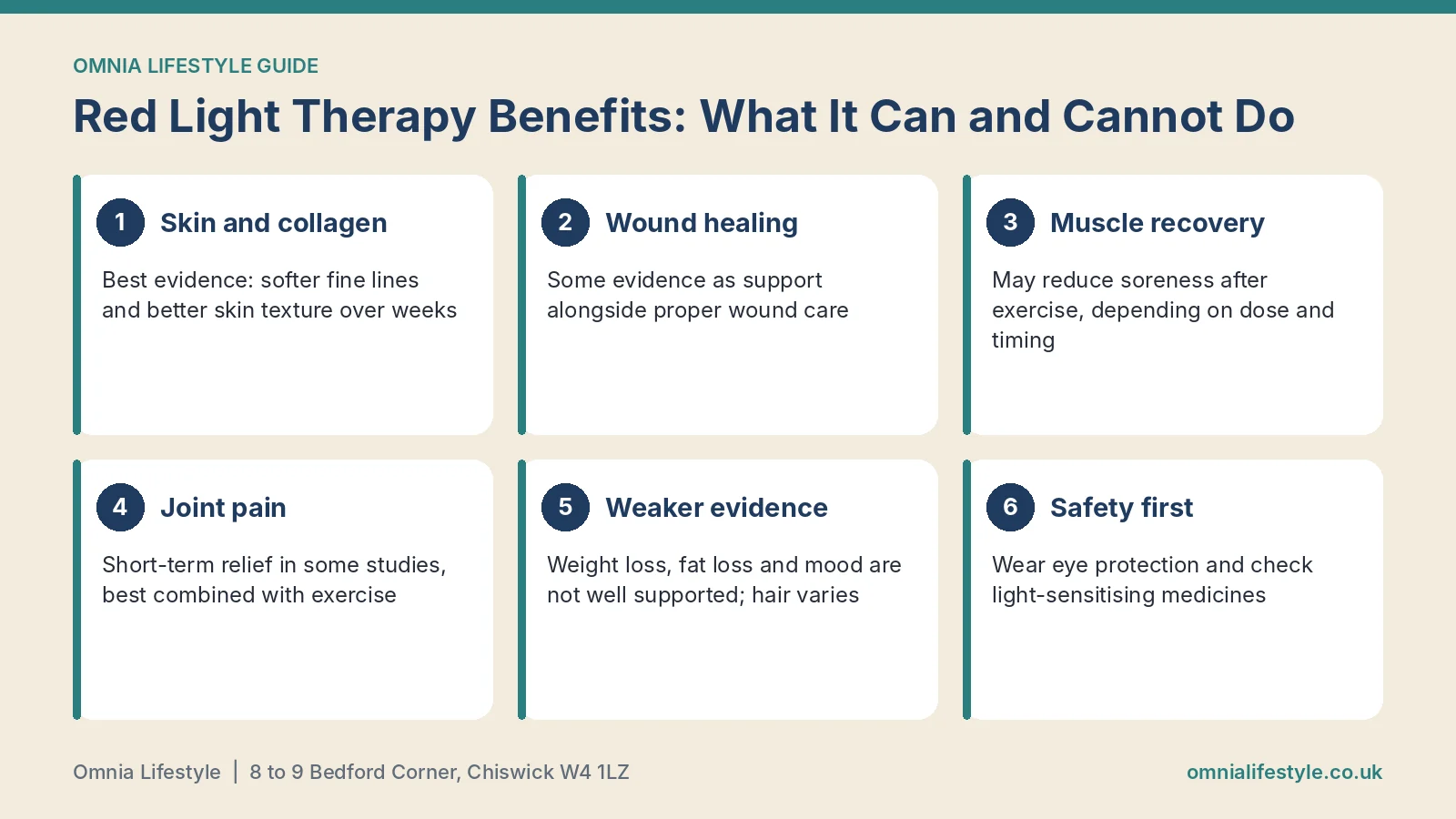
The research is still developing, but these are the areas where the benefits of red light therapy are best supported by controlled trials.
Skin rejuvenation and collagen
Several controlled studies have found that regular red and near-infrared light can soften fine lines and improve skin roughness and tone, with measurable increases in collagen in some. Changes are gradual, build over weeks of regular sessions and are modest compared with medical treatments such as prescription retinoids. Red light is also used alongside other treatments for acne and some inflammatory skin problems. See red light therapy for eczema, rosacea and acne.
Wound healing
There is some evidence that red and near-infrared light can help certain wounds heal, including some slow-healing wounds and healing scars. It is used as a supportive treatment, never instead of proper wound care. Any wound that is not healing needs assessment by a GP or practice nurse.
Muscle recovery
Trials in athletes suggest that light applied before or after exercise can reduce muscle soreness and markers of muscle damage. Results depend on the dose and timing, and it does not replace sleep, good nutrition and sensible training loads.
Joint pain
Low-level laser and near-infrared light have been studied for knee osteoarthritis, neck pain and tendon problems, with some reviews finding short-term improvements in pain and function. Benefits appear greatest when light therapy is combined with exercise, which remains the core treatment for most joint pain in NICE guidance.
Benefits of red light therapy with weaker evidence
Some popular claims go well beyond what the research shows.
- Weight loss and fat loss: a few studies of devices used on the stomach, thighs or arms have reported small, temporary reductions in measurements. There is no good evidence that red light therapy causes meaningful weight loss or can replace changes to diet and activity.
- Mood: early research on light and mood is interesting but small. Red light is not a treatment for depression or anxiety, and anyone struggling with low mood should speak to their GP.
- Hair growth: low-level light devices are used for pattern hair loss and some people see thicker hair, but results vary and treatment needs to continue to keep any gains. See whether red light therapy helps hair growth.
- Sleep and energy: sessions can feel relaxing, but evidence for better sleep or energy is limited.
Red light therapy beds, saunas and sunbeds
Full-body red light therapy beds surround the body with LED panels, which suits general recovery, widespread aches and skin goals. A true red light therapy bed is not a sunbed: it emits no UV and will not tan you.
- Red light therapy sunbeds: some gyms and salons offer beds that look like tanning beds. Ask what wavelengths and power they use, and make sure there is no UV.
- Red light saunas: these combine heat with red or near-infrared light. The heat may feel relaxing, but the light dose in many saunas is low and unmeasured, so the benefits are hard to judge. If you have a heart condition, low blood pressure or are pregnant, check with your GP before using any sauna.
For session lengths, costs and what to look for, read our guide to red light therapy beds.
Green, yellow and other light therapy benefits
Different colours of light reach different depths in the skin and act on different targets. For most of them, the evidence is thinner than it is for red light.
- Green light therapy: early studies have looked at green light for migraine and some types of long-term pain, with interesting but small results. In facial devices it is marketed for uneven pigmentation, with little research to support this.
- Yellow and amber light therapy: used in some facial devices to calm redness and sensitive skin. Research is limited.
- Orange light therapy: sits between red and yellow and is marketed for skin tone and radiance, with very little independent research.
- Blue light therapy: has reasonable evidence for mild to moderate acne, because blue light acts on the bacteria involved. It does not reach deeper tissues.
Is red light therapy safe? Warning signs and who should check first
Red light therapy is generally well tolerated. Side effects are usually mild, such as temporary warmth, redness or tightness of the skin. Some people need to take extra care or speak to a doctor first. Read more in is red light therapy safe.
Protect your eyes. The lights are very bright and near-infrared light is invisible, so a device can be working even when it looks dim. Wear the protective eyewear provided for every session and do not look directly into the lights. If you have an eye condition, ask your optician or GP first.
Check your medicines. Some medicines make the skin more sensitive to light, including certain antibiotics such as doxycycline, retinoid acne medicines such as isotretinoin, some diuretics and some herbal remedies. If you take any regular medicine, ask your pharmacist whether it increases light sensitivity.
Pregnancy. There is little research on red light therapy in pregnancy, so treatment over the abdomen is usually avoided and many clinics advise waiting. Speak to your midwife or GP first.
Check with your GP first if you have:
- Epilepsy that can be triggered by light, as some devices flicker or pulse
- A history of skin cancer, or a mole or patch of skin that is changing
- A condition that makes you sensitive to light, such as lupus or porphyria
- Reduced feeling in the skin, for example from diabetes, so you may not notice if the skin becomes too warm
- An undiagnosed lump, a new pain that has not been assessed, or an active infection
Get medical help:
- Call 999 if someone has a seizure for the first time, or a seizure lasts more than five minutes
- Go to A&E or an urgent eye service if you have sudden changes in your vision or eye pain after any light exposure
- See a GP promptly if you develop blistering, a burn or a rash, notice a mole changing in size, shape or colour, or have a wound that is red, hot, swollen or not healing
How a clinician uses red light therapy
Good red light therapy starts with the person, not the device. A clinician will usually:
- Check suitability by asking about your health, medicines, skin and eyes
- Agree realistic goals, explaining where the evidence is stronger and where it is weaker
- Choose the right device and dose, such as a full-body bed for general recovery or a targeted laser for a single joint or tendon
- Plan a course, as most studies use regular sessions over several weeks rather than a single treatment
- Combine it with other care, such as exercise rehabilitation for joint pain or a skincare routine for skin goals
- Review progress and stop if it is not helping
At Omnia Lifestyle, red light therapy is delivered with a NOVOTHOR full-body bed and a THOR Laser for targeted treatment of a joint, tendon or small area.
Frequently asked questions
What is red light therapy good for?
The best evidence is for skin rejuvenation and collagen, some wound healing, muscle recovery and joint pain. It is less clear for weight loss, mood, sleep and hair growth.
What is light therapy?
Light therapy is a broad term for treatments that use light. It includes red light therapy, blue light for acne, the ultraviolet phototherapy dermatologists use for psoriasis and eczema, and bright white light boxes used for seasonal affective disorder, which all work in different ways.
Are there benefits to red light therapy on the stomach?
Some studies have found small, temporary reductions in waist measurements, but there is no good evidence that red light therapy burns fat or leads to lasting weight loss. Diet, activity and sleep matter far more.
What is broadband light therapy?
Broadband light, often called BBL, is a type of intense pulsed light. A flash lamp delivers short, powerful pulses across many wavelengths to target redness and brown marks, so it is quite different from red light therapy.
What does amber light therapy do?
Amber light is used in some facial devices to calm redness and soothe sensitive skin. It is generally gentle, but there is little good-quality research to show how well it works.
Red light therapy in Chiswick
Red light therapy is available at Omnia Lifestyle, 8 to 9 Bedford Corner, The Avenue, Chiswick W4 1LZ, close to Turnham Green station, on bus routes 94, E3 and 272. Limited parking is available on request when booking. Sessions use the NOVOTHOR full-body bed or the THOR Laser, start from £70 and begin with a short check of your health, medicines and goals.
Read more about whether red light therapy really works, whether the NovoTHOR bed works and red light therapy safety and side effects, explore red light therapy at Omnia, or book a session.
This article is general information, not medical advice. If you have any of the warning signs listed above, seek medical attention.
Ready to book?
Red Light Therapy

.jpg)
.jpg)