





Frozen shoulder is painful, disruptive and slow, so it is no surprise that one of the most searched questions about it is how to cure it quickly. The honest answer is that there is no instant cure. Left alone, frozen shoulder commonly takes one to three years to resolve. The right treatment at the right stage, however, can make the painful phase much easier and help movement return sooner.
This guide explains what the evidence shows actually speeds recovery, what slows it down, and a stage-by-stage plan.
Why there is no overnight fix
In frozen shoulder, the capsule around the shoulder joint becomes inflamed, thickened and tight. It passes through three overlapping stages: a painful freezing stage, a stiff frozen stage and a thawing stage when movement gradually returns. Treatments work best when they match the stage you are in.
What can speed recovery
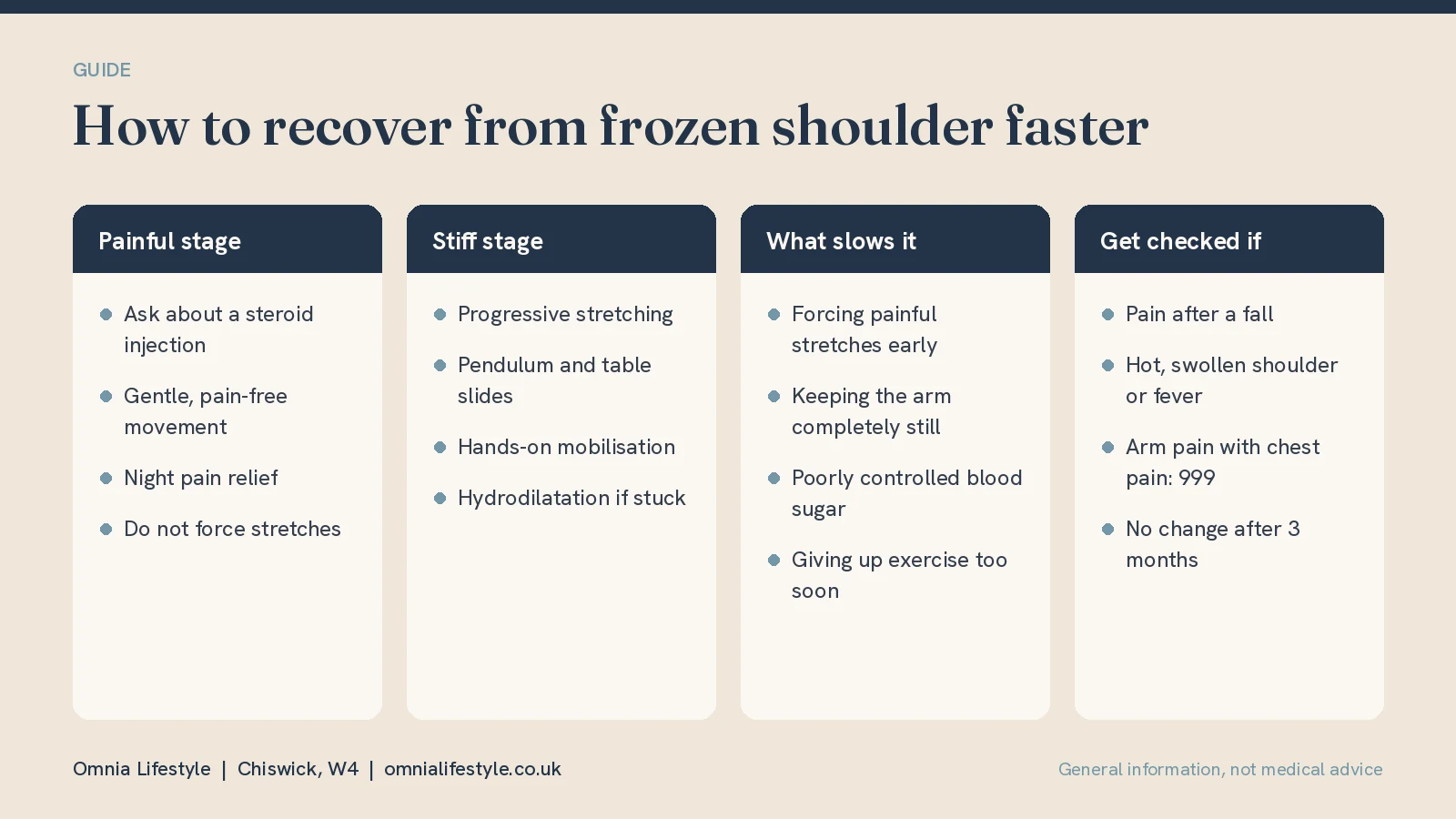
A steroid injection in the painful stage
An injection into the shoulder joint early in the freezing stage reduces pain for many people and makes gentle movement possible sooner. It is usually most helpful in the first few months. Ask your GP whether it is suitable for you.
The right physiotherapy at the right time
In the painful stage, gentle movement within comfort keeps the shoulder from stiffening further. Once pain settles, progressive stretching and strengthening restore movement. Hands-on mobilisation can help in the stiff stage.
Hydrodilatation
For people whose shoulder stays stiff, hydrodilatation injects fluid into the joint to stretch the tight capsule, usually alongside a steroid. It can give a faster short-term improvement in some people and is followed by physiotherapy.
Procedures for shoulders that do not improve
For a small number of people, manipulation under anaesthetic or keyhole surgery to release the capsule may be offered. The UK FROST trial compared these with early structured physiotherapy combined with a steroid injection and found no clinically important difference between them at one year, so the least invasive option is usually tried first.
Good blood sugar control
Frozen shoulder is more common, more severe and longer lasting in people with diabetes. Keeping blood sugar well controlled supports recovery, and anyone with frozen shoulder who has not had a recent blood sugar test should ask for one.
What slows recovery
- Forcing painful stretches in the freezing stage. This tends to increase inflammation and pain.
- Keeping the arm completely still. Gentle, comfortable movement protects the range you have.
- Stopping exercises too soon once pain eases, before movement has returned.
- Quick-fix claims promising a cure in one session.
A stage-by-stage plan
Freezing stage: two to nine months
Focus on pain relief, sleep and gentle movement. Ask your GP about a steroid injection. Use pendulum swings and table slides within comfort, and sleep with a pillow supporting the arm. Acupuncture or laser therapy can help with night pain for some people.
Frozen stage: four to twelve months
Pain eases but stiffness remains. This is the time to build stretching gradually, with physiotherapy and hands-on mobilisation. If progress stalls, hydrodilatation may be discussed.
Thawing stage: months to a year or more
Movement returns. Keep stretching and add strengthening so the shoulder works well as range comes back.
How long will my frozen shoulder last?
Most frozen shoulders resolve within one to three years, and many people notice a clear improvement well before that once the painful stage passes. Some are left with a small loss of movement that rarely affects daily life.
When to get your shoulder checked
Call 999 if shoulder or arm pain comes with chest pain, breathlessness or sweating.
See a doctor promptly if:
- Pain followed a fall and you cannot lift your arm
- The shoulder is hot and swollen or you feel feverish
- You have unexplained weight loss or a history of cancer
- There is no improvement at all after three months
Frequently asked questions
Can frozen shoulder go away in a few weeks?
Rarely. Shoulder stiffness that resolves within a few weeks is more likely to have another cause, such as a rotator cuff problem.
Will massage cure frozen shoulder?
Massage can ease muscle tension around the shoulder but does not release the tight joint capsule. It is best used alongside exercise.
Is heat or ice better for frozen shoulder?
Heat is usually more comfortable before stretching, and either can ease pain. Use whichever feels better.
Can frozen shoulder come back?
It rarely returns in the same shoulder, but a small number of people develop it later in the other shoulder.
Frozen shoulder treatment in Chiswick
Frozen shoulder is assessed and treated at Omnia Lifestyle in Chiswick, W4, close to Turnham Green station, on bus routes 94, E3 and 272. Limited parking is available on request when booking. Assessment identifies which stage you are in and sets a plan that matches it.
Read more about frozen shoulder, see our guides to frozen shoulder exercises and shoulder exercises for pain, explore physiotherapy, acupuncture and red light therapy, or book an assessment.
This article is general information, not medical advice. If you have any of the warning signs listed above, seek medical attention.



.jpg)
.jpg)