






Book at our Chiswick clinic
Blood Test
Folate, also called vitamin B9, is a B vitamin your body needs to make healthy red blood cells and new DNA. Folic acid is the man-made form found in supplements and fortified foods. A shortage of folate can lead to a type of anaemia in which red blood cells are larger than usual, and in early pregnancy folic acid helps protect against problems with the baby's spine and brain, known as neural tube defects.
This guide explains what your folate result means, the difference between serum folate and red cell folate, common causes of low folate, the NHS advice on folic acid in pregnancy and why vitamin B12 should be checked before folate is treated. Ranges vary between laboratories, so always read your result against the range printed on your own report.
Test it in Chiswick: our Folate (Folic Acid) blood test costs £49, with your result explained in person by a practitioner. No GP referral needed. Book this test or call 020 4515 0000. Prefer to test at home? A home finger-prick kit is also available, ask us when you enquire.
Quick answer
Serum folate ranges vary between NHS laboratories, but many use about 3 to 20 µg/L (micrograms per litre). A result below your laboratory's lower limit suggests low folate. Red cell folate reflects your longer-term stores, and one NHS laboratory uses a range of 125 to 650 µg/L. The NHS advises 400 micrograms of folic acid a day from before pregnancy until 12 weeks, or 5 milligrams for higher risk pregnancies. Vitamin B12 should be checked before folate deficiency is treated.
What is folate?
Folate is found naturally in foods such as broccoli, Brussels sprouts, asparagus, peas, chickpeas and brown rice. Folate works closely with vitamin B12, and a shortage of either can cause similar blood changes and symptoms.
Serum folate and red cell folate
There are two ways to measure folate in the blood:
- Serum folate: measures folate in the liquid part of your blood. It is the standard first test and gives an early picture of your folate status, but it can be affected by your recent diet and any supplements you take.
- Red cell folate: measures folate stored inside your red blood cells. NHS laboratories describe it as the more reliable indicator of folate status because it reflects your stores over a longer period. It is useful when a serum result is borderline or hard to interpret. We offer a separate Red Cell Folate test for £89.
What your folate result means
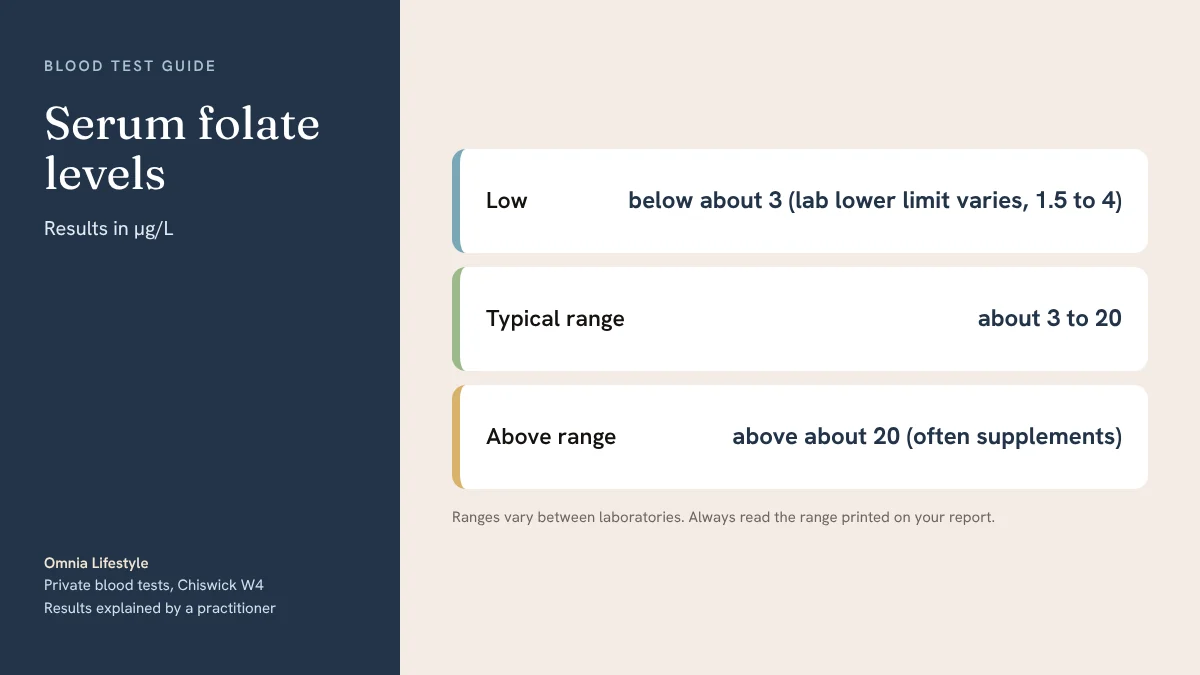
- Low: below the lower limit on your report. For serum folate, many NHS laboratories set this at about 3 µg/L, although limits range from 1.5 to about 4 µg/L between laboratories.
- Within range: serum folate of about 3 to 20 µg/L in many laboratories. For red cell folate, one NHS laboratory uses 125 to 650 µg/L.
- High: above the upper limit, often about 20 µg/L for serum folate. A high result usually reflects folic acid supplements or fortified foods. Taking folic acid can hide a vitamin B12 deficiency, so it is worth checking B12 too.
Symptoms of low folate
Low folate can develop slowly, and some people have no symptoms at first. The NHS lists these symptoms of vitamin B12 or folate deficiency:
- extreme tiredness and a lack of energy
- a sore and red tongue, and mouth ulcers
- muscle weakness
- pins and needles
- problems with vision
- low mood, and problems with memory, understanding and judgement
Common causes of low folate
- Diet: not eating enough folate-rich foods, or a restrictive diet that leaves out good sources.
- Alcohol: regularly drinking too much can lower folate.
- Absorption problems: conditions of the digestive system, such as coeliac disease, can stop folate being absorbed properly.
- Medicines: including some anticonvulsants, colestyramine, sulfasalazine and methotrexate.
- Increased needs: pregnancy, some blood disorders such as sickle cell anaemia, cancer, and infection or inflammation all increase the amount of folate the body uses.
- Losing folate in urine: this can happen with congestive heart failure, acute liver damage or long-term dialysis.
Why vitamin B12 is checked before treating folate
Low folate and low vitamin B12 can both cause anaemia with large red blood cells, and they often cause similar symptoms. The NHS explains that before you start folic acid, your GP will check your vitamin B12 levels, because folic acid treatment can sometimes improve your symptoms so much that it masks an underlying vitamin B12 deficiency. An untreated B12 deficiency can damage the nervous system, and some of these problems can become permanent.
For this reason, folate and B12 are usually tested together. Read our guide to vitamin B12 levels, or add a Vitamin B12 test to your folate test.
Folic acid before and during pregnancy
The NHS advises taking a 400 microgram folic acid supplement every day from before you are pregnant until you are 12 weeks pregnant. If you did not take it before conceiving, start as soon as you find out you are pregnant.
Some people are advised to take a higher dose of 5 milligrams a day until 12 weeks, prescribed by a GP. This includes people who have, or whose baby's biological father has, a personal or family history of neural tube defects, a previous pregnancy affected by a neural tube defect, diabetes, or who take medicine for epilepsy or anti-retroviral medicine for HIV. Speak to your GP, midwife or pharmacist if you are unsure which dose is right for you.
What to do about your result
A folate result outside the range starts a conversation with your practitioner or GP rather than giving a diagnosis. If your folate is low, the NHS says most people take folic acid tablets for about four months, or longer if the cause continues. Your GP will look for the reason, such as diet, alcohol, medicines or an absorption problem, and check your vitamin B12 first. Eating more folate-rich foods helps keep your levels up after treatment.
When to see your GP or get urgent help
See your GP if you think you may have low folate or B12, or if your result is below the range on your report. The NHS advises that these deficiencies are diagnosed and treated as soon as possible, because some problems can become permanent if left untreated.
Get urgent help from NHS 111 or your GP if you develop new numbness, problems with balance or walking, or confusion.
Call 999 or go to A&E if you have chest pain, severe shortness of breath or you faint. If you are pregnant and worried about your health, contact your midwife or maternity unit.
Who should consider a folate test
- People who feel tired all the time, or who have a sore tongue or mouth ulcers.
- Anyone planning a pregnancy who wants to check their levels.
- People with coeliac disease or another digestive condition.
- People who drink alcohol heavily, or who take methotrexate, sulfasalazine or some anticonvulsants.
- Anyone with large red blood cells (a high MCV) on a full blood count.
Preparing for the test
Follow any instructions you are given when you book. Tell us if you take folic acid, a multivitamin or any other supplement, as recent supplements can raise serum folate. If you take biotin (vitamin B7), including in hair, skin and nail supplements, tell us when you book, as high doses can interfere with some laboratory tests.
How often to retest
If you are being treated for low folate, your GP will decide when to recheck your levels. Some NHS laboratories suggest leaving at least three months between routine folate tests. If your result was within range and you feel well, there is no need to retest regularly unless your diet, medicines or health change.
Frequently asked questions
Is a folate level of 3 low?
A serum folate of 3 µg/L is at or near the lower limit used by many NHS laboratories, so it is borderline. Your practitioner may suggest a red cell folate test or a repeat test, and will check your vitamin B12 too.
Is folate the same as folic acid?
Folate is the form found naturally in food. Folic acid is the man-made form used in supplements and fortified foods. Blood tests measure your total folate, whichever form it came from.
Is high folate bad?
A high folate result is usually caused by supplements or fortified foods, so mention any you take to your practitioner. Because folic acid can hide a vitamin B12 deficiency, it is worth checking your B12 if you take folic acid regularly.
What is the difference between serum folate and red cell folate?
Serum folate gives an early picture and can be affected by your recent diet. Red cell folate reflects your stores over a longer period and is considered the more reliable measure of overall folate status.
How much folic acid should I take when trying to conceive?
The NHS advises 400 micrograms a day from before pregnancy until 12 weeks. Some people need 5 milligrams a day on prescription. Ask your GP if you are unsure.
Folate testing in Chiswick
We offer serum folate and red cell folate testing at Omnia Lifestyle, 8 to 9 Bedford Corner, The Avenue, Chiswick, London W4 1LZ. We are a short walk from Turnham Green station on the District line (Piccadilly line trains stop there early in the morning and late in the evening only), and buses 94, E3 and 272 stop nearby. Limited parking is available on request when you book. Your sample is taken at the clinic and analysed at the Randox accredited laboratory, and most results are ready within a few working days. You do not need a GP referral. A practitioner goes through your result with you in person, and a GP feedback report is available on request.
Find out more about our Folate (Folic Acid) test, or check folate alongside B12, ferritin and vitamin D with our Vitamins and Minerals Check. You can also compare every blood test and price, or read our guides to vitamin B12 levels and blood tests before pregnancy.
This article is general information, not medical advice. Discuss your results with your GP or practitioner.
Ready to book?
Blood Test




.jpg)
.jpg)
