








Book at our Chiswick clinic
Tai Chi & Qi Gong
Tai chi and yoga are both mind and body practices that combine movement, breathing and attention, and both are recommended for health at almost any age. They feel very different in practice, though, and the better choice depends on what you want from it and what your body is ready for.
This guide compares the two side by side, for balance, flexibility, strength, joints and stress, and gives a simple way to decide.
Try tai chi for £15: our tai chi classes in Chiswick run on Wednesdays at 9:30am and Fridays at 1:30pm, and beginners can join in any week. Save your place in a group class, message us on WhatsApp or call 020 4515 0000.
Quick answer
Choose tai chi if your main aims are balance, steadiness on your feet, gentle exercise for stiff or painful joints, or a calm, standing practice you can keep up for years. Choose yoga if you want to build flexibility and strength through held postures, are comfortable getting down to and up from the floor, or want a wider range from gentle to vigorous. Many people do both.
How they differ
Where they come from
Tai chi developed in China as a martial art and is closely linked to qigong and Chinese medicine. Yoga developed in India, and the posture-based yoga taught in most classes today is one part of a wider tradition.
How they move
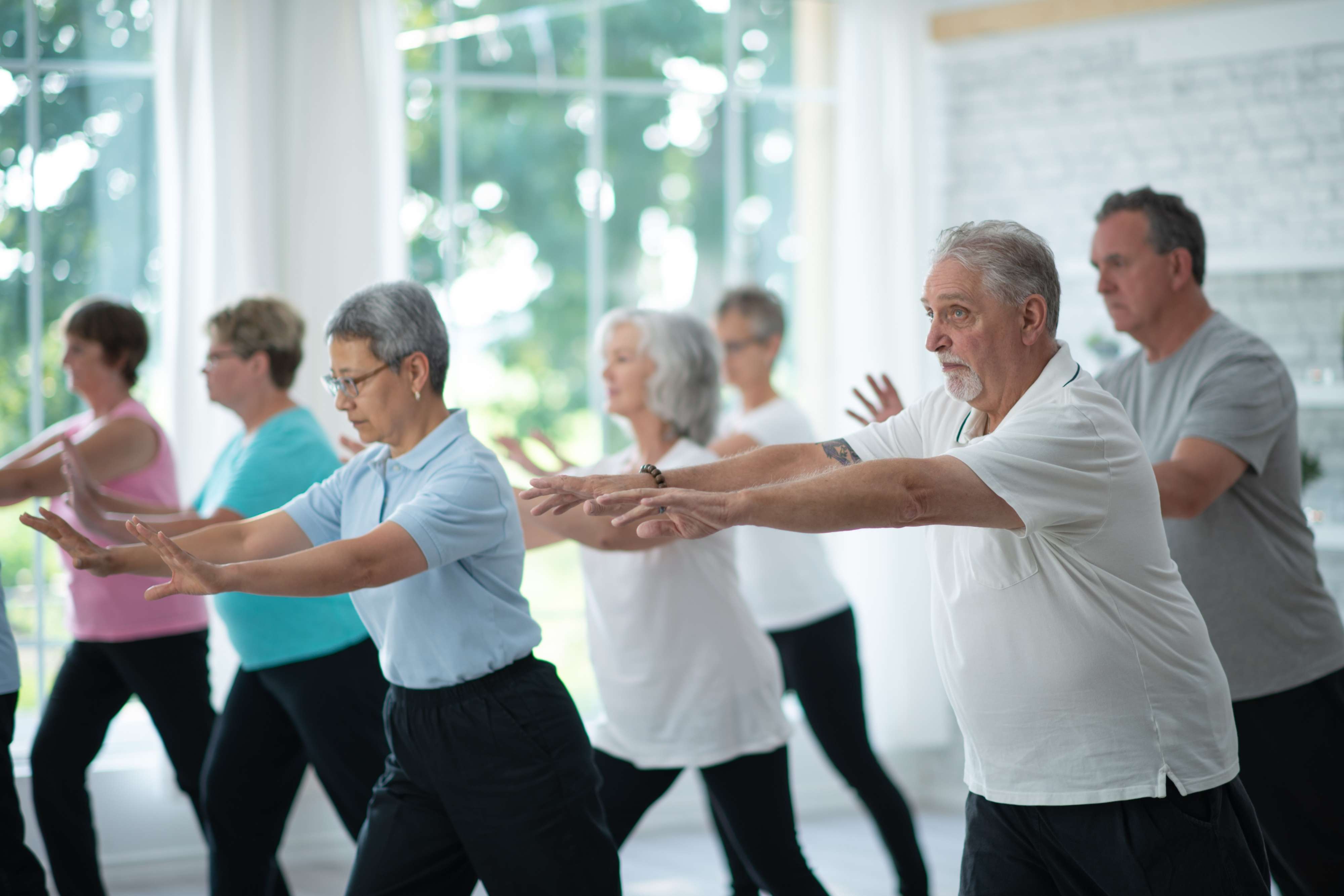
Tai chi is practised standing, moving continuously from one posture to the next in a slow, flowing sequence called a form, with constant gentle shifts of weight from one leg to the other. Yoga is built around postures, called asanas, which are usually held for several breaths, with some styles linking them into flowing sequences. Yoga uses the floor: standing, kneeling, sitting and lying postures are all common.
Intensity
Tai chi stays low impact and slow throughout, though holding bent-knee stances works the legs more than it looks. Yoga ranges widely, from gentle and restorative styles to dynamic, physically demanding classes.
Tai chi vs yoga for balance
Tai chi has the stronger evidence for balance and falls, particularly in older adults. Every movement involves controlled weight transfer, so balance is trained continuously, and tai chi appears in falls prevention guidance in several countries. Yoga includes balance postures too and can improve balance, but it is less central to the practice. If falls or unsteadiness are your main concern, tai chi is the more targeted choice. See is tai chi good for older adults.
Tai chi vs yoga for flexibility
Yoga is the clear choice if flexibility is the main goal. Held stretches through the hips, hamstrings, spine and shoulders build range of movement more directly than tai chi. Tai chi improves mobility in a gentler way, through relaxed, repeated movement rather than deep stretching.
Tai chi vs yoga for strength
Both build strength, in different ways. Yoga builds strength by holding the body in postures, including the arms and upper body in poses such as plank. Tai chi mainly builds leg and trunk strength and endurance, because the knees stay softly bent while the weight shifts slowly. Neither replaces dedicated strength training, but both count towards the strength activity the NHS recommends.
Tai chi vs yoga for joints and arthritis
Tai chi has some of the best evidence of any exercise for knee osteoarthritis. A 2026 umbrella review in the British Journal of Sports Medicine, pooling 1,744 trials of traditional Chinese exercise, found the strongest evidence for knee osteoarthritis, with improvements in function, pain and stiffness. Read our summary of the review. Yoga can also help joint pain and back pain, but some postures load the knees, wrists or spine heavily, so choose a gentle class and tell the teacher about your joints. See is tai chi good for arthritis.
Tai chi vs yoga for stress and sleep
Both practices slow the breath and focus attention, and both have been studied for stress, anxiety, mood and sleep, with broadly encouraging results. The difference is mostly one of feel: tai chi is a moving meditation that many people find easy to settle into, while yoga often includes stillness, held breathing patterns and a relaxation at the end.
Which is easier for beginners?
Tai chi asks little of your flexibility or strength on day one, and nothing involves getting down to the floor, so it is often the easier start for older adults, people with stiff joints, or anyone nervous about exercise. The challenge is learning the sequence, which takes weeks. Yoga gives you clear postures to work on from the first class, but some will feel hard if you are stiff. Both can be adapted, and both can be done in a chair: see chair tai chi.
Can you do both?
Yes, and they complement each other well. Yoga builds flexibility and upper-body strength; tai chi builds balance, leg endurance and a calm, flowing way of moving. Many people practise one in a class and the other at home.
A simple way to decide
- Worried about falls or balance? Start with tai chi.
- Knee pain or osteoarthritis? Tai chi has the stronger evidence.
- Want to become more flexible? Start with yoga.
- Find it hard to get down to the floor? Tai chi, or chair-based classes of either.
- Want a gentle practice to keep up for life? Either. Pick the one you enjoy enough to keep doing.
Frequently asked questions
Is tai chi better than yoga for seniors?
For balance and falls, tai chi has the stronger evidence. For flexibility, yoga is more direct. Many older adults find tai chi easier to start because it does not involve the floor.
Is tai chi or yoga better for weight loss?
Neither is a strong calorie burner in its gentle forms. Dynamic yoga styles use more energy than tai chi. Both work best alongside walking or other activity.
Is tai chi easier than yoga?
Physically, tai chi is usually gentler. Mentally, learning a tai chi form takes patience, while yoga postures can be learned one at a time.
What is the difference between tai chi and qigong?
Qigong is a set of simple, repeated exercises; tai chi links movements into a longer flowing sequence. See tai chi vs qi gong.
Try tai chi in Chiswick
Our group tai chi and qi gong classes are £15 a class, every Wednesday from 9:30am to 10:30am and every Friday from 1:30pm to 2:30pm. Each class opens with qigong breathing and warm-up exercises, then teaches tai chi movements step by step, with a seated option throughout. Beginners can join in any week. We also offer yoga at the clinic if you would like to try both.
Classes are at Omnia Lifestyle, 8 to 9 Bedford Corner, The Avenue, Chiswick W4 1LZ, close to Turnham Green station, on bus routes 94, E3 and 272. Limited parking is available on request when booking. Read more about tai chi and qi gong in Chiswick or our tai chi classes in London.
Join a tai chi group class in Chiswick: £15 a class, Wednesdays 9:30am and Fridays 1:30pm. Save your place in a group class, message us on WhatsApp or call 020 4515 0000. Prefer to learn on your own? One-to-one sessions are £50 and can be booked online.
This article is general information, not medical advice. If you have a medical condition or a history of falls, speak to your GP before starting a new exercise practice.
Ready to book?
Tai Chi & Qi Gong




.jpg)
.jpg)
