





Sciatica can be one of the most painful things people experience, so the first question most people ask is how long it will last. The encouraging answer is that most sciatica improves within four to six weeks, and the large majority of people recover within about three months without surgery.
This guide sets out a typical recovery timeline, what affects how long sciatica lasts, what speeds recovery and what slows it, and when to get it checked.
A typical sciatica timeline
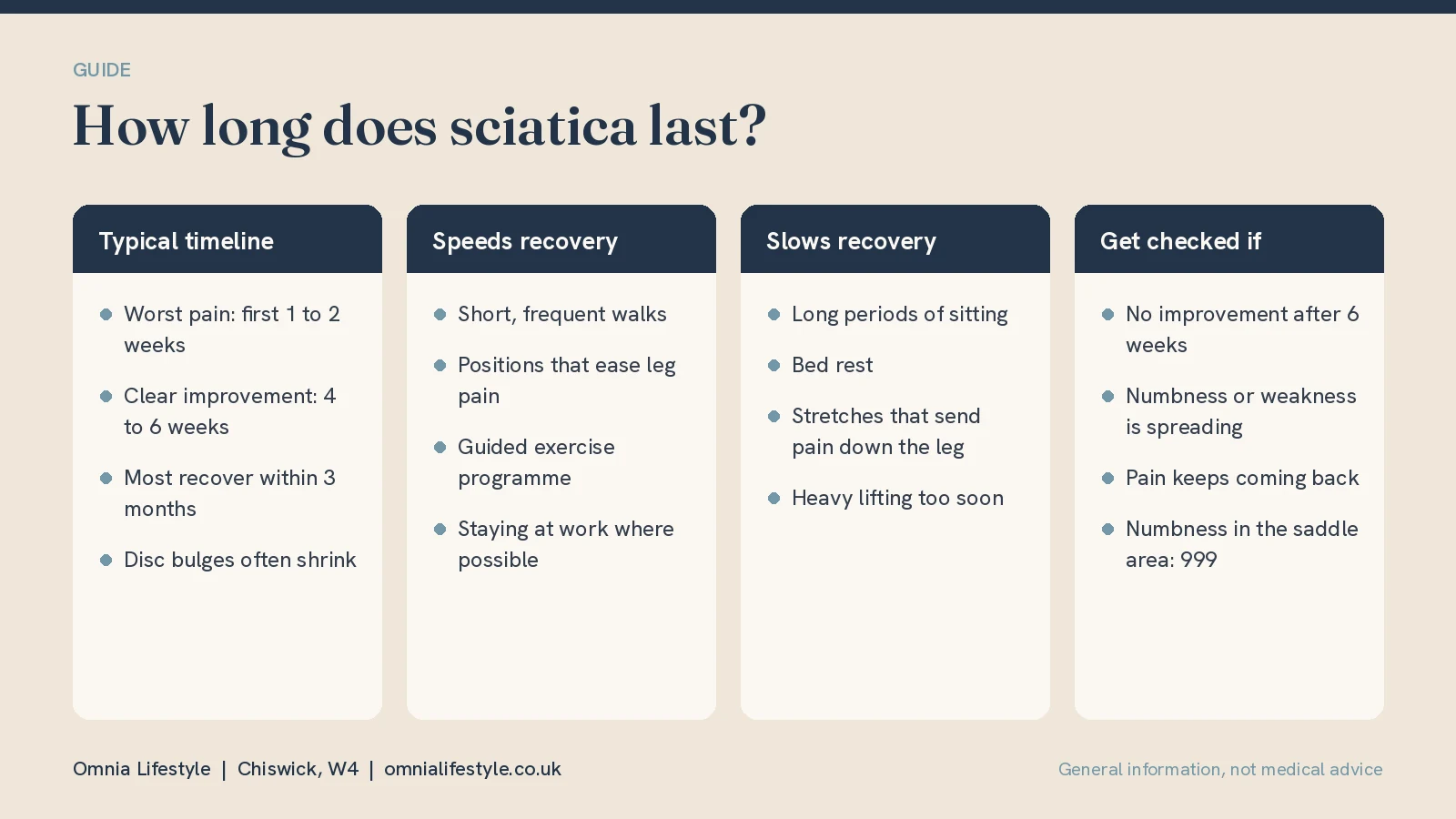
- Weeks 1 to 2: usually the worst phase. Leg pain can be severe and sitting, bending and coughing are often painful.
- Weeks 2 to 6: pain starts to ease for most people. A good sign is leg pain retreating up towards the buttock and back, even if back pain remains.
- Weeks 6 to 12: most people have recovered or are much better, with occasional twinges.
- Beyond 12 weeks: a smaller group still has symptoms. This is described as persistent sciatica and deserves a structured assessment.
Why sciatica usually gets better
Most sciatica is caused by a disc bulge irritating a nerve root in the lower back. The body often reabsorbs part of the displaced disc material over weeks to months, and the inflammation around the nerve settles. Scan studies show that larger disc herniations are often the ones most likely to shrink.
What affects how long sciatica lasts
- The cause: disc-related sciatica usually settles. Sciatica from spinal stenosis, the narrowing of the spaces around the nerves that is common after 60, tends to fluctuate over a longer period.
- Severity: significant numbness or weakness can take longer to recover than pain.
- Activity: people who stay active recover faster than those who rest in bed.
- Sitting: long hours of sitting often keep the nerve irritated.
- Previous episodes, smoking, stress and poor sleep are all linked to slower recovery.
What speeds recovery
- Short, frequent walks rather than long periods of sitting or lying down
- Positions that ease leg pain, such as lying on your back with your calves on a chair
- An exercise programme matched to your sciatica, because disc-related and stenosis-related sciatica often respond to opposite movements
- Staying at work with changes where possible, such as standing breaks every 20 to 30 minutes
- Heat on the lower back and buttock for muscle spasm
For medication, speak to your pharmacist or GP. NICE advises against gabapentin, pregabalin and oral steroids for sciatica, because they have not been shown to help overall.
What slows recovery
- Bed rest and avoiding movement
- Long periods of sitting, especially in low, soft chairs
- Hamstring and toe-touch stretches that send pain further down the leg
- Heavy lifting and high-impact exercise too soon
Signs sciatica is improving
- Leg pain moving up towards the buttock and back
- Being able to sit or walk for longer
- Sleeping better and waking less often
- Pins and needles becoming less constant
Does sciatica go away for good?
For most people, yes, the episode resolves. Sciatica can return, particularly if the underlying back weakness or sitting habits are not addressed. Regular walking, strengthening the back and hip muscles, and breaking up long periods of sitting reduce the chance of it coming back.
What if sciatica lasts longer than 12 weeks?
Persistent sciatica deserves a proper assessment. Your GP or physiotherapist may suggest a scan if it would change the plan, and a specialist may discuss a spinal injection or surgery for the minority who do not improve. For people without severe nerve loss, outcomes after surgery and after physiotherapy are often similar at one to two years, so surgery is a choice rather than the only option.
When to get sciatica checked
Call 999 or go to A&E if you have numbness around the genitals, inner thighs or buttocks, new bladder or bowel problems, or weakness in both legs. These can signal cauda equina syndrome, which needs emergency treatment.
See your GP or a physiotherapist if:
- There is no improvement after six weeks
- Numbness or weakness in the leg or foot is getting worse
- Pain is severe and uncontrolled
- Sciatica keeps coming back
- You feel generally unwell, have unexplained weight loss or a history of cancer
Frequently asked questions
Can sciatica last for years?
Rarely. A small number of people have symptoms that come and go over a longer period, most often with spinal stenosis. A structured programme usually improves these too.
Is walking good for sciatica?
Yes, for most people. Short, frequent walks usually help more than rest. If walking brings on leg pain that eases when you sit or bend forward, this can suggest stenosis, which is worth having assessed.
Why is sciatica worse at night?
Lying still for long periods and certain positions can increase pressure on the irritated nerve. Lying on your side with a pillow between your knees, or on your back with a pillow under your knees, often helps.
Will my sciatica come back?
It can, but staying active, strengthening the back and hips, and avoiding long spells of sitting reduce the risk considerably.
Sciatica assessment and treatment in Chiswick
Sciatica is assessed and treated at Omnia Lifestyle in Chiswick, W4, close to Turnham Green station, on bus routes 94, E3 and 272. Limited parking is available on request when booking, and home visits are available when travelling is too painful. Assessment finds the movements that ease your leg pain and sets a programme around them.
Read more about sciatica and slipped discs, see our sciatica exercises guide, explore physiotherapy, acupuncture and home visits, or book an assessment.
This article is general information, not medical advice. If you have any of the warning signs listed above, seek medical attention.



.jpg)
.jpg)