






What 1,744 trials say about tai chi, qigong and musculoskeletal pain
The largest review of its kind, published in the British Journal of Sports Medicine, brought together 92 meta-analyses of traditional Chinese exercise for joint, bone, muscle and back conditions. Scroll to watch the evidence narrow down to what we can be most sure of.
Chen W-X, Wu Q-J and colleagues, British Journal of Sports Medicine, first published 17 August 2026. Read the paper
1,744randomised controlled trials
Each dot is one trial of a traditional Chinese exercise in adults living with a musculoskeletal condition, from knee osteoarthritis to osteoporosis and low back pain.
92meta-analyses
Those trials had already been pooled into 92 meta-analyses. Overlap between them was negligible, so the same trials were rarely counted twice.
547separate findings, each graded
The team re-analysed every pairing of exercise and outcome from the original trial data, then rated how certain each finding is using GRADE, the system guideline panels use.
HighModerateLowVery low
23reached high certainty
The top row. Better movement and mental health in knee osteoarthritis, better mental health with neck pain, better sleep with fibromyalgia, less long-term pain, and higher bone density with tai chi.
Musculoskeletal conditions are the leading cause of disability worldwide
1.69bnpeople were living with a musculoskeletal disorder in 2021, according to the Global Burden of Disease study cited in the review.
Low back pain alone is the leading cause of disability in 160 countries, according to the World Health Organization. These conditions limit movement and dexterity, lead to early retirement and make it harder to take part in everyday life.
Seven traditional exercises, one family
Each combines slow movement, controlled breathing and focused attention. The width of each band shows its share of the 547 findings. Select one to read about it.
Smaller bands, left to right: , , and .
Tai chi
How sure can we be?
Of the 547 findings, 394 (72%) showed a statistically significant benefit. Significance is not the same as certainty, so the researchers graded each one. Much of the evidence is promising rather than settled, and that is worth knowing.
High
23
Moderate
179
Low
218
Very low
127
- High certainty
- Further research is very unlikely to change confidence in the effect.
- Moderate certainty
- The true effect is probably close to what was found, but it could differ.
- Low and very low certainty
- The true effect may be quite different. These findings show where more and better trials are needed.
The quality of the meta-analyses themselves was rated high for 65 of 92 and moderate for the other 27. None was rated low.
What it found, condition by condition
Only findings graded high or moderate certainty are shown. Where a common scale allows it, the bar shows effect size: 0.2 is small, 0.5 medium and 0.8 large. The line across it is the 95% confidence interval.
Strongest grade of evidence shown beside each
Knee osteoarthritis has the deepest evidence in the review: 170 findings, 15 of them high certainty. WOMAC is a questionnaire covering pain, stiffness and everyday function. SF-36 measures general health, including mental health.
High certainty
Traditional Chinese exercise improved physical function on WOMAC
SMD −0.85 (95% CI −1.04 to −0.65)
High certainty
Traditional Chinese exercise improved physical function on SF-36
WMD 2.85 (95% CI 1.65 to 4.06)
Measured in the scale’s own units
High certainty
Traditional Chinese exercise improved mental health on SF-36
WMD 2.02 (95% CI 0.83 to 3.22)
Measured in the scale’s own units
High certainty
Tai chi improved physical function on WOMAC
SMD −0.56 (95% CI −0.80 to −0.33)
High certainty
Tai chi reduced pain on WOMAC
SMD −0.44 (95% CI −0.63 to −0.24)
High certainty
Tai chi reduced stiffness on WOMAC
SMD −0.27 (95% CI −0.43 to −0.11)
High certainty
Tai chi improved mental health on SF-36
WMD 2.41 (95% CI 0.89 to 3.93)
Measured in the scale’s own units
Moderate certainty
Tai chi and wuqinxi reduced WOMAC pain and stiffness scores
Several moderate-certainty analyses
No single pooled figure
These analyses pooled adults with different long-term musculoskeletal pain conditions.
High certainty
Tai chi reduced pain compared with no exercise
SMD −0.65 (95% CI −0.82 to −0.48)
Moderate certainty
Tai chi reduced disability
SMD −0.65 (95% CI −0.82 to −0.48)
Moderate certainty
Traditional Chinese exercise reduced pain
SMD −0.50 (95% CI −0.75 to −0.25)
Moderate certainty
Traditional Chinese exercise improved physical function
SMD −0.57 (95% CI −0.82 to −0.32)
Fibromyalgia causes widespread pain, poor sleep and fatigue. Sleep was one of the clearest findings in the review.
High certainty
Traditional Chinese exercise improved sleep quality
MD −2.23 (95% CI −2.88 to −1.58). A lower sleep score is better
Measured in the scale’s own units
High certainty
Traditional Chinese exercise reduced pain
MD −2.17 (95% CI −2.73 to −1.61)
Measured in the scale’s own units
Moderate certainty
Tai chi improved quality of life
SMD −0.61 (95% CI −0.90 to −0.31)
Moderate certainty
Tai chi improved sleep quality
SMD −0.57 (95% CI −0.86 to −0.28)
Moderate certainty
Tai chi eased anxiety and depression symptoms
SMD −0.25 (95% CI −0.47 to −0.02)
For neck pain, the strongest evidence concerned mental health rather than pain alone.
High certainty
Traditional Chinese exercise improved mental health
MD 3.37 (95% CI 0.50 to 6.24)
Measured in the scale’s own units
Moderate certainty
Traditional Chinese exercise reduced pain
SMD 0.81 (95% CI 0.50 to 1.13)
Moderate certainty
The reduction in pain was still present at follow-up
SMD 0.69 (95% CI 0.39 to 1.00)
Bone mineral density (BMD) was measured by scan at weight-bearing sites of the hip and spine.
High certainty
Tai chi increased BMD at Ward’s triangle of the hip
MD 0.04 g/cm² (95% CI 0.02 to 0.06)
Measured in the scale’s own units
High certainty
Tai chi increased BMD at the femoral neck
MD 0.02 g/cm² (95% CI 0.00 to 0.04)
Measured in the scale’s own units
High certainty
Tai chi increased lumbar spine BMD in postmenopausal women
MD 0.04 g/cm² (95% CI 0.02 to 0.06)
Measured in the scale’s own units
Moderate certainty
Further benefits at the femoral neck and trochanter, in the lumbar spine of perimenopausal women, and for pain
20 moderate-certainty findings
No single pooled figure
These changes are small in absolute terms. Bone renews itself slowly, and the review found larger benefits with regular, sustained practice. Tai chi does not replace osteoporosis medication or your doctor’s advice.
Low back pain was the second largest group, with 79 findings.
Moderate certainty
Traditional Chinese exercise, including tai chi and baduanjin, reduced pain
SMD −1.13 (95% CI −1.52 to −0.74)
Moderate certainty
Traditional Chinese exercise improved disability
SMD −0.77 (95% CI −1.39 to −0.15)
Moderate certainty
More people responded to treatment, in middle-aged and older adults with lumbar disc herniation
OR 4.92 (95% CI 2.89 to 8.39)
Shown as an odds ratio
Sarcopenia is age-related loss of muscle; frailty is reduced reserve and resilience in later life.
Moderate certainty
Yijinjing and related exercises improved the six-minute walk and sit-to-stand performance
WMD 0.31 (95% CI 0.28 to 0.33). Six-minute walk test
Measured in the scale’s own units
Moderate certainty
Traditional Chinese exercise improved grip strength
Hedges’ g 0.32 (95% CI 0.00 to 0.64)
Moderate certainty
Fewer falls in older adults with sarcopenia or frailty
MD −0.41 (95% CI −0.64 to −0.17)
Measured in the scale’s own units
Chronic ankle instability follows repeated sprains, when the ankle keeps giving way.
Moderate certainty
Tai chi improved balance
SMD 0.79 (95% CI 0.40 to 1.17)
Moderate certainty
Tai chi increased strength pointing the foot down
SMD 0.82 (95% CI 0.34 to 1.29)
Moderate certainty
Tai chi increased strength turning the foot outwards
SMD 1.04 (95% CI 0.62 to 1.46)
Moderate certainty
Tai chi sharpened the sense of where the ankle is
SMD −0.60 (95% CI −1.08 to −0.12)
Axial spondyloarthritis is an inflammatory condition affecting the spine.
Moderate certainty
Traditional Chinese exercise reduced disease activity
MD −0.72 (95% CI −1.11 to −0.34)
Measured in the scale’s own units
Moderate certainty
Traditional Chinese exercise improved spinal mobility
MD −0.51 (95% CI −0.84 to −0.18)
Measured in the scale’s own units
Moderate certainty
Qigong reduced pain
MD −0.71 (95% CI −0.91 to −0.51)
Measured in the scale’s own units
How much practice did it take?
The researchers compared programmes by how often people practised, how many minutes a week, and for how many months. Set a week below to see where it sits against what they found.
An Omnia class lasts 60 minutes. One class a week plus two 45-minute practices at home comes to three sessions and 150 minutes.
Why might slow movement help?
The review did not test how the exercises work. Drawing on other studies, the authors point to three likely routes.
Stronger, steadier legs
Slow, controlled weight shifts load the muscles around the hip, knee and ankle, and train balance and the body’s sense of where the joints are.
Breath and attention
The breathing and meditative elements may calm the stress response and lower markers of inflammation, which could contribute to less pain.
Something people keep doing
It is gentle, needs no equipment and is often practised in a group. That makes it easier to sustain, which matters because the benefits grew with longer practice.
Reading it with care
- Most findings are not yet high certainty. 23 of the 547 reached that grade, and 345 were rated low or very low.
- The trials varied a great deal. More than a third of findings showed high heterogeneity: results differed between studies because of different people, programmes and measures.
- Many trials were small and short. The authors call for larger, longer trials across several centres, and for head-to-head comparisons of the different forms.
- It cannot yet say who benefits most. The original analyses rarely reported results by severity, sex or ethnicity.
- It sits alongside care, not in place of it. The authors see these exercises as a complement to conventional treatment and a way to support self-management.
Tai chi at Omnia, Chiswick
Classes are taught by two doctors of Chinese medicine with lifelong practice, in a clinic that also offers acupuncture and physiotherapy. See class details and fees
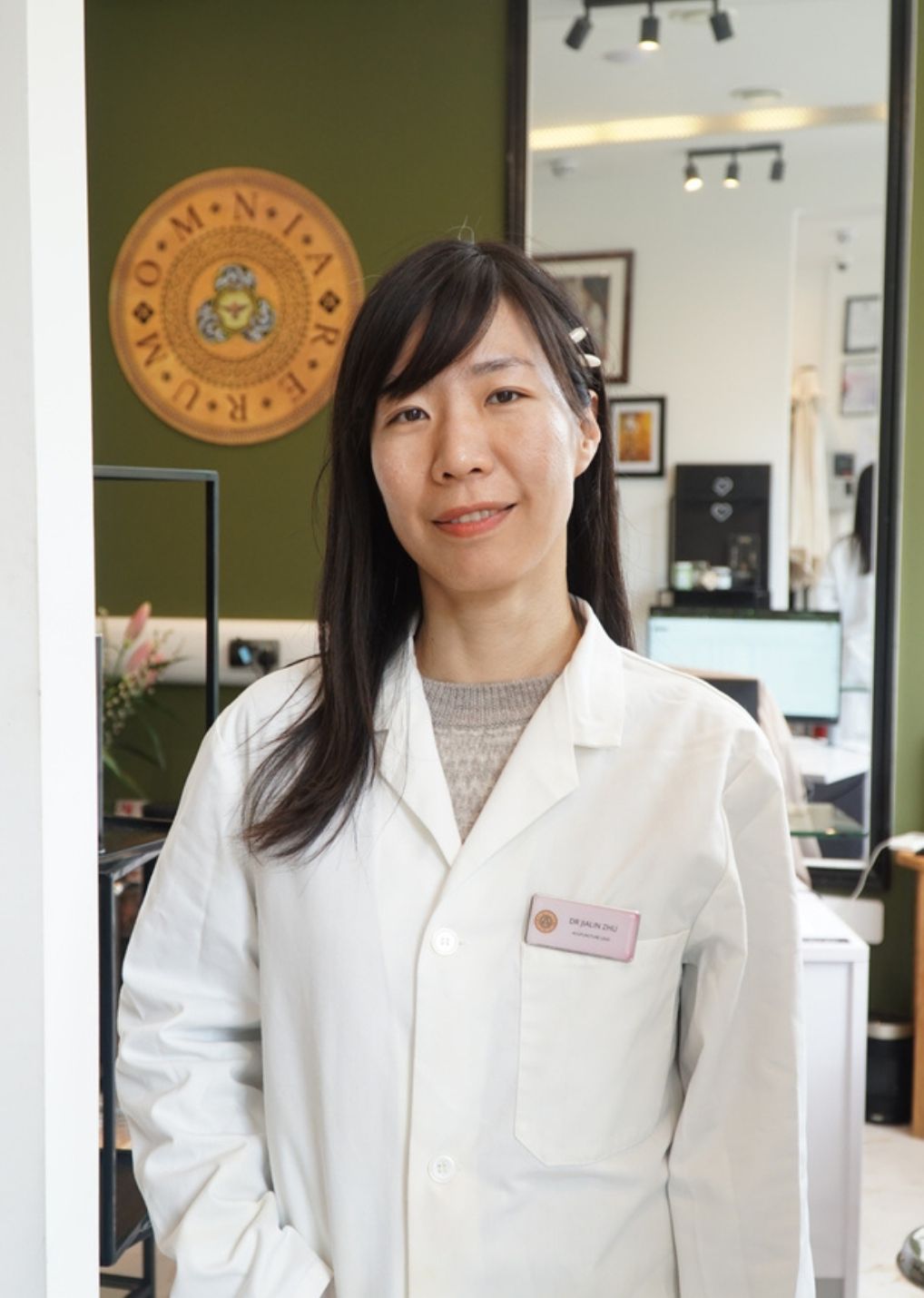
Dr Jialin Zhu
Sixth-generation holder of her family’s Wu-style tai chi lineage, trained from childhood by her father.
Book with Dr ZhuRead her profile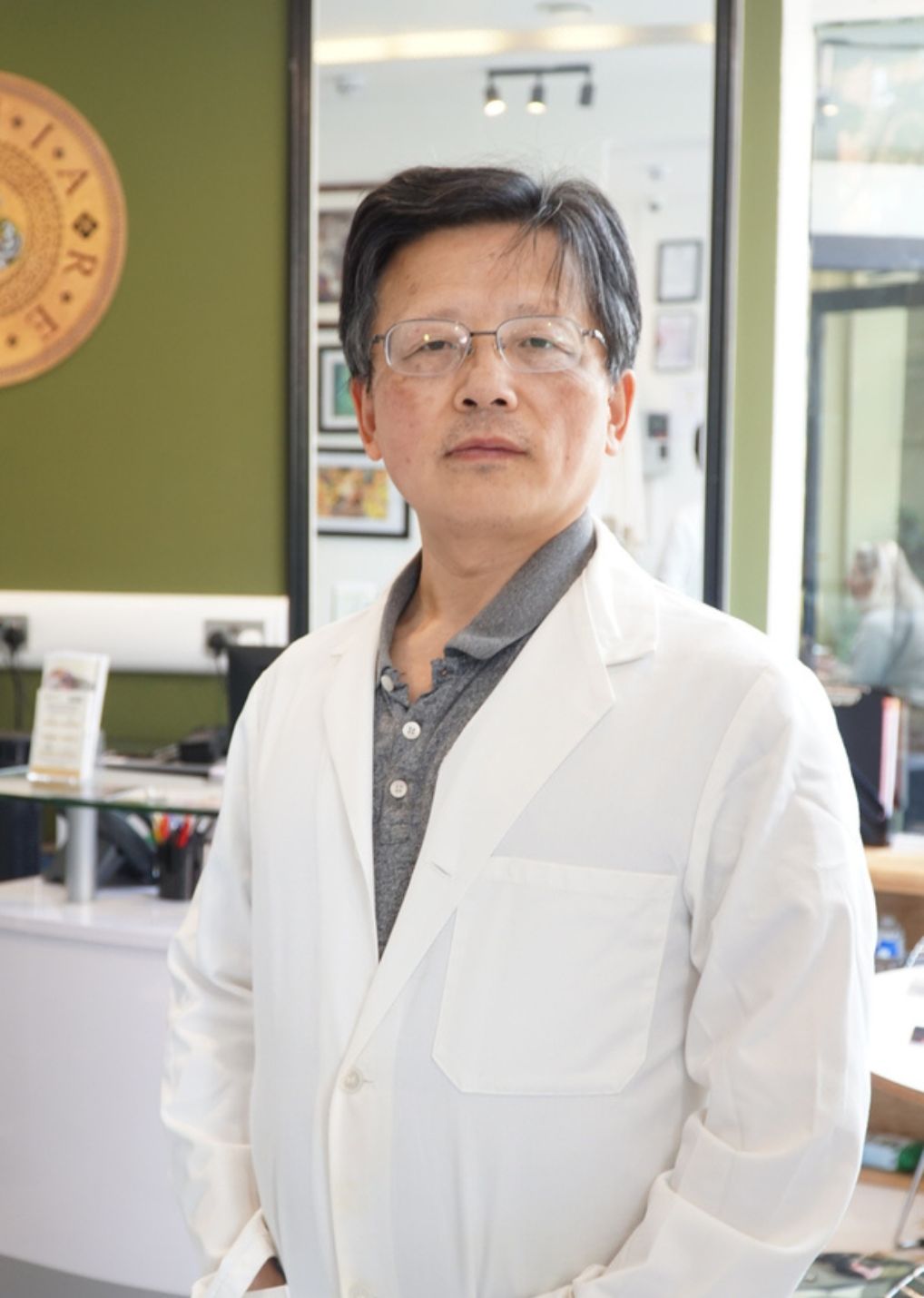
Dr Youzhong Wu
A professional tai chi and qigong trainer since 1994, whose classes include qigong exercises and meditation.
Book with Dr WuRead his profileIf you have a heart condition, osteoporosis, recent surgery or a joint injury, tell us when you book so the class can be adapted, and check with your GP if you are unsure.
Sources
- Chen W-X, Li Y-Z, Kang L-D, et al. Efficacy and evidence certainty of traditional Chinese exercises for musculoskeletal disorders: an umbrella review of meta-analyses. British Journal of Sports Medicine 2026. doi:10.1136/bjsports-2026-111792
- Coverage of the review in The Guardian, 24 August 2026. theguardian.com
- World Health Organization. Musculoskeletal health fact sheet. who.int
This page summarises published research in our own words for general information. Findings describe average effects across groups of people in trials and are not a promise of results for any individual. Tai chi and qigong are offered at Omnia Lifestyle as exercise and lifestyle support, not as a substitute for medical diagnosis or treatment.


Find us
Omnia Lifestyle
8-9 Bedford Corner, The Avenue
Chiswick, London W4 1LZ
A few minutes’ walk from Turnham Green station on the District line.
Copyright © Omnia Lifestyle Limited 2026
8-9, Bedford Corner, W4 1LZ