Menu
A periodic warming of the tropical Pacific that bends weather across continents, read through Kala, Ritu, Agni and Dosha.
Normally, trade winds push warm surface water toward Indonesia while cold, nutrient-rich water rises near South America. During El Niño those winds weaken, the warm pool slides eastward, and the cold upwelling fades.
That single shift of heat and moisture changes atmospheric circulation, and with it rainfall, temperature and storms thousands of kilometres away.
El Niño and La Niña are opposite phases of ENSO, recurring irregularly every two to seven years. Individual events usually last several months to a year.
Fishermen along the coast of Peru and Ecuador noticed warmer water arriving around Christmas.
They associated it with the Christ Child and called it El Niño.
They also noticed those warmer waters brought dramatic changes in fish populations and marine conditions. The scientific understanding came centuries later.
ENSO is far older than the instruments built to measure it. Tree rings, corals, ice cores, cave deposits and ocean sediments let researchers reconstruct its variability well beyond the modern record.
Associated with severe droughts and food crises in several parts of the world. Often regarded as one of the most consequential historical climate events.
Demonstrated how a Pacific Ocean phenomenon could produce widespread consequences right across the globe.
Associated with floods, droughts, fires, heat, and major ecological and economic disruption in different parts of the world.
Impacts involving drought, flooding, food insecurity, heat stress, respiratory disease and infectious disease risks, affecting populations across multiple regions.
The lesson is that El Niño does not produce the same weather everywhere.
El Niño is not simply a hot weather phenomenon. It is a large-scale disturbance of the ocean-atmosphere system that alters the environmental conditions human health depends on.
The WHO notes that ENSO can influence heat stress, wildfire smoke exposure, drought-related nutritional problems, vector-borne diseases, and water- and food-borne diseases. Effects depend on geography, season, the strength and location of the event, and interactions with other climate systems.
And there is no established evidence that El Niño directly raises a particular dosha. These are two different explanatory systems.
El Niño causes Pitta imbalance.
El Niño can create conditions, heat, dryness, humidity, disturbed food and water, that may favour particular dosha disturbances.
The qualities the environment has acquired matter more than the name of the weather pattern producing them. That reframing is what makes the rest of this article useful.
The Charaka Samhita divides the year by the sun's direction of travel. One half takes strength from living beings. The other gives it back.
Adana means taking away, or withdrawing. Visarga conveys releasing, or giving. This distinction matters because Ayurveda does not treat every season as having the same effect on agni, bala and dosha.
Ayurveda describes three phases: accumulation (sanchaya), aggravation (prakopa), and pacification (prashama). Each dosha moves through them in its own season.
These shifts are not simply about temperature. They reflect environmental qualities, diet, digestion, humidity, dryness, heat and adaptation together.
Prolonged heat asks the body to hold more fire than it can carry.
When El Niño brings unusually high temperatures, the environmental Ushna quality becomes prominent, and conditions may favour Pitta accumulation, particularly in those already Pitta-predominant.
These are Ayurvedic interpretations of environmental exposure, not clinically proven effects of El Niño itself.
Dry, windy environments make everything feel lighter, faster, more scattered.
Where El Niño brings drought, and the environment turns dry, windy and depleted, these same qualities become prominent outside the body, and prolonged dryness may favour Vata disturbance within it.
Again, an Ayurvedic reading of environmental conditions, rather than evidence that El Niño causes Vata disorders.
Humidity, stagnant water, heavy meals: everything moves more slowly.
Where El Niño brings unusual rainfall, humidity or standing water, Kapha-like qualities dominate the environment. This matters most when high humidity combines with reduced activity and heavy food.
Rainfall alone should not be equated with Kapha aggravation. Ayurveda weighs the whole combination: season, temperature, humidity, diet, activity and individual constitution.
Digestive strength varies with season and conditions. Climate disturbance reaches digestion indirectly, through everything it disrupts along the way.
So rather than a fixed El Niño diet, ask
Is my environment right now predominantly hot, dry, humid, cold, irregular, or depleted?
Then adapt diet and lifestyle to the answer. Extreme heat may blunt appetite. Humidity, infection, or poor-quality food and water may disturb digestion outright.
Ayurveda speaks of bala, strength, and ojas, associated with vitality and resilience. Severe climatic disturbance rarely attacks these directly. It erodes them sideways.
Through heat stress, dehydration, poor sleep, food insecurity, psychological stress, infection, reduced access to clean water, and thinner nutritional quality. The WHO makes a similar observation, noting that ENSO events affect food security, water quality, ecosystems and health infrastructure alike.
So resilience means protecting
Ayurveda never asked us to eat the same way all year. But climate variability breaks something subtler: the assumption that the season tells you what the weather is doing.
So a contemporary reading of Ayurveda has to weigh Kala, time, together with Desha, place, and the conditions actually outside the window. Adapt to the environment you have, not the one the calendar promised.
Match fluids to heat, sweat, and thirst.
Heat and drought raise dehydration risk sharply. Needs climb further with heavy sweating, vomiting, diarrhoea, or long sun exposure, so drink to thirst rather than to a fixed daily number.
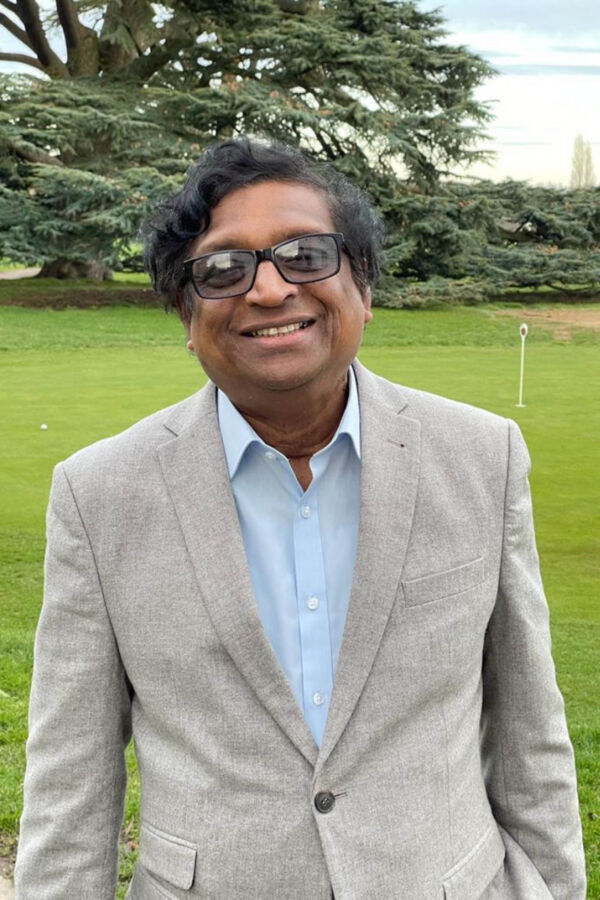
Ayurveda Consultant
A recognised global expert in Ayurveda, Dr Serasinghe holds a First-Class Honours degree in Ayurvedic Medicine from the University of Colombo and a PhD in Medicine and Pharmacology from Toyama University, Japan.
Over three decades of practice, teaching, and research have placed him at the rare intersection of traditional Ayurveda and modern medicine. He is currently president of the British Ayurvedic Medical Council.
Read full bioIf it becomes excessively hot, protect against heat.
If it becomes dry, nourish and stabilise.
If it becomes humid and heavy, support digestion and movement.
If it becomes irregular, strengthen routine.
Health is not achieved by resisting nature,
but by learning how to live intelligently within it.
Copyright © Omnia Lifestyle Limited 2026
8-9, Bedford Corner, W4 1LZ