Omnia Journal. Beyond Diagnosis, an essay series by Prof (Dr) Diwakar Sukul
A diagnosis explains what a person is experiencing. After nearly three decades in clinical practice, a psychologist asks whether it explains why they are suffering.
Prof (Dr) Diwakar SukulPhD, CPsychol, AFBPsS, HCPC. Chartered Clinical Psychologist, Head of Mental Health at Omnia Lifestyle
As psychologists and psychiatrists, we are trained to recognise patterns of symptoms.
Diagnosis is fundamental to good clinical practice. It guides treatment, facilitates communication between professionals and, importantly, helps individuals access appropriate care.
Yet after nearly three decades of clinical practice, I have often found myself asking a different question.
What if a diagnosis explains what a person is experiencing, but not necessarily why they are suffering?
Borderline Personality Disorder is commonly characterised by emotional instability, fear of abandonment, impulsivity, unstable relationships, identity disturbance and chronic emptiness.
These descriptions are clinically accurate.
Behind every diagnosis is a human being whose story deserves to be understood.
Many of the individuals I have had the privilege of working with have been extraordinarily sensitive, emotionally perceptive, creative, intelligent and deeply compassionate.
Many have also experienced trauma, emotional invalidation or insecure attachment. Their emotional intensity, which might have become a strength under different circumstances, instead became overwhelming.
One experience repeatedly described is the inner void. Psychiatry recognises chronic feelings of emptiness as one of the diagnostic features of BPD. But perhaps we should also ask a deeper question.
Is it simply mood?
Is it identity?
Is it belonging?
Or might it reflect a profound disconnection from one's authentic self?
For many individuals, this experience can become an endless search for relief.
The brain naturally seeks to reduce emotional pain, often through dopamine-driven experiences that provide temporary comfort: relationships, achievement, social media, shopping, substances or other forms of immediate gratification.
These experiences may briefly silence the pain. But they rarely answer the deeper question.
Pleasure can provide temporary relief. Meaning has the potential to transform how we understand ourselves and our lives.
More than 2,500 years ago, Siddhartha Gautama left behind a life of extraordinary comfort and privilege because he could not ignore the reality of human suffering. His profound restlessness eventually became the catalyst for a lifelong search for understanding.
I am not suggesting that Siddhartha experienced Borderline Personality Disorder, nor should profound spiritual searching be confused with mental illness.
Rather, his journey reminds us that human restlessness can arise from different sources. Sometimes it reflects psychological distress. Sometimes it reflects an existential search for meaning. Sometimes those experiences may coexist.
As clinicians, our responsibility is not only to recognise symptoms but also to understand the person who is experiencing them.
Diagnosis remains essential. But perhaps diagnosis is the beginning of understanding rather than its conclusion.
Recovery is not simply about reducing symptoms. It is also about helping people reconnect with safety, meaning, purpose, relationships and, ultimately, with themselves.
This philosophy has increasingly shaped my work on developing the Kamkus Multidimensional Healthcare model, and underpins what I now call Beyond Diagnosis.
Beyond Diagnosis is not about moving beyond science. It is about building upon science with curiosity, compassion and a commitment to understanding the whole person.
I believe healing begins when we ask not only:
Meaningful hope does not arise from false promises. It arises from understanding.
Healing begins within.
It flourishes through compassionate relationships, evidence-informed care and the rediscovery of one's authentic self.
The author's argument sits comfortably with the mainstream evidence base. NICE guidance for BPD already recommends psychological therapies that work with a person's history, relationships and sense of self, and cautions against treating the label as the whole story. Linehan's biosocial model, which underpins dialectical behaviour therapy, describes BPD as high emotional sensitivity meeting an invalidating environment: close to the account given above.
Where the article moves from clinical observation to philosophy, the Siddhartha passage and the language of the authentic self, it is offering a lens rather than a finding. Readers who have been given this diagnosis should know that structured, evidence-based treatments exist and that outcomes over time are considerably better than older textbooks suggested.
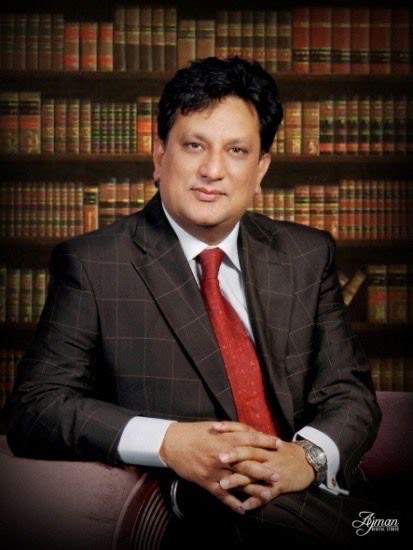
PhD, CPsychol, AFBPsS, HCPC Registered. Chartered Clinical Psychologist, Head of Mental Health at Omnia Lifestyle
In 1998 he established the Kamkus Clinic on Harley Street, built on his concept of multidimensional healthcare, and went on to develop the Body Mind Energy Assessment and Vedic Psychotherapy. He is a Chartered Member and Associate Fellow of the British Psychological Society.
If you have been given this diagnosis, or recognise yourself in this article, Dr Sukul works with the whole person: the pattern, the history behind it, and the strengths that have carried you this far.
Dr Sukul runs a weekly clinical psychology clinic at Omnia by secure video call. You can also call the clinic on 020 4515 0000. If you are in crisis right now, call NHS 111 and choose the mental health option, or call Samaritans free on 116 123, day or night.