Omnia Journal. Mental health. A perspective by Prof (Dr) Diwakar Sukul
Since 2020, one crisis has followed another. Each has left most households poorer and a handful of sectors richer. A psychologist asks what that pattern is doing to our minds.
Prof (Dr) Diwakar SukulPhD, CPsychol, AFBPsS. Chartered Clinical Psychologist, Head of Mental Health at Omnia Lifestyle
Over the past six years, a pattern has quietly but consistently emerged. It is difficult to ignore. Call it a perpetual crisis loop.
A pandemic, then war in Europe, and now escalating conflict in the Middle East. Beneath each event lies the same economic reality: while the majority face instability, inflation and survival stress, certain sectors experience unprecedented growth.
This is not a coincidence. It reflects a structural shift in how wealth is created, and concentrated, during crises.
The pandemic was the first major catalyst. Vaccine makers such as Pfizer and Moderna recorded historic revenues, and Big Tech consolidated its power as the world moved online.
81% Rise in global billionaire wealth since 2020. Oxfam, 2026.As the world attempted recovery, war reshaped economic priorities. Oil and gas companies reported record-breaking profits and defence budgets rose sharply, with billions in new contracts.
The escalation in the Middle East is not an isolated event. It is a convergence, with three sectors dominating at once.
$2.89tn World military spending in 2025, the eleventh consecutive annual rise. SIPRI, 2026.Economists and writers have long described disaster capitalism: crises that become openings for market capture and policy shifts. The term was popularised by Naomi Klein in 2007.
What was once described in single countries is now visible at a global scale.
Crisis brings public spending. Public spending becomes private profit. The bill arrives as public debt, then as inflation, and finally as less money in every household.
And then the next crisis arrives, before the last one has been paid for.
The top 0.001 per cent of the world's population, fewer than 60,000 people, now control more wealth than ever before.
3× What that group holds, relative to the entire bottom half of humanity. World Inequality Report 2026.Their share of global wealth has climbed from about 4 per cent in 1995 to over 6 per cent today. The poorest half of the world, some four billion people, hold around 2 per cent between them.
The distance between corporations and citizens grows with every turn of the loop.
Different countries are absorbing the same shock in different ways. The strain on ordinary people looks remarkably similar.
In the author's reading, leadership in this crisis broadly falls into three approaches.
The real question is not political. It is ethical: are our systems being used to protect citizens, or to sustain the crisis economy?
This is where the impact becomes deeply human. In clinical practice, the consequences are visible every day.
Patients are not dealing with anxiety or depression in isolation. They are carrying chronic financial stress, choosing between debt and basic survival, and living with continuous uncertainty about the future.
The link is well established: a meta-analysis of 65 studies found that people in debt were more than three times as likely to have a mental health problem.
“I do not know whether to prioritise three meals a day or paying my energy bills.”
A patient, recently
This is no longer an exception. It is becoming the norm.
We are investing heavily in treating mental health, yet we are not addressing one of its primary drivers: a global system that keeps people in a constant state of survival.
If this trajectory continues, financial stress becomes a permanent baseline. Mental health disorders rise structurally, not episodically. Inequality deepens beyond repair.
This is not merely an economic issue. It is a societal and moral inflexion point.
The figures above are sound. How to read them is contested, and readers deserve the other side of the argument.
Timing is not the same as intent. That some sectors profit during crises shows who is exposed to sudden shifts in demand; it does not, on its own, show that crises are prolonged for profit. Much of the billionaire gain since 2020 came from rising asset prices after emergency rate cuts, and it has swung with the markets.
Governments have also clawed some windfalls back: the UK introduced the Energy Profits Levy on oil and gas producers in 2022. Much of the recent rise in defence spending is European rearmament after Russia's invasion, and SIPRI records that US military spending fell in 2025. Economists still disagree over how much of the 2021 to 2023 inflation came from energy shocks rather than pandemic stimulus and broken supply chains.
None of this removes the human cost described here. It does mean the causes are argued over, not agreed.
Crises are no longer disruptions. They are becoming mechanisms.
Unless we question the system, the suffering of many will continue to fund the growth of a few.
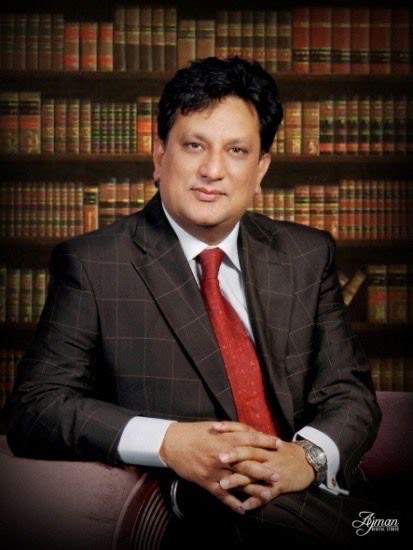
PhD, CPsychol, AFBPsS, HCPC Registered. Chartered Clinical Psychologist, Head of Mental Health at Omnia Lifestyle
In 1998 he established the Kamkus Clinic on Harley Street, built on his concept of multidimensional healthcare, and went on to develop the Body Mind Energy Assessment and Vedic Psychotherapy. He is a Chartered Member and Associate Fellow of the British Psychological Society.
If money worries are wearing down your mental health, you do not have to carry that alone. Dr Sukul works with the whole picture: the symptoms, the circumstances behind them, and the person living with both.
Dr Sukul runs a weekly clinical psychology clinic at Omnia by secure video call. You can also call the clinic on 020 4515 0000. If you are in crisis right now, call NHS 111 and choose the mental health option, or call Samaritans free on 116 123, day or night.